


30-Sep-2026
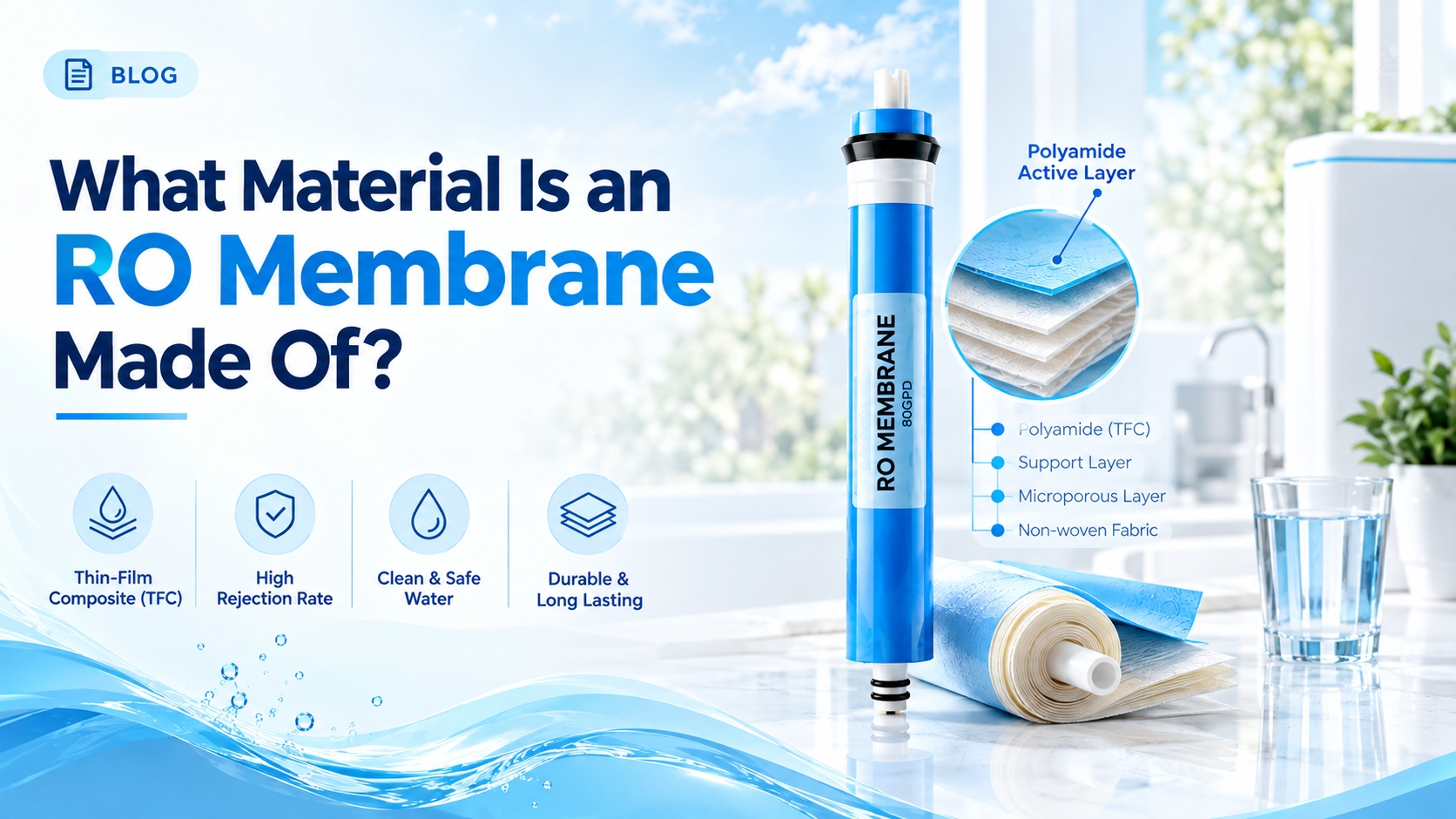
A modern RO membrane is a Thin Film Composite (TFC) built from three bonded layers: a polyester fabric backing for strength, a microporous polysulfone layer for support, and an ultra-thin polyamide barrier — roughly 200 nanometers thick — that does the actual salt rejection. Older membranes used cellulose acetate instead, a single-material construction now largely phased out for lower rejection and weaker chemical tolerance.
Property |
Thin Film Composite (TFC) |
Cellulose Acetate (CA) |
|---|---|---|
Construction |
3-layer composite |
Single material |
Typical Salt Rejection |
95–99.5%+ |
90–95% |
Chlorine Tolerance |
Low — sensitive to degradation |
Higher — more tolerant |
pH Operating Range |
Typically 2–11 |
Narrower, often 4–6.5 |
Mechanical Durability |
High |
Moderate — prone to compaction/hydrolysis over time |
Current Market Status |
Industry standard |
Largely phased out |
Leave A Comment