
What Types of RO Membranes Are Available?
Quick Answer
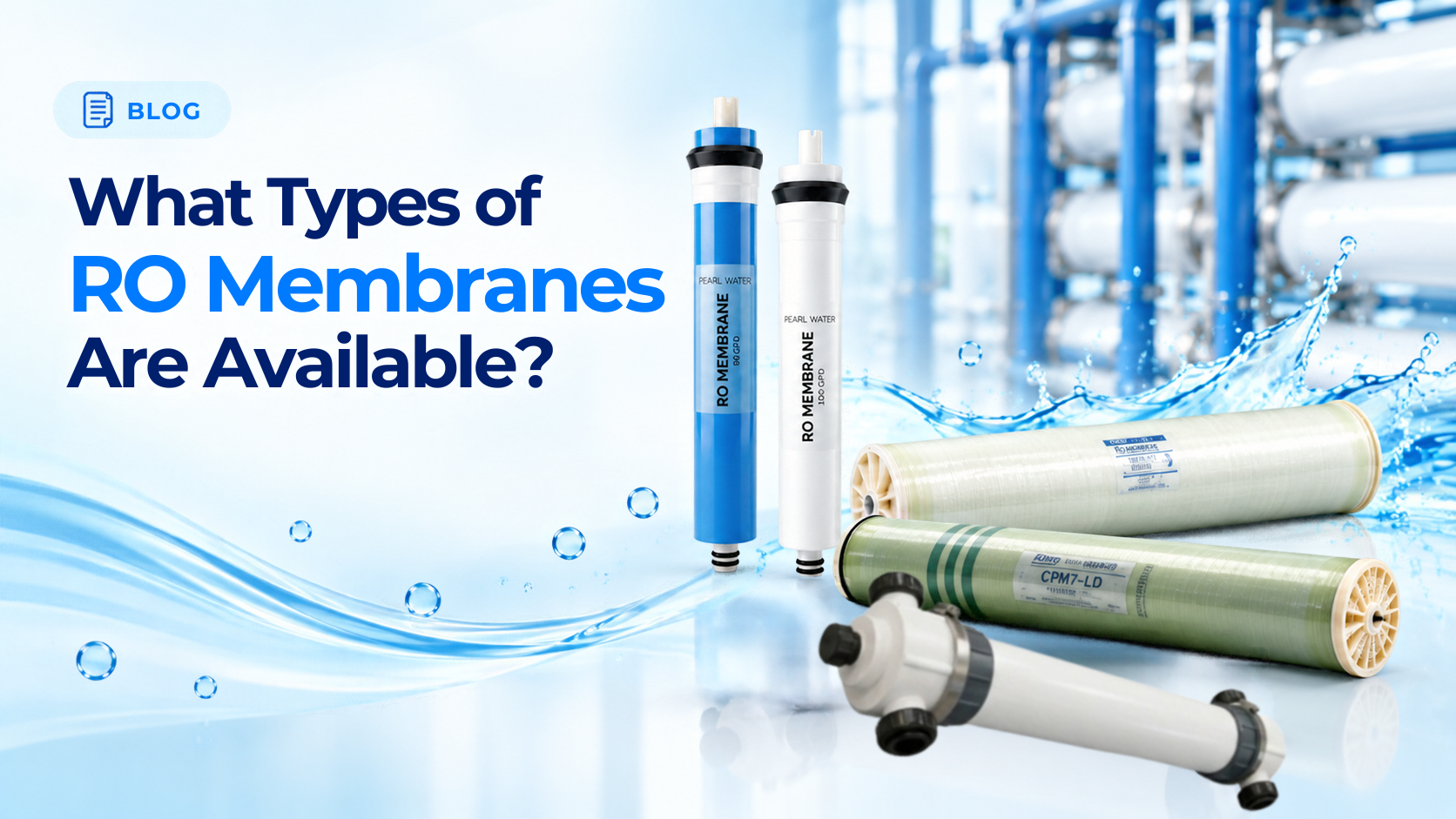
RO membranes are categorized four ways: by material (Thin Film Composite is standard; Cellulose Acetate is largely outdated), by water source (brackish water vs seawater), by scale (domestic vs industrial, sized in standard 4040/8040 formats), and by specialization (standard, low-fouling, or high-flow variants). Real options span from a ?449 domestic membrane to industrial elements from DOW, Toray, LG, and Hydranautics.
Below is the full breakdown — with real, purchasable products in every category, not just abstract descriptions.
Table of Contents
-
By Material: Thin Film Composite vs Cellulose Acetate
-
By Water Source: Brackish Water vs Seawater
-
By Scale: Domestic vs Industrial
-
By Format: 4040 vs 8040 Sizing
-
By Specialization: Standard, Low-Fouling & High-Flow
-
Real Brands and Models You Can Actually Buy
-
How to Choose the Right Type
-
FAQs
By Material: Thin Film Composite vs Cellulose Acetate
Thin Film Composite (TFC) is the current industry standard — a multi-layer construction (polyester backing, microporous polysulfone, ultra-thin polyamide barrier) offering high rejection, strong chemical resistance, and durability. Virtually every membrane Pearl Water sells today, domestic or industrial, uses TFC construction, including the 80 GPD RO Membrane Classic.
Cellulose Acetate (CA) was the original RO membrane technology — tolerant of low-level chlorine, but offering meaningfully lower salt rejection and weaker chemical resistance. It's largely been phased out of new installations in favor of TFC, though understanding the distinction matters if you're evaluating an older or unusually cheap membrane.
For the full mechanism behind how TFC membranes actually achieve their rejection performance, see How Does the RO Membrane Actually Remove TDS?
By Water Source: Brackish Water vs Seawater
Brackish water membranes are built for moderate-salinity sources — borewell, municipal, groundwater — and make up the vast majority of both domestic and industrial membranes sold. They operate at moderate pressure, typically up to 600 psi.
Seawater membranes are a genuinely different category, built for high-salinity desalination above 10,000 PPM, operating at much higher pressure — up to 1200 psi in products like Toray's TM820V-400. Using a brackish water membrane on seawater (or vice versa) isn't just suboptimal — it's a fundamental mismatch that won't perform as rated.
By Scale: Domestic vs Industrial
Domestic membranes are sized for home under-sink systems — typically 75–150 GPD capacity in a compact 12-inch housing. Priced accessibly, rated for household TDS levels up to roughly 1000–2000 PPM.
Industrial membranes are built for continuous, high-volume operation, standardized into 4040 and 8040 physical formats regardless of brand. They cost substantially more, reflecting higher flow capacity and continuous-duty construction. Browse Domestic RO Membrane or Industrial RO Spares depending on your scale.
By Format: 4040 vs 8040 Sizing
Within industrial membranes specifically, sizing follows two physical standards used across every manufacturer:
-
4040 — 4-inch diameter, 40-inch length. Compact, suited to mid-scale commercial installs.
-
8040 — 8-inch diameter, 40-inch length. Higher flow capacity, standard for larger plants, often configured with 1–8 elements per housing.
Because these are industry-wide standards, an 8040 housing from one brand generally accepts an 8040 membrane from another. For the full sizing decision framework, see 8040 or 4040: Which RO Membrane Is Best for You?
By Specialization: Standard, Low-Fouling & High-Flow
Within TFC brackish and seawater membranes, manufacturers offer purpose-built variants:
-
Standard/High Rejection — prioritizes maximum salt rejection, the default choice absent a specific complication like fouling-prone water
-
Low-fouling — engineered with hydrophilic surface treatments to resist organic and biological fouling, worth the added cost on difficult feed water. Example: Toray's TML20D-400, or Hydranautics' CPA5-LD
-
High-flow — optimized for higher daily output per element, often at lower energy consumption. Example: DOW's TapTec LC HF
-
UF pretreatment membranes — not RO membranes themselves, but ultrafiltration elements used ahead of RO to protect it from fouling. Example: DOW's XP 77 IG
Real Brands and Models You Can Actually Buy
Most "types of RO membrane" content stays abstract. Here's what's actually available, by category:
Category |
Real Products |
|---|---|
Domestic (TFC, 75-150 GPD) |
Pearl Water 80 GPD RO Membrane Classic, Domestic RO Membrane range |
Industrial brackish, standard |
DOW BW30-365/BW30-400 (8040), LG BW R series, Hydranautics CPA3 |
Industrial brackish, energy-efficient |
LG BW ES series |
Industrial brackish, low-fouling |
Toray TML20D-400, Hydranautics CPA5-LD |
Industrial brackish, high-flow |
DOW TapTec LC HF |
Seawater |
Toray TM810V (4040), Toray TM820V-400 (8040), LG SW series |
UF pretreatment |
DOW XP 51 IP IG, XP 77 IG |
Budget industrial |
Ultra XP / ULP series |
For a full brand-by-brand comparison rather than a category view, see Top Industrial RO Membrane Brands in India.
How to Choose the Right Type
-
Start with your water source — brackish or seawater determines the entire category you're choosing from
-
Match scale to actual need — domestic for home use; 4040 for compact commercial; 8040 for plant-scale
-
Check fouling risk — if your feed water has high organic content or biological activity, pay the premium for a low-fouling variant
-
Weigh energy cost for continuous operation — high-flow or energy-saving (ES) variants pay off over months of continuous industrial use
-
Confirm rejection rate matches your TDS target — don't over- or under-spec relative to actual feed water TDS
Comments (0)