|
Product name |
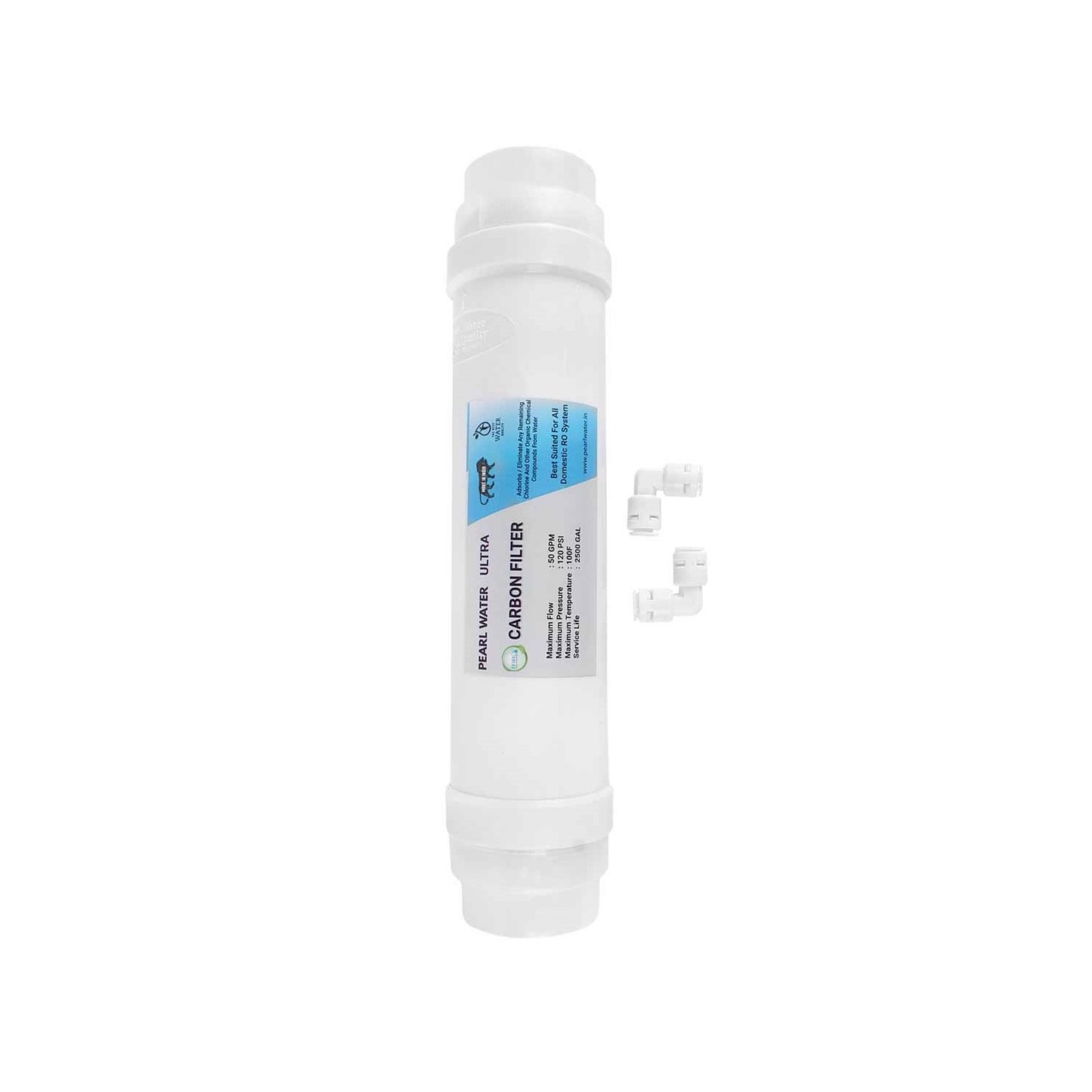
Pearl Water Activated Carbon Filter Classic |
|
Filter type |
Granular Activated Carbon (GAC) |
|
Size |
10 inch (25 cm) |
|
Diameter |
2 inch |
|
Micron rating |
5 micron |
|
Material |
Carbon granules (coconut shell activated carbon) |
|
Capacity |
2,500 gallons |
|
Country of origin |
India |
|
Net quantity |
1 |
|
Warranty |
1 year |
|
Replacement window |
10 days |


Pearl Water 10 Inch Activated Carbon Filter Classic
Product Overview
If your filtered water still tastes or smells slightly off — a faint chlorine bite, a musty edge, or just a flatness you can't quite place — the missing piece is usually carbon filtration. The Pearl Water Activated Carbon Filter Classic is a 10 inch cartridge filled with granular activated carbon (GAC) made from coconut shell, designed to absorb chlorine, organic compounds, and the substances responsible for bad taste and odor in drinking water. Rated for a 2500 gallon capacity, it's built to sit in the carbon stage of a multi-stage RO or gravity purification system — typically after sediment pre-filtration and before or after the RO membrane — polishing the water so what comes out of the tap actually tastes clean. It's a standard 10 inch, 2 inch diameter cartridge, so it fits most universal filter housings already installed in Indian homes. For anyone whose water tastes "off" despite having a working RO system, this is usually the fix.
What Is an Activated Carbon Filter?
Activated carbon is carbon that's been processed to be riddled with microscopic pores, giving it an enormous internal surface area relative to its size — a single gram can have a surface area equivalent to a few tennis courts. That pore structure is what makes it so good at adsorption: as water passes through, organic molecules, chlorine, and odor-causing compounds get trapped inside the carbon's internal surface instead of passing through with the water.
The Pearl Water Carbon Filter Classic uses carbon granules, commonly sourced from coconut shell, known for producing activated carbon with strong adsorption performance and a naturally black, amorphous, porous structure. This isn't the same job a sediment filter does. A PP spun cartridge filter physically screens out particles like sand and rust; a carbon filter chemically and physically adsorbs dissolved substances that a sediment filter can't touch at all — chlorine, certain organic compounds, and taste- and odor-causing molecules.
Every RO or multi-stage purification system benefits from a carbon stage because RO membranes themselves are vulnerable to chlorine damage over time, and even after the membrane does its job, water can pick up flat or plastic-like tastes without a carbon polish stage. This cartridge typically works as the third stage in a domestic water filter setup, both improving taste and helping protect the RO membrane from chlorine exposure.
How Does It Work?
The filtration process inside a carbon cartridge happens through adsorption rather than simple screening:
Water enters the cartridge and flows through the packed bed of activated carbon granules.
Organic molecules and chlorine compounds come into contact with the carbon's porous surface as water moves through.
Adsorption occurs — these molecules bind to the internal surface of the carbon particles rather than passing through with the water.
Odor and taste compounds are captured the same way, since many of them are the same class of organic molecules carbon is especially good at trapping.
Filtered water exits the cartridge tasting and smelling noticeably cleaner, ready for the next stage of your purification system or straight to the tap.
Because this is an adsorption process, not a mechanical strainer, the carbon bed has a finite capacity — once its pore structure is saturated, it stops effectively adsorbing new contaminants, which is why cartridges like this one are rated to a specific capacity (2500 gallons here) rather than lasting indefinitely.
Comparison: Carbon Filter vs Sediment Filter vs PP Spun Filter vs RO Membrane
|
Filter Type |
What It Removes |
Best Used For |
Limitation |
|---|---|---|---|
|
Activated Carbon Filter (this product) |
Chlorine, organic compounds, taste, odor, color |
Taste and odor polishing, chlorine removal, membrane protection |
Doesn't remove sediment, dissolved salts, or sand |
|
Sediment Filter (general) |
Larger particles, sand, silt |
Pre-filtration ahead of carbon and RO stages |
Doesn't address taste, odor, or chlorine |
|
PP Spun Filter |
Sand, rust, suspended solids down to a rated micron size |
First-stage mechanical pre-filtration |
Doesn't affect taste, odor, or dissolved substances |
|
RO Membrane |
Dissolved salts, heavy metals, most microorganisms |
Final purification stage for drinking-quality water |
Vulnerable to chlorine damage without carbon protection ahead of it |
A complete water purification system typically layers all of these: sediment removal first, carbon filtration for taste, odor, and chlorine, and an RO membrane for dissolved solids and microbiological safety.
Related Products
To build out a complete filtration system, pair this carbon filter with a domestic sediment filter for mechanical pre-filtration, or a PP spun cartridge filter to catch sand and rust before water reaches this stage. Browse Pearl Water's RO membrane range for the final purification stage, check cartridge filter housings if you need a compatible housing, explore the RO filter kit for an all-in-one multi-stage replacement, or view the full RO water purifiers lineup if you're setting up a new system entirely.
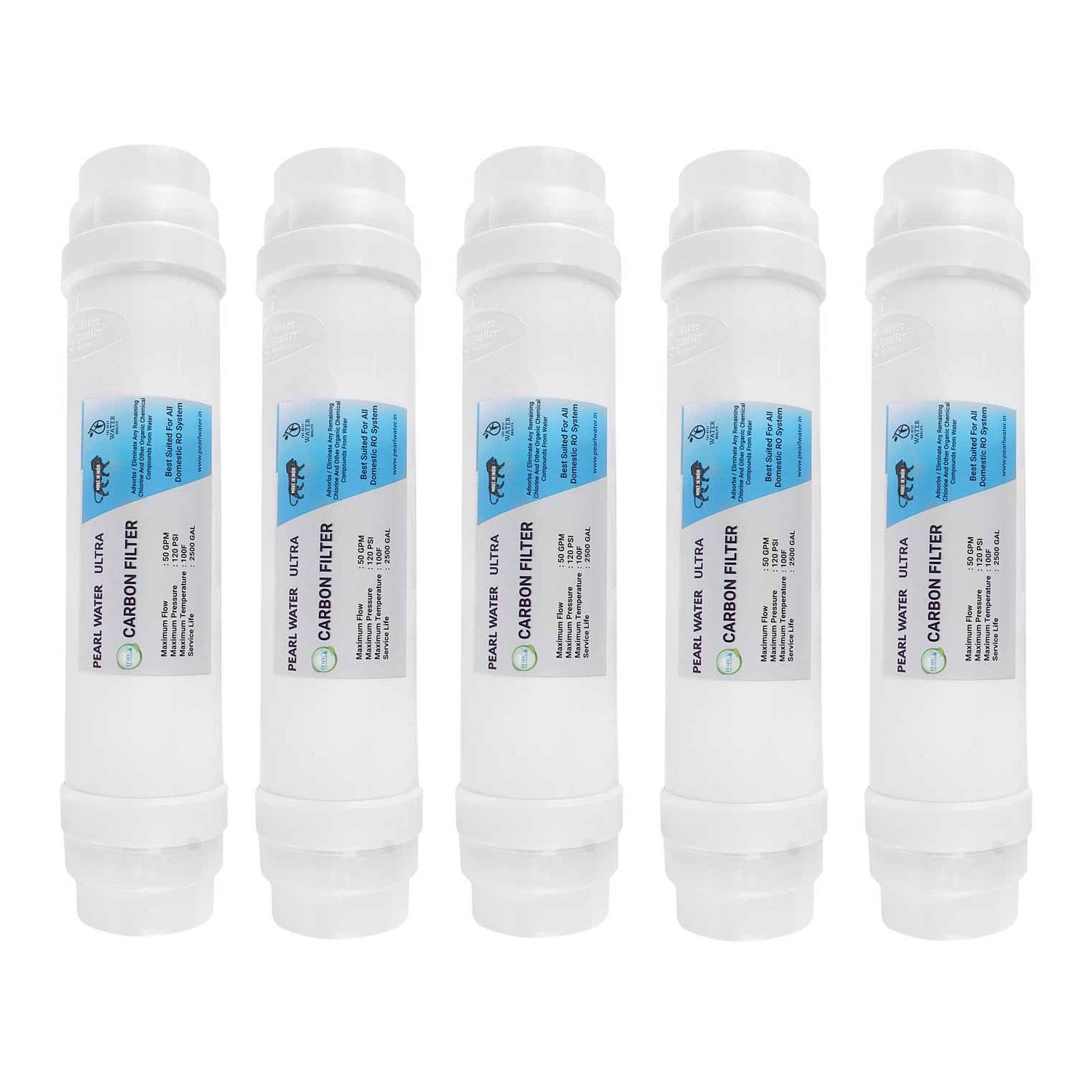
If you're maintaining more than one purifier or want to stock up for the year, this cartridge is also sold as a Pack of 2, Pack of 3, and Pack of 5. For higher-performance filtration needs, Pearl Water also offers the Carbon Filter Ultra, and for finer, compressed-media filtration, the CTO/Carbon Block 10 Inch is worth a look.
Taste the Difference
Sediment filters and RO membranes handle particles and dissolved solids, but taste and odor come down to this stage. The Pearl Water Activated Carbon Filter Classic is a straightforward, effective way to get chlorine, bad taste, and odor out of your drinking water while giving your RO membrane a longer, healthier working life. Order yours today and notice the difference in your very next glass of water.
|
Product name |
Pearl Water Activated Carbon Filter Classic |
|
Filter type |
Granular Activated Carbon (GAC) |
|
Size |
10 inch (25 cm) |
|
Diameter |
2 inch |
|
Micron rating |
5 micron |
|
Material |
Carbon granules (coconut shell activated carbon) |
|
Capacity |
2,500 gallons |
|
Country of origin |
India |
|
Net quantity |
1 |
|
Warranty |
1 year |
|
Replacement window |
10 days |
| Customer Rating | |
| Price |
₹206
|
| Availability |
3 in stock
|
Why Choose Pearl Water?
Pearl Water manufactures this cartridge using coconut shell-sourced activated carbon, chosen for its strong, consistent adsorption performance rather than cheaper alternatives that saturate quickly or leach carbon fines into the water. Each cartridge carries a defined 2,500 gallon capacity rating, giving buyers a clear, measurable expectation instead of vague marketing claims about "long life."
Beyond the product itself, Pearl Water backs this filter with a 1-year warranty and a 10-day replacement window, along with responsive customer support for sizing and compatibility questions. With years of focused experience in water filtration components — sediment filters, carbon filters, membranes, and housings — Pearl Water understands how these pieces work together in a real, everyday purification system, not just in isolation.
Buying Guide: Choosing the Right Carbon Filter
Micron rating — 5 micron is a standard, effective rating for this stage, balancing adsorption performance with reasonable water flow.
Capacity and replacement timing — This cartridge is rated for 2,500 gallons; households with higher daily usage or more heavily chlorinated water will reach that limit sooner than lighter users.
Housing compatibility — Confirm your housing accepts a standard 10 inch, 2 inch diameter cartridge before ordering, since this is the standard sizing across most domestic systems.
Water source considerations — Heavily chlorinated municipal water, or water with a noticeable taste or odor issue, benefits most clearly from a dedicated carbon stage like this one.
System placement — This cartridge works best as part of a complete multi-stage system, following sediment pre-filtration rather than replacing it.
Buying in bulk — If you're stocking up for the year or maintaining more than one purifier, this cartridge is also available as a Pack of 2, Pack of 3, or Pack of 5, each working out cheaper per unit than repeat single purchases.
Installation Guide
Turn off the water supply to your purifier and release pressure by opening the purifier's tap.
Unscrew the housing for the carbon filter stage, typically the second or third housing in a multi-stage system.
Remove the old cartridge and note its orientation before disposal.
Rinse the housing to clear out any residue or loose carbon fines from the previous cartridge.
Insert the new Pearl Water carbon cartridge, seating it correctly against the housing base and central stem.
Reattach the housing, tightening by hand or with a housing wrench — avoid over-tightening.
Turn the water supply back on and check the housing joint for leaks.
Run the system for a few minutes and discard the first batch of water to flush out any loose carbon fines before regular use.
Required fields are marked *
Frequently Asked Questions
What is an activated carbon filter used for? An activated carbon filter removes chlorine, organic compounds, and the substances responsible for bad taste and odor in water. It typically sits in the carbon stage of a multi-stage purification system, improving how water tastes and smells while also helping protect the RO membrane from chlorine exposure.
How does a carbon filter work? Activated carbon has an extremely porous internal structure that adsorbs organic molecules and chlorine as water passes through it. Rather than physically screening out particles like a sediment filter, it chemically binds contaminants to the carbon's surface, removing them from the water.
What does this carbon filter remove? It removes chlorine, bad taste, bad odor, discoloration, and various dissolved organic compounds. It does not remove sand or sediment (that requires a sediment filter) or dissolved salts (that requires an RO membrane).
How long does this cartridge last? This cartridge is rated for a 2,500 gallon capacity. Actual replacement timing depends on your household's water usage and how heavily chlorinated or contaminated your water source is.
Is this filter suitable for borewell water? It can help with organic taste and odor issues sometimes present in borewell water, but it should be paired with a dedicated sediment filter first, since carbon filters aren't designed to remove sand, silt, or physical sediment.
Does this filter remove chlorine? Yes, chlorine removal is one of the primary functions of activated carbon. This is particularly useful for municipal water supplies, which are commonly chlorinated for disinfection but can leave a noticeable taste.
Is this cartridge compatible with all RO systems? It's a standard 10 inch, 2 inch diameter cartridge, which fits most universal filter housings used across Indian RO and gravity purifier brands. Confirming your housing size before ordering is always recommended.
How does this filter protect the RO membrane? By removing chlorine before it reaches the membrane, this cartridge reduces one of the more common causes of premature RO membrane degradation, since many RO membranes are sensitive to prolonged chlorine exposure.
How do I install this carbon filter? Turn off the water supply, unscrew the relevant housing, remove the old cartridge, rinse the housing, insert the new cartridge, and reattach the housing securely. Full step-by-step instructions are covered in the installation guide above.
What maintenance does this filter need? Beyond timely replacement near its rated capacity, the main maintenance step is flushing the system for a few minutes after installing a new cartridge, and keeping the sediment pre-filter stage working properly so it doesn't overload the carbon.
Does this filter remove bacteria or viruses? No. Activated carbon filters address chemical and organic contaminants, taste, and odor — not microbiological safety. Bacteria and viruses require UV treatment or an RO membrane rated for microbiological filtration.
Can this be used as a standalone filter without RO? It's designed to work as part of a multi-stage system, but it can also be used in simpler gravity-based setups specifically for taste, odor, and chlorine reduction, without necessarily needing a full RO membrane stage.
What's the difference between this and a Carbon Block (CTO) filter? Granular activated carbon, used in this cartridge, is made of loose carbon granules packed into the cartridge, offering strong adsorption with good flow rate. A Carbon Block (CTO) filter compresses carbon into a solid block, which can offer finer filtration but at a somewhat lower flow rate.
How do I know when to replace this filter? The clearest signs are a return of chlorine taste or odor in your water, or reaching the cartridge's rated 2,500 gallon capacity based on your typical usage. If taste starts to decline before you expect, it's worth replacing early.
Is this filter made from coconut shell carbon? Yes, the carbon granules used in this cartridge are commonly sourced from coconut shell, a material recognized for producing activated carbon with strong, consistent adsorption performance.