28-Oct-2026
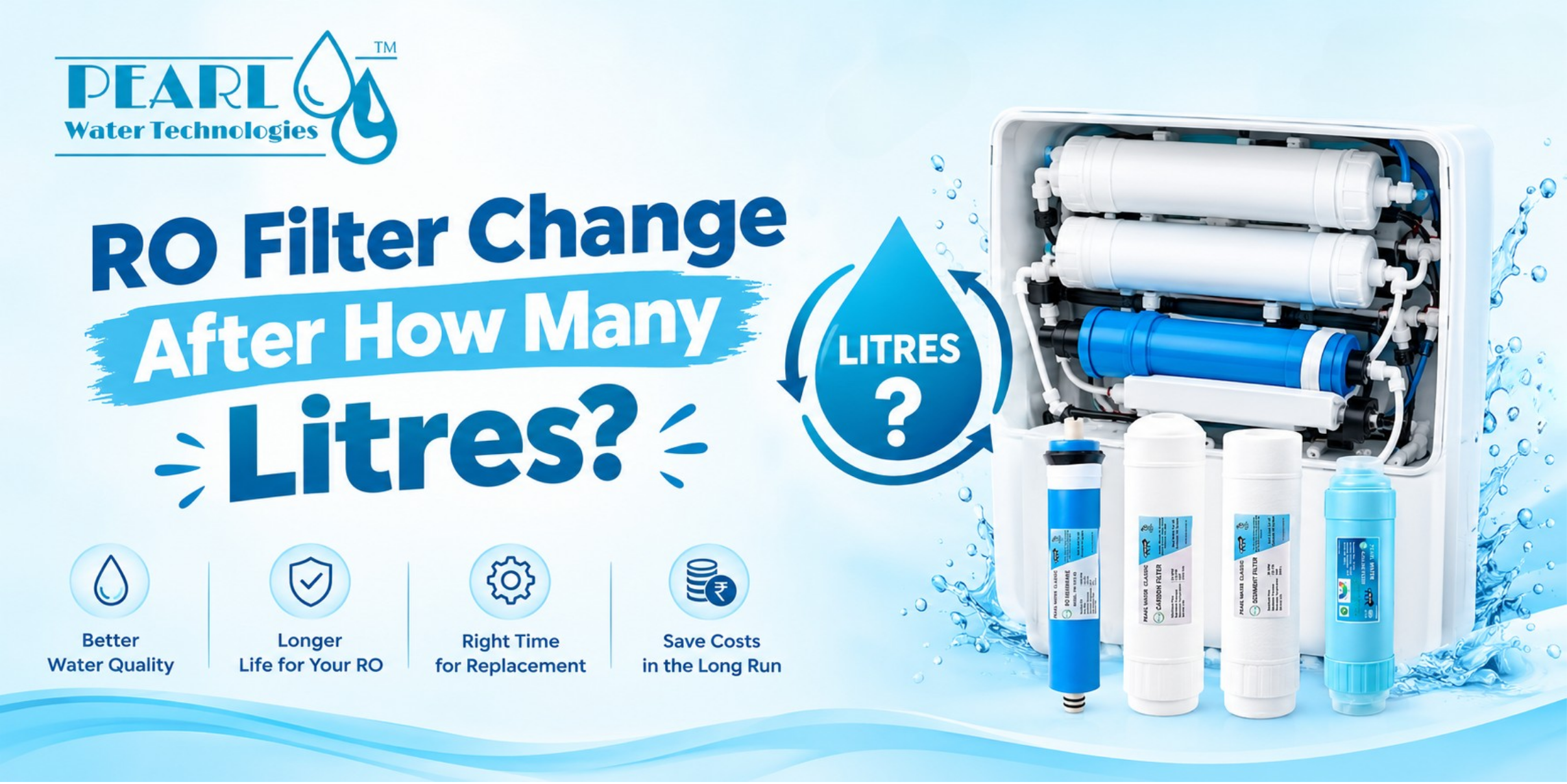
RO stage |
Typical life in litres |
Typical life in time |
Change sooner if |
|---|---|---|---|
Sediment filter (pre-filter) |
3,000 to 6,000 L |
3 to 6 months |
Water is muddy, borewell or tanker supply |
Pre carbon filter |
6,000 to 10,000 L |
6 to 9 months |
Water smells of chlorine or has a taste problem |
Post carbon filter |
6,000 to 10,000 L |
6 to 12 months |
Purified water tastes flat or stale |
RO membrane (75 to 80 GPD) |
12,000 to 20,000 L |
2 to 3 years |
Input TDS is above 1,000 ppm |
UV lamp / UF module (if fitted) |
Time-based |
12 months (lamp) |
Lamp light is off or the unit gives an alert |
These are general ranges. Always check the rated capacity printed on your cartridge or membrane datasheet.
Use this simple formula:
Filter life in months = Rated litres ÷ (Daily litres × 30)
Example: A carbon filter rated for 7,200 litres, in a home that uses 20 litres of RO water per day:
7,200 ÷ (20 × 30) = 12 months
Now the same filter in a home using 40 litres a day: 7,200 ÷ (40 × 30) = 6 months.
One point that many people miss: the litres a filter is rated for usually refers to the water passing through it, not only the drinking water you collect. An RO system sends part of the incoming water to drain, so the sediment and carbon stages handle more water than the final tank gives you. Keep this in mind when you compare your usage with the rated litres.
A litre count is only a guide. Three things can shorten or extend filter life.
If your water is hard, a water softener ahead of the RO can protect the membrane and extend its life. See our water softeners range.
A sediment filter catches sand, rust and silt. It usually lasts 3,000 to 6,000 litres, or 3 to 6 months. Because it is the first line of defence, a clogged sediment filter lowers flow and strains the pump. You can browse the RO sediment filter options for the right size and micron rating.
Activated carbon removes chlorine, odour and organic compounds. Expect 6,000 to 10,000 litres, or 6 to 12 months. Once carbon is exhausted, chlorine can reach the membrane and damage it. Choose from the RO carbon filter range for both pre and post stages.
The membrane does the real purification and removes dissolved salts. A good 75 or 80 GPD membrane typically lasts 12,000 to 20,000 litres, or 2 to 3 years. It is the most expensive part, so protecting it with timely pre-filter changes is the best way to extend it. Compare options on our RO membrane page.
Your water and your machine will tell you if you are paying attention. Watch for these:
If the water looks cloudy right after a change, that is a different issue. Read our guide on why RO water turns cloudy after a new filter for the fix.
In most homes, yes. Changing the full set together keeps water quality steady and avoids repeat service visits. A ready-made RO filter kit (sediment, carbon and membrane set) is also cheaper than buying each part separately. If your TDS is low and usage is light, you can change the sediment and carbon filters on schedule and leave the membrane for 2 to 3 years, as long as the output TDS stays in range.
Skipping a change costs more later. A clogged sediment filter strains the pump. Exhausted carbon lets chlorine through and damages the membrane. A worn-out membrane lets dissolved salts and contaminants into your drinking water, and you may not notice at first because the water can still look clear. For families with children or elderly members, this matters most.
For more maintenance guides, explore the Pearl Water blog. Our posts cover membrane replacement, TDS and troubleshooting in simple language.
A typical domestic RO membrane purifies about 12,000 to 20,000 litres, which is 2 to 3 years for most households. High-TDS water shortens this.
A family of 4 to 5 usually uses about 20 to 30 litres of RO water a day. Change the sediment and carbon filters every 6 months and the membrane every 2 to 3 years.
It is not advised. Old pre-filters let sediment and chlorine reach the new membrane and shorten its life. Change them together, or at least check them at the same time.
Price depends on the brand and the filters included. A complete RO filter kit costs less than buying each part separately. Check current prices on the RO filter kit page.
Use a handheld TDS meter. Output TDS under 50 ppm is excellent for RO water, and 75 ppm or lower is usually acceptable. If it keeps rising, check the membrane first.
Not sure which filters fit your purifier or how many litres they have left? Share your usage and TDS with the Pearl Water team and we will help you pick the right set. Browse the RO filter kit, or see our complete range of RO water purifiers and spares.
Action completed successfully.

Leave A Comment