


09-Oct-2026
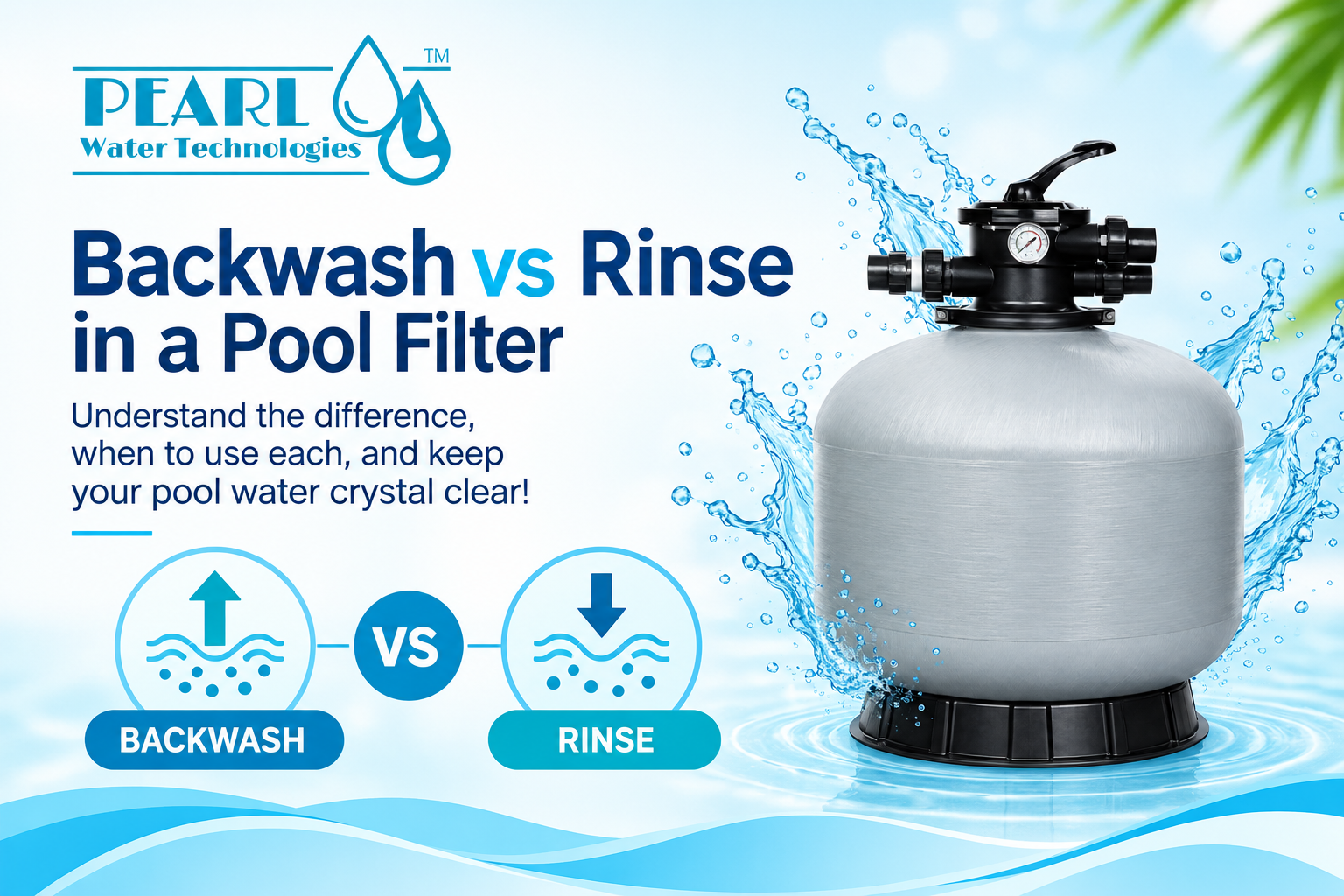
Backwash reverses the water flow through the sand filter to flush trapped dirt out of the sand bed and send it to waste. Rinse runs water in the normal direction, straight to waste, for 30 to 60 seconds. This settles the sand bed and flushes out loose dirt so it doesn’t return to your pool. Always do the rinse after backwashing, then switch back to Filter.
A swimming pool sand filter traps dirt, oil, algae and fine debris in a bed of filter sand as water passes through. Over time the sand gets clogged, pressure rises and water flow drops.
Backwashing fixes this by sending water through the filter in the opposite direction. The reversed flow lifts and loosens the sand, and the trapped dirt leaves through the waste line. If you want to see how the filter is built and how the valve connects, our pool filter range shows the models and specifications.
After a backwash, the sand bed is disturbed and some dirty water remains in the filter body and pipework. Rinse sends water through in the normal downward direction, straight to waste. This:
Feature |
Backwash |
Rinse |
|---|---|---|
Water direction |
Reverse (up through the sand) |
Normal (down through the sand) |
Purpose |
Remove trapped dirt from the sand |
Re-settle sand, clear residual dirty water |
Typical duration |
2 to 3 minutes, until sight glass runs clear |
30 to 60 seconds |
Goes to |
Waste |
Waste |
When |
When pressure rises or flow drops |
Right after every backwash |
Skip it? |
No, when the filter is dirty |
No, never skip after backwash |
Don’t backwash on a fixed calendar alone. Use the pressure gauge as your guide:
For many pools this lands around once a week, but heavily used, tree-covered or commercial pools such as hotel and resort pools may need it more often. Avoid backwashing too often, because a slightly dirty bed actually filters finer particles better.
If pressure stays high right after backwashing, or water stays cloudy, the issue is usually not a missed backwash. Possible causes:
In these cases, a sand change or a correctly sized upgrade is the fix. You can compare options on our swimming pool sand filter page, and read more maintenance guides in our blog library.
Backwash cleans the sand. Rinse settles it and clears out the leftover dirty water. Always run them as a pair, in that order, and use the pressure gauge to decide when. Do this and your filter will last longer and your water will stay clearer. If your current filter is struggling, explore the Pearl Water pool filter range, and browse more pool care tips on the Pearl Water blog.
1. Is rinse the same as backwash?
No. Backwash reverses the water flow to clean the sand. Rinse runs water in the normal direction to settle the sand and flush leftover dirty water.
2. Do I have to rinse after backwashing?
Yes. Skipping it can send loose dirt back into the pool and leave the bed uneven.
3. How long should I rinse a pool filter?
About 30 to 60 seconds is typical.
4. How often should I backwash a pool sand filter?
When the pressure gauge rises about 8 to 10 psi above the clean baseline, often around once a week for average pools.
5. Can I backwash with the pump on?
You can run the pump during backwash, but you must switch the pump off before moving the valve handle to any new position.
Leave A Comment