29-Oct-2026
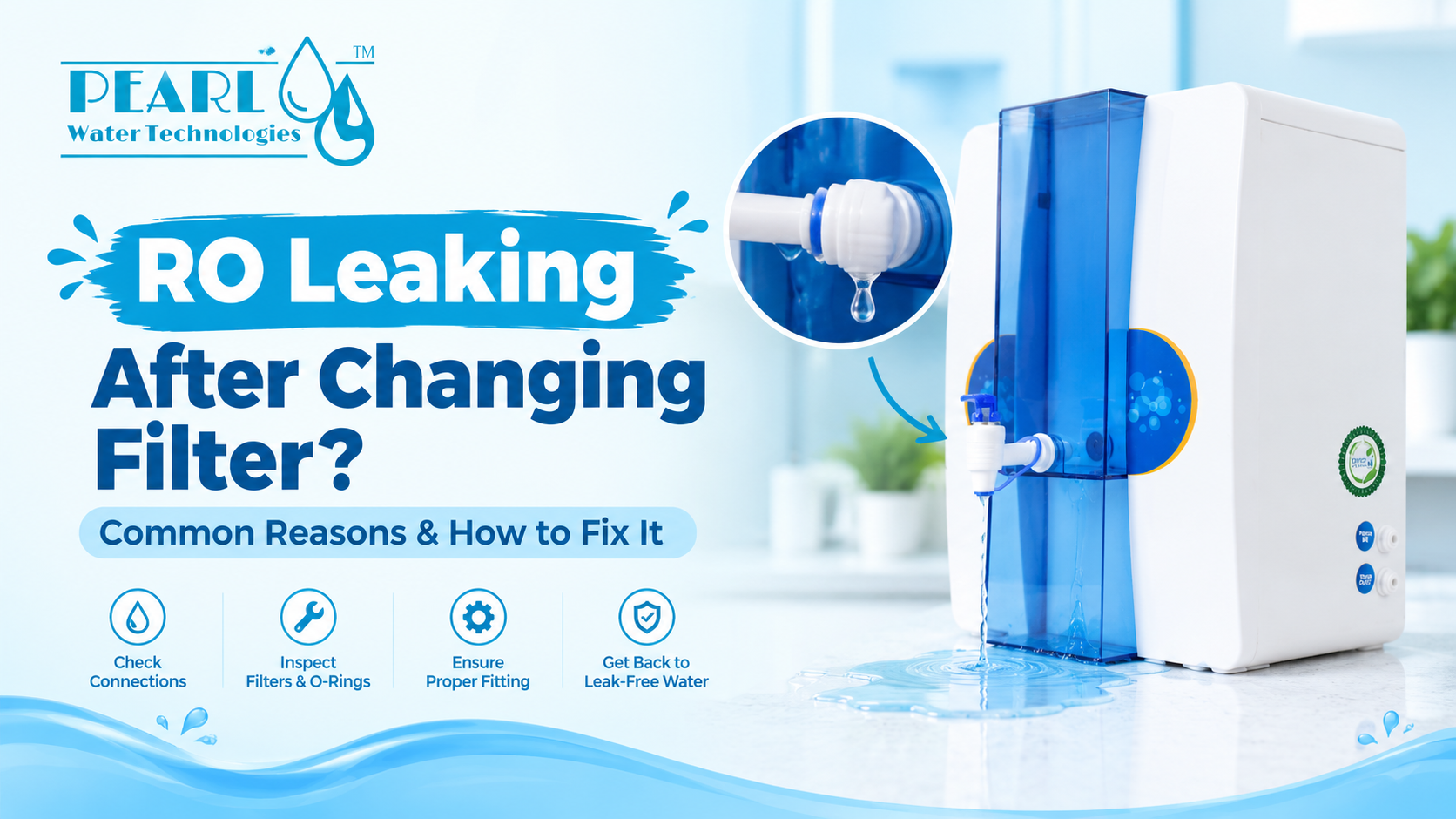
Why Is My RO Leaking After Changing the Filter?
An RO purifier leaks after a filter change mainly because a seal or connection was disturbed during the service. The usual causes are a missing, twisted or dry O-ring, a cartridge housing that is not tightened or seated properly, a push-fit tube that is not fully locked, a cross-threaded housing or an over-tightened fitting. These are all fixable at home in most cases.
If water is dripping from a joint, the base or the tubing, switch off the supply and follow the steps below. Do not keep the purifier running while it leaks.
The O-ring seals the housing. If it was left out, pinched in the thread or nicked, water escapes from the housing joint. This is the most common cause after a kit change.
A dry O-ring can fold or roll as you tighten the housing, which breaks the seal. A thin film of food-grade silicone grease helps it seat properly.
A loose housing leaks at the thread. An over-tightened one can crack the housing or deform the O-ring. Hand-tight plus a small extra turn is usually enough, unless the manual says otherwise.
If the housing is started at an angle, the threads do not mate and it leaks even when tight. Unscrew it fully and refit it straight.
Quick-connect tubes must be pushed all the way in, past the collet. A tube that is only partly inserted looks connected but leaks or pops out under pressure. A tube with an uneven or crushed cut also leaks.
If the cartridge sits crooked or at the wrong depth, the housing cannot close fully, and the seal gets pushed out of position.
An old housing, a dropped one or one with an over-tightened elbow fitting can crack. This type of leak will not stop with tightening. The damaged part must be replaced.
Blocked filters or a choked line raise the pressure inside the housing. A joint that held before may start to leak. Check for a clogged sediment filter or a wrong cartridge order.
Where the water appears |
Most likely cause |
|---|---|
Around the housing, at the thread |
O-ring problem or loose or cross-threaded housing |
At the top, where the tube enters |
Tube not fully inserted or locked, or a bad cut |
From the bottom of the housing |
Cracked housing or worn O-ring |
From the membrane housing end cap |
Membrane O-ring or cap not seated |
From the tank connection |
Loose tank fitting or damaged tank valve |
Continuous drip at the drain line |
Drain tube loose, or ASO or flow restrictor issue |
Wet base with no visible drip |
Slow weep from a joint. Dry and re-check for 15 minutes |
Using genuine, correctly sized parts prevents most leaks. See the complete RO filter kit and the individual cartridges:
Get professional help if:
A leaking RO wastes water, damages the cabinet and floor and can short the electrics. If hard water or high pressure keeps causing failures, consider the RO water purifiers range or a water softener to reduce wear on seals and parts.
More service guides are in the Pearl Water blog
1. Why is my RO leaking after I changed the filter?
A seal or connection was disturbed during the change. The most common causes are a missing or twisted O-ring, a loose or cross-threaded housing and a push-fit tube that is not fully locked.
2. Is a small RO leak dangerous?
It is not dangerous to drink the water, but it wastes water, damages floors and cabinets and can reach the electrical parts. Stop the supply and fix it promptly.
3. How do I stop my RO housing from leaking?
Close the inlet, release the pressure, check and replace the O-ring, lubricate it with food-grade silicone grease, refit the housing straight and hand-tighten it.
4. Why is water leaking from the bottom of my RO?
It can come from a cracked housing, a worn O-ring, or water running down from a leaking joint above. Dry the unit and watch where the first drop forms.
5. Can I use a wrench to tighten the RO housing?
Avoid it unless the manual says so. Over-tightening can crack the housing or deform the O-ring and make the leak worse.
Action completed successfully.

Leave A Comment