Pearl Water RO Membranes: Your Path to Refreshing Water
20-Sep-2023
If you've ever wondered why your tap water tastes a little off, or why some homes have that constant "hard water" film on their glasses, the answer usually comes down to what's dissolved in the water — salts, minerals, and sometimes things you really don't want to be drinking, like heavy metals or bacteria. An RO membrane is the part of your water purifier that actually deals with all of that.
This isn't a sales pitch dressed up as an article — here's what an RO membrane really does, in plain terms, and how to think about choosing one.
So What Does an RO Membrane Actually Do?
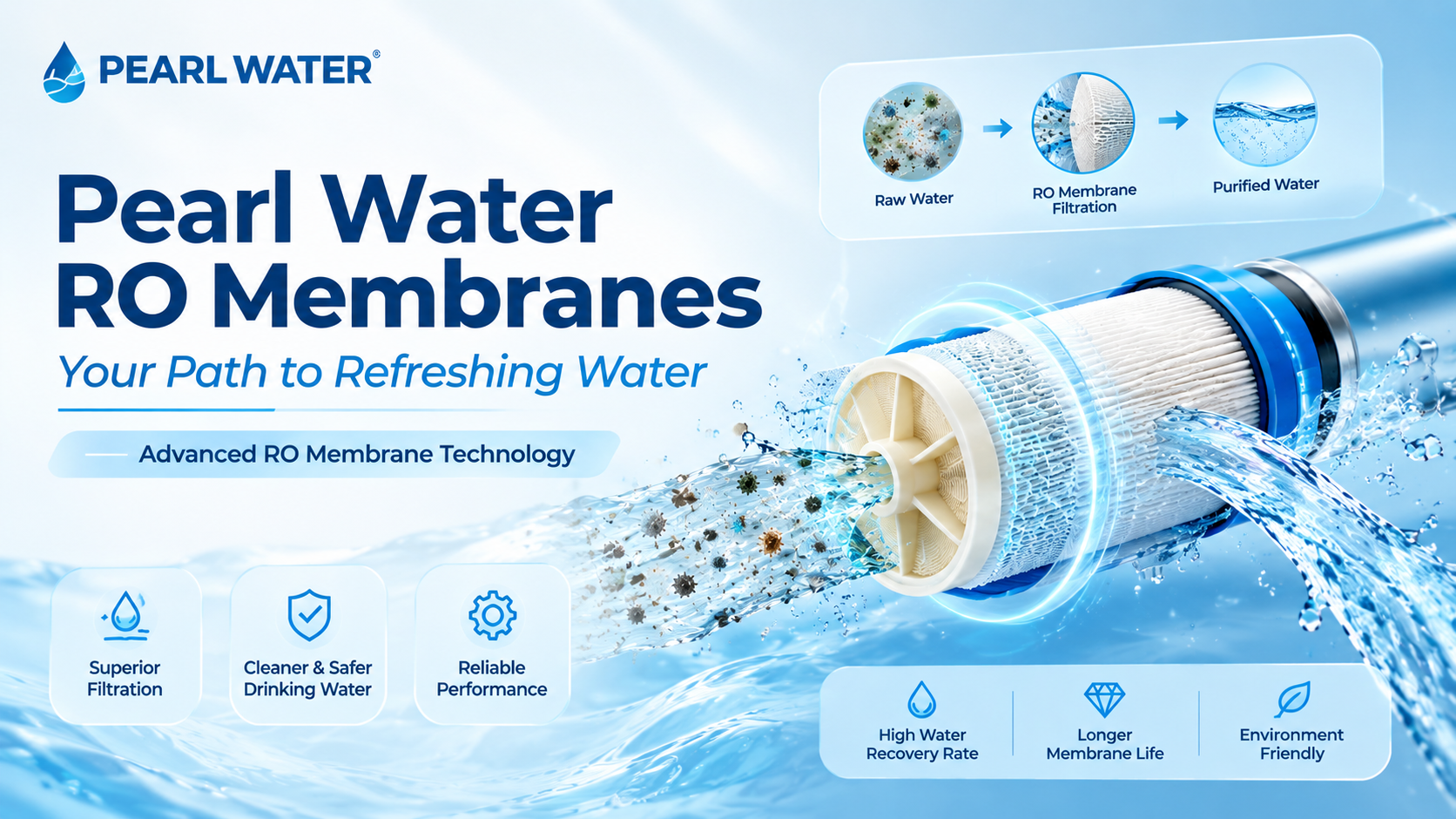
Think of it like an incredibly fine filter — but instead of blocking things the way a tea strainer blocks tea leaves, it works almost like a bouncer at a club door that only lets water molecules through, one at a time, while turning away salts, heavy metals, chlorine, bacteria, and viruses. Water gets pushed through under pressure, and what comes out the other side is clean.
That's the plain-English version. If you're curious about the actual science behind how it does this at a molecular level, we've written a full breakdown here: What Is an RO Membrane and How Does It Work? — worth a read if you like understanding the "why," not just the "what."
Why Your Water Tastes Different Afterward
This is the part people notice first, even before they think about safety. Water with high TDS (that's "Total Dissolved Solids" — basically, everything dissolved in your water that shouldn't be there) often tastes salty, metallic, or just "off" in a way that's hard to describe. A good RO membrane strips most of that out, which is why water from a properly working RO system usually tastes noticeably cleaner and lighter.
Skip the marketing claims and check these instead:
Salt rejection rate — this tells you what percentage of dissolved salts the membrane actually removes. Look for 90% or higher for home use.
Capacity (GPD) — measured in Gallons Per Day, this tells you how much water the membrane can process. Most homes do fine with 75–100 GPD.
Compatibility with your existing purifier — membranes come in standard sizes, so check yours fits before buying.
Warranty — a company confident in their membrane will back it with a real warranty, not just a return window.
Pearl Water's 80 GPD RO Membrane Classic covers most households comfortably, backed by a 1-Year Warranty. If you want to see the full range and compare capacities, browse Domestic RO Membranes.
A Membrane Doesn't Work Alone
Here's something a lot of people don't realize: the membrane is only as good as what's protecting it. Before water ever reaches the membrane, it should pass through a sediment filter (which catches sand, dust, and rust) and a carbon filter (which removes chlorine and odour). Skip those, or let them get old and worn, and your expensive membrane ends up doing extra work it shouldn't have to — which shortens its life. If you'd rather buy all three together, a complete RO Filter Kit is usually the simplest option.
Beyond Just Drinking Water
Cleaner water isn't just about what comes out of the tap for drinking — it changes:
Cooking — food genuinely tastes different when it's not fighting against salty or metallic-tasting water
Tea and coffee — both are mostly water, so the quality of your water directly affects the taste of your cup
Ice cubes — cloudy, mineral-flecked ice is usually a TDS problem, and it's one of the easiest ways to actually see the difference a membrane makes
How Long Does a Membrane Actually Last?
Most home RO membranes need replacing every 12–24 months, depending on your water source and how well the pre-filters ahead of it are maintained. The easiest way to know for sure — rather than guessing — is to test your water with a TDS meter every so often. If the reading starts climbing, that's your membrane telling you it's tiring out.
FAQs
1. How do I know if I actually need an RO purifier?
If your water tastes salty, metallic, or leaves white residue on utensils and glasses, that's usually a sign of high TDS — a good candidate for RO purification. Municipal water with already-low TDS may not need it as urgently.
2. Does an RO membrane remove good minerals along with the bad stuff?
Yes, to some extent — which is why some purifiers add a mineral cartridge after the membrane stage, to add back a small amount for taste and nutrition.
3. How often should I replace my RO membrane?
Typically every 12–24 months, though this depends on your water source and how well your sediment and carbon filters are maintained.
4. Will an RO membrane make my water taste "flat"?
Some people notice this initially, since RO water lacks the minerals that give tap water its familiar taste. It usually isn't a sign anything's wrong — just a different taste profile.
5. How do I check if my RO membrane is still working properly?
Test your water with a TDS meter — compare the reading before and after purification. If the purified water's TDS starts creeping up over time, it's a sign the membrane needs attention.


Leave A Comment