|
Output capacity |
100 LPH (litres per hour) |
|
Operation |
Fully Automatic |
|
Duty cycle |
Heavy duty, up to 10 hours non-stop |
|
Water recovery rate |
50–70% |
|
Inlet TDS |
Up to 1,000 ppm |
|
Material of construction |
Fully stainless steel |
|
Maintenance |
Minimal, plug-and-play operation |
|
Certification |
ISO certified |
|
Warranty |
1 Year |
|
Replacement window |
10 days |


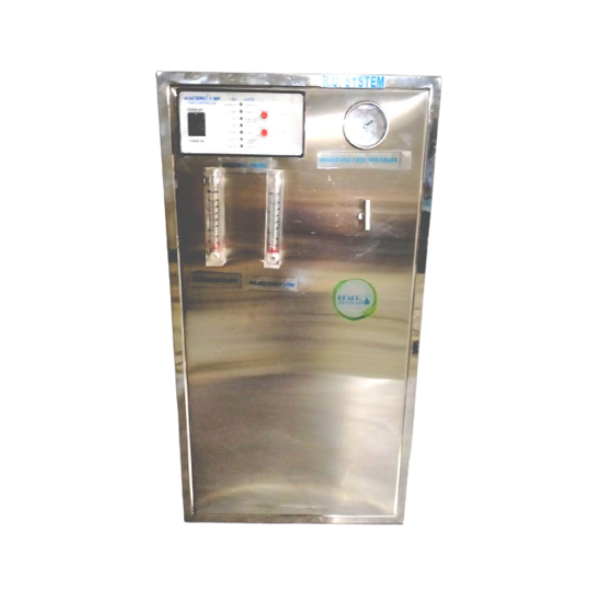
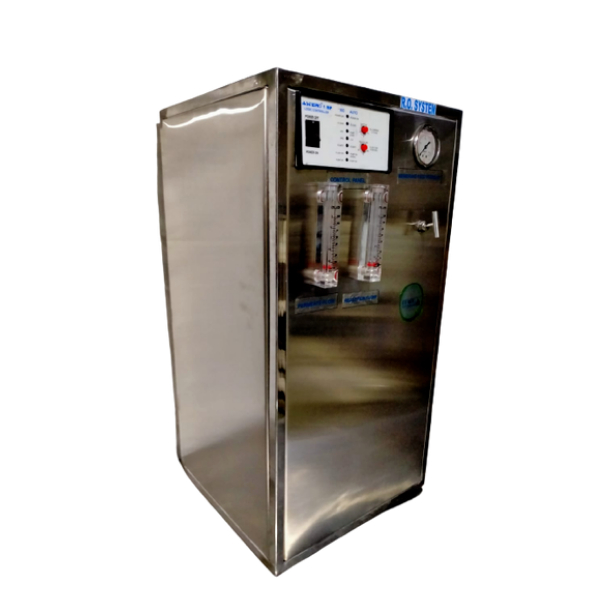
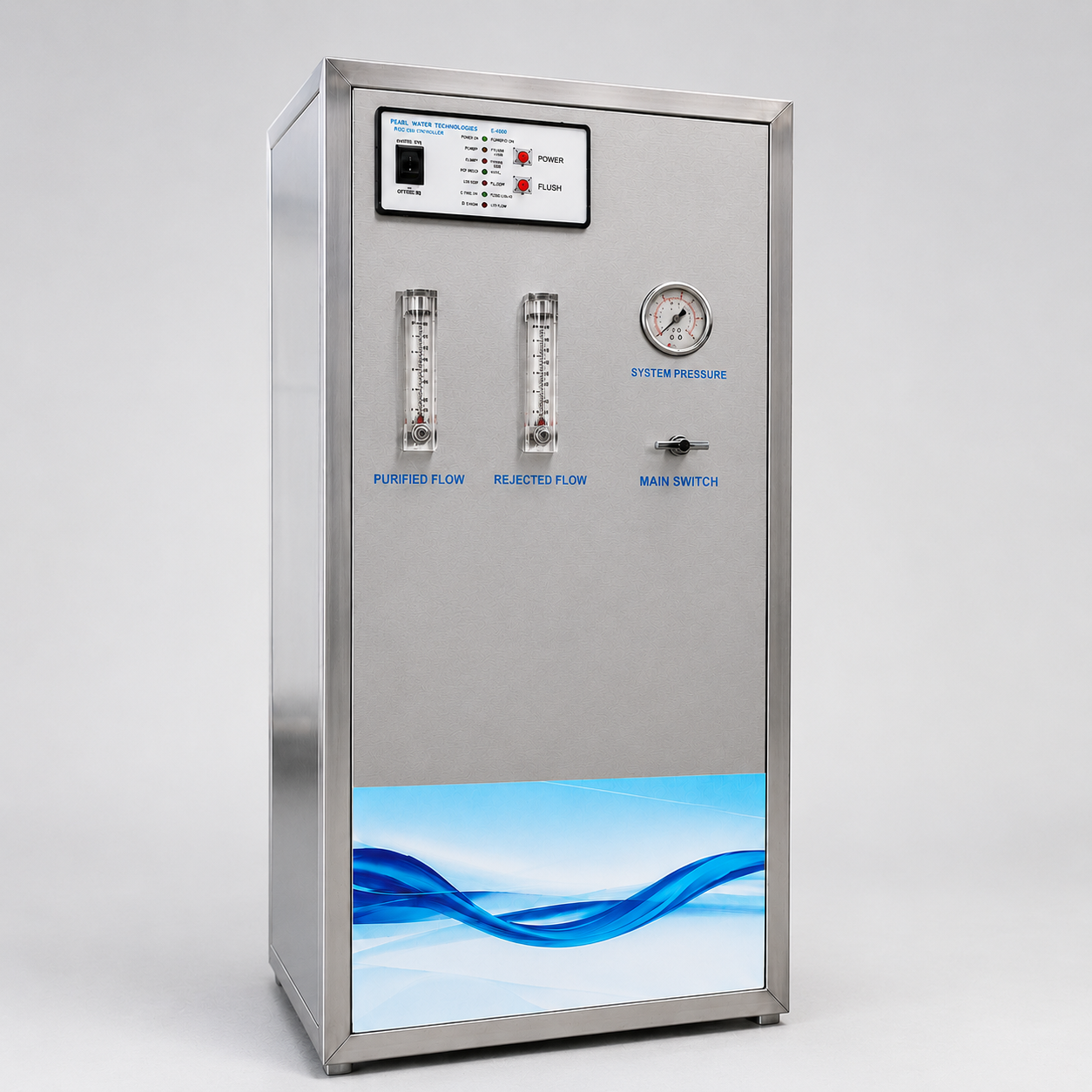
Institutions, offices, hotels, and small-to-mid-size commercial operations that need a steady, unattended supply of purified water outgrow domestic RO purifiers fast — a single household unit simply isn't built for continuous, high-volume output. The Pearl Water 100 LPH Industrial RO Plant is a fully automatic, plug-and-play reverse osmosis system built to deliver 100 litres of purified water per hour, running heavy-duty cycles of up to 10 hours non-stop with negligible manual intervention. Built in fully stainless-steel construction and handling inlet water with TDS up to 1,000 ppm at a 50–70% water recovery rate, it's ISO certified and sized specifically for small schools, hospitals, institutes, offices, hotels, and residential complexes that need dependable purified water without the complexity of a full industrial installation. Pearl Water's guide on what an industrial RO plant is and how it works covers where this capacity typically fits relative to smaller and larger systems.
Who Needs a 100 LPH RO Plant?
Choosing the right RO plant capacity comes down to how many people you're serving and how much water they need daily. A 100 LPH system produces 100 litres every hour it runs — so over a typical 8–10 hour operating day, that's roughly 800–1,000 litres of purified water, enough to comfortably cover drinking, cooking, and light operational water needs for a small institution or commercial site.
This capacity is commonly used by:
Small schools, hospitals, and institutes where consistent daily access to purified water matters but overall demand isn't large-scale.
Small to mid-size offices needing reliable drinking water without domestic purifiers scattered across floors.
Hotels and hospitality businesses covering both guest drinking water and kitchen use.
Residential complexes supplying purified water to a shared facility rather than individual units.
Small commercial or light industrial operations needing modest volumes of purified water for cleaning, production support, or general use.
If your daily requirement is noticeably higher — larger institutions, food processing, or facilities serving hundreds of people — Pearl Water's 200 LPH, 250 LPH, or 500 LPH systems are worth comparing before committing to this capacity.
How Does the 100 LPH RO Plant Work?
This system runs through a complete multi-stage filtration process, not just a single membrane:
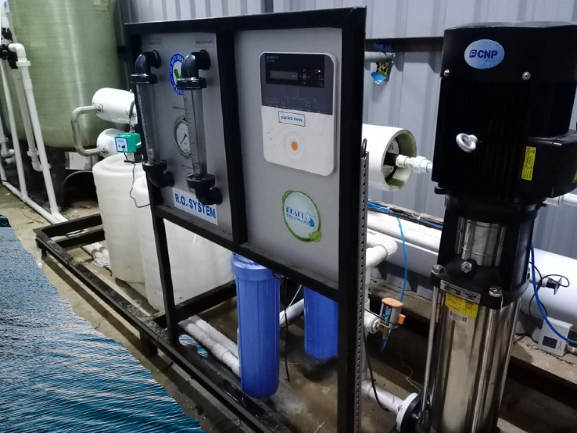
Raw water pump forces incoming raw water into the filtration system.
Dual Media Filter (DMF) removes larger suspended impurities from the raw water.
Activated Carbon Filter (ACF) removes color and odor from the water ahead of the RO stage.
Doser injects anti-scalant to prevent scaling buildup on the RO membrane over time.
Micron filters remove fine particles down to 5 microns, protecting the membrane from finer sediment.
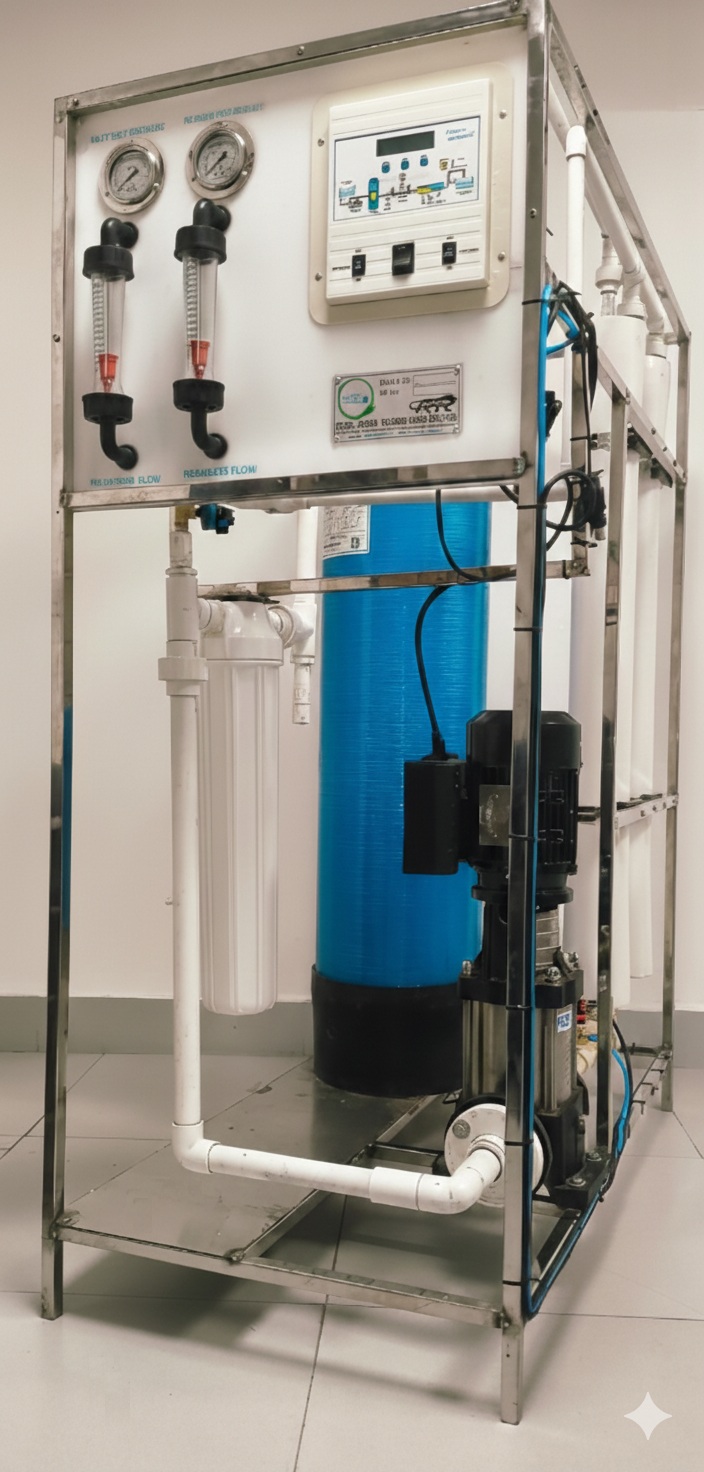
High-pressure pump (SS 304 construction) pushes water through to the RO membranes at the pressure needed for reverse osmosis to occur.
RO membranes (0.0001 micron) remove up to 90% of dissolved salts and heavy metals such as lead and mercury.
Online rotameter measures the permeate (purified water) flow rate in real time.
Microprocessor-based control panel manages the entire process automatically, minimizing manual intervention.
The whole system sits on a robust, MS powder-coated frame that keeps the skid compact and stable for a fixed installation.
Standard 100 LPH vs Pearl Lite Series 100 LPH
Pearl Water also offers a 100 LPH Pearl Lite Series variant at a notably lower price point. If you're comparing the two:
|
Factor |
Standard 100 LPH RO Plant |
Pearl Lite Series 100 LPH |
|---|---|---|
|
Output capacity |
100 LPH |
100 LPH |
|
Construction |
Fully stainless steel |
Lighter-duty build (confirm specification with Pearl Water) |
|
Best suited for |
Continuous heavy-duty commercial or institutional use |
Lighter-duty or budget-conscious installations with lower continuous runtime |
|
Price positioning |
Higher upfront cost |
Lower upfront cost |
If your facility runs the plant for extended hours daily under continuous demand, the standard heavy-duty build is generally the safer long-term choice. For lighter or intermittent use, the Lite Series may offer better value — confirm the exact build specification difference with Pearl Water before deciding, since construction details can vary between listings.
Related Products
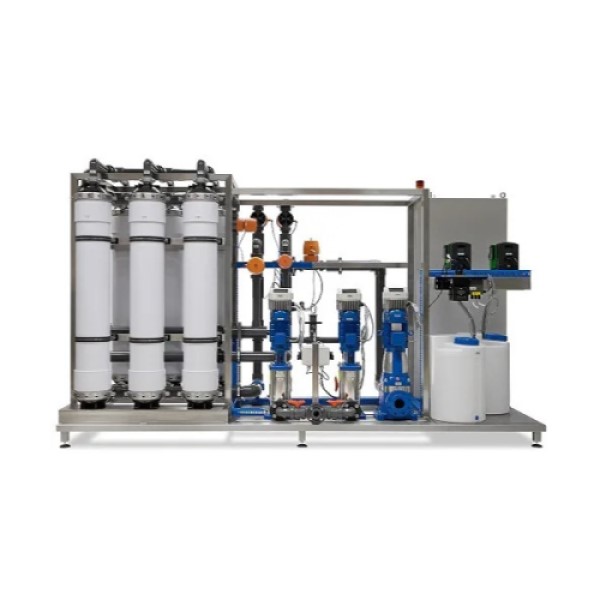
If your daily demand is higher than this capacity covers, compare the 200 LPH Semi-Automatic RO Plant, 250 LPH Automatic RO Plant, or 500 LPH Automatic RO Plant. For smaller or lighter-duty needs, the 50 LPH Automatic RO Plant or the 100 LPH Pearl Lite Series may be a better fit. For plants requiring finer pre-treatment ahead of RO, Pearl Water also offers a dedicated Ultra Filtration Plant. Browse the full Industrial RO Plant range for all available capacities, or check Industrial RO Spares for replacement parts and maintenance accessories like TDS meters and rotameters.
Reliable Purified Water, Built for Daily Commercial Use
Whether you're supplying a school, a hotel kitchen, or a small commercial facility, the Pearl Water 100 LPH Industrial RO Plant is built to run day after day with minimal intervention, backed by ISO-certified manufacturing and a full-year warranty. Order it today and give your facility a dependable, purified water supply it can count on.
|
Output capacity |
100 LPH (litres per hour) |
|
Operation |
Fully Automatic |
|
Duty cycle |
Heavy duty, up to 10 hours non-stop |
|
Water recovery rate |
50–70% |
|
Inlet TDS |
Up to 1,000 ppm |
|
Material of construction |
Fully stainless steel |
|
Maintenance |
Minimal, plug-and-play operation |
|
Certification |
ISO certified |
|
Warranty |
1 Year |
|
Replacement window |
10 days |
| Customer Rating | |
| Price |
₹49,999
|
| Availability |
3 in stock
|
Buying Guide: Choosing the Right Capacity and Configuration
Estimate your daily water requirement first. Multiply your expected daily operating hours by 100 (litres/hour) to see whether this capacity meets your needs, or whether a 200, 250, or 500 LPH system is more appropriate.
Check your raw water's TDS level. This plant is rated for inlet TDS up to 1,000 ppm — if your source water tests higher, discuss your water analysis with Pearl Water before ordering to confirm suitability.
Consider your recovery rate needs. A 50–70% recovery rate affects how much raw water you'll need to feed the system per litre of purified output — relevant if your raw water supply itself is limited or costly.
Decide between automatic and semi-automatic. This model is fully automatic; Pearl Water also offers semi-automatic variants at this and other capacities for facilities comfortable with slightly more manual oversight in exchange for a different price point.
Factor in installation space and plug-and-play setup. The stainless-steel skid design is built for straightforward installation, but confirming your site's space and electrical requirements ahead of delivery avoids delays.
Installation and Maintenance Notes
Installation is designed to be plug-and-play, though proper electrical connection, water supply plumbing, and drainage for reject water should be planned before the unit arrives.
Routine maintenance is minimal by design, but periodic checks of the dosing system, micron filters, and RO membrane condition help maintain the rated recovery rate and output quality over time.
Monitor the online rotameter regularly — a drop in permeate flow rate is often the earliest sign that a filter stage needs attention or the membrane is nearing replacement.
The anti-scalant doser should be kept stocked and functioning, since scaling is one of the more common causes of reduced membrane performance in hard water areas.
Pearl Water's guide on what is reverse osmosis and how an industrial RO plant works is a useful reference for understanding the underlying process in more depth.
Required fields are marked *
What is a 100 LPH Automatic RO Plant? A 100 LPH Automatic RO Plant is a reverse osmosis water purification system designed to produce up to 100 litres of purified water per hour. It's suitable for commercial, institutional, residential-complex, and small industrial applications.
What is the inlet TDS capacity of this 100 LPH RO Plant? This RO plant is specified for raw water with an inlet TDS of up to 1,000 ppm. If your feed-water TDS is higher, the system should be evaluated based on your actual water analysis before purchase.
What is the water recovery rate of this RO Plant? The specification sheet states a 50–70% water recovery rate. Actual recovery can vary depending on feed-water quality, TDS, pressure, temperature, membrane condition, and operating conditions.
Is the 100 LPH RO Plant fully automatic? Yes. It's designed as a fully automatic RO plant and includes a microprocessor-based control panel to simplify operation.
How much purified water can a 100 LPH RO Plant produce? The system has a rated production capacity of 100 litres per hour. Actual output can vary depending on feed-water conditions and operating parameters.
Can this RO Plant operate continuously? It's described as a heavy-duty system capable of operating for up to 10 hours non-stop under suitable operating conditions.
What filtration stages are included in the 100 LPH RO Plant? The system includes a raw-water pump, dual media filter, activated carbon filter, dosing system, micron filter, high-pressure pump, RO membranes, online rotameter, and a microprocessor-based control panel.
Does this RO Plant remove dissolved salts and heavy metals? Yes. The reverse osmosis membranes reduce dissolved salts and contaminants, including certain heavy metals. Actual removal performance depends on the feed-water composition and operating conditions.
Is this 100 LPH RO Plant suitable for commercial use? Yes. Its 100 LPH capacity makes it suitable for businesses, institutions, commercial facilities, residential complexes, and other locations requiring a regular supply of purified water.
Does the RO Plant require a dosing system? Yes. The specifications include a dosing system intended to help prevent scaling of the RO membrane.
How is this different from the Pearl Lite Series 100 LPH plant? Both are rated for 100 LPH output, but they're positioned differently on build and price — the standard model here is built for sustained heavy-duty use, while the Pearl Lite Series is priced lower for lighter-duty applications. Confirm the exact construction difference with Pearl Water if continuous daily runtime is a priority.
What size facility or population can a 100 LPH plant realistically serve? As a general guide, this capacity suits smaller institutions like schools, small hospitals, offices, and hotels rather than large-scale facilities serving hundreds of people daily — for higher population counts, a 200, 250, or 500 LPH system is generally more appropriate.