|
Flow Rate |
20 LPH |
|
Capacity |
100 GPD |
|
Micron Rating |
0.0005 Micron |
|
Working TDS |
Up to 2000 PPM |
|
Material |
TFC (Thin Film Composite) |
|
Cartridge Type |
Solid Filter Cartridge |
|
Additional Component |
Integrated Flow Resistor |
|
Size |
12 Inch (30 cm) |
|
Diameter |
2 Inch |
|
Total Service Life |
8500 Litres |
|
Pack Size |
1 Piece (Single Unit) |
|
Installation |
Easy DIY Installation |


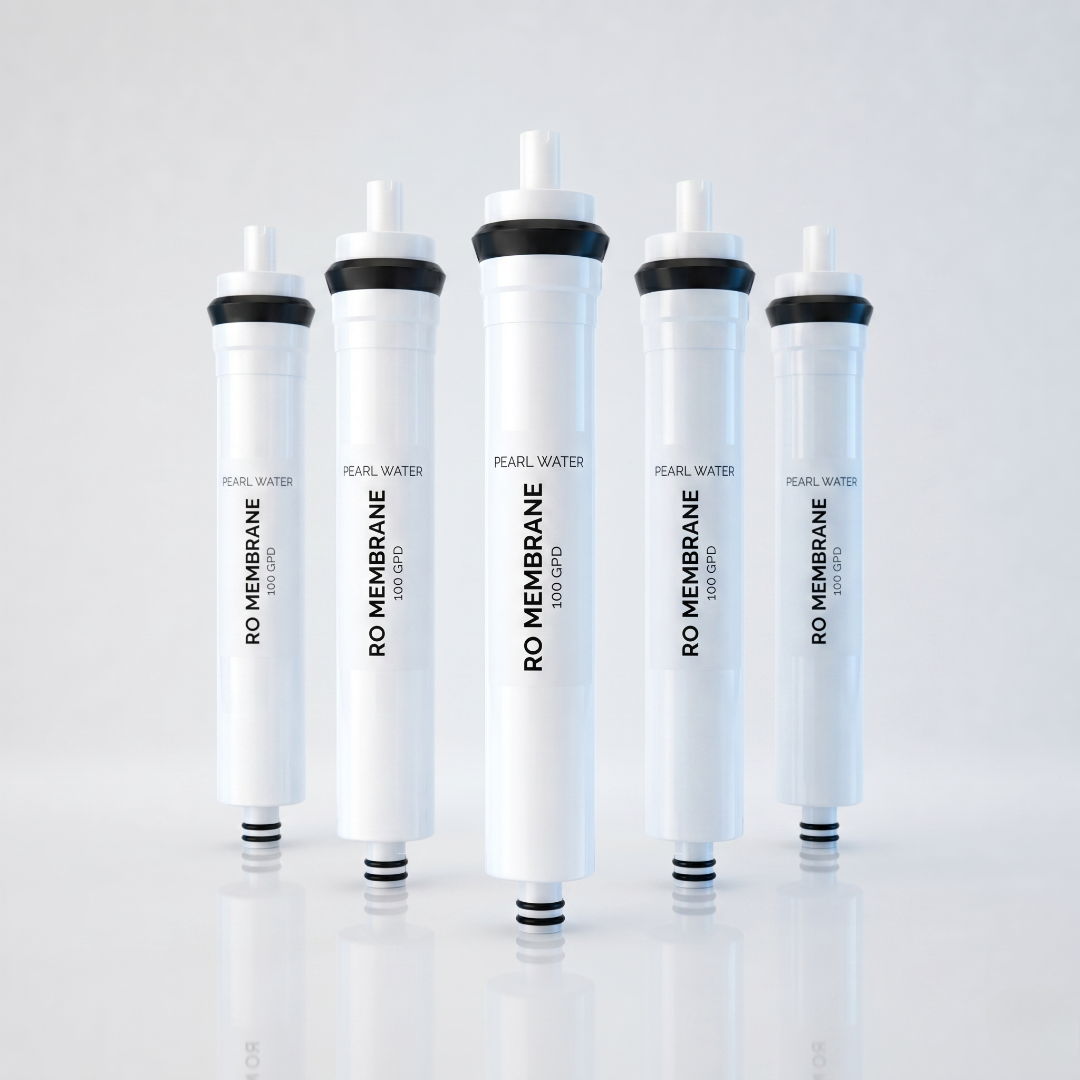
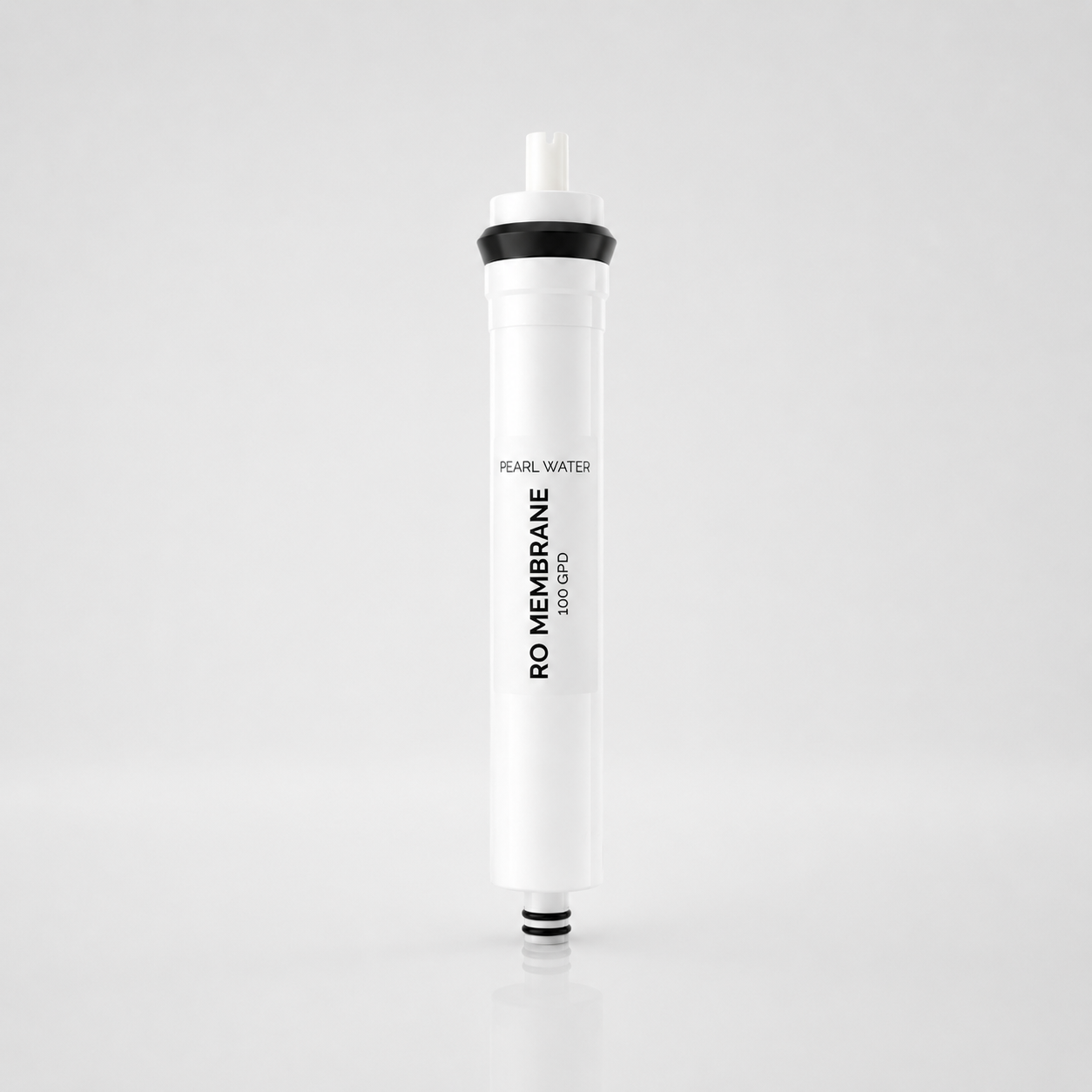
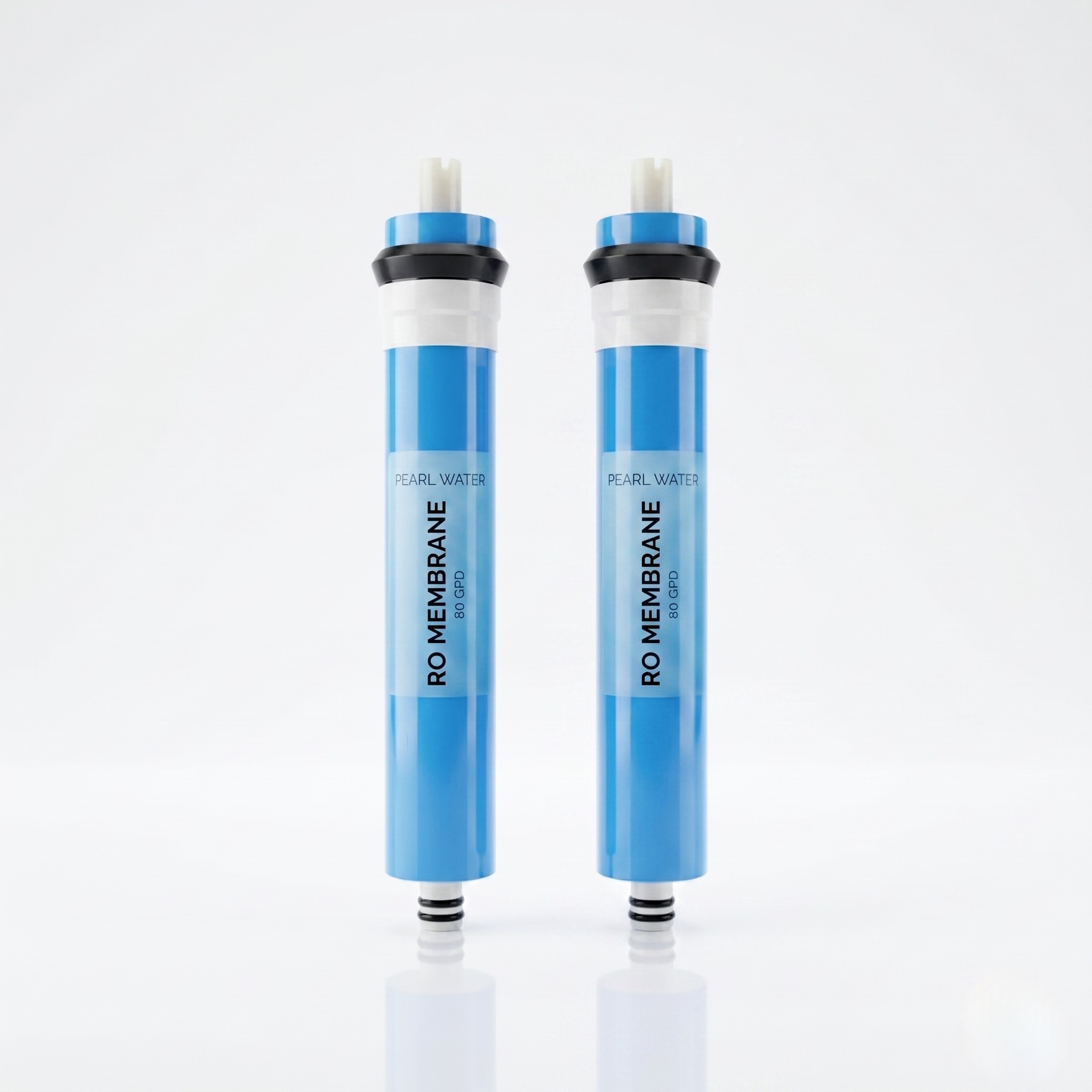
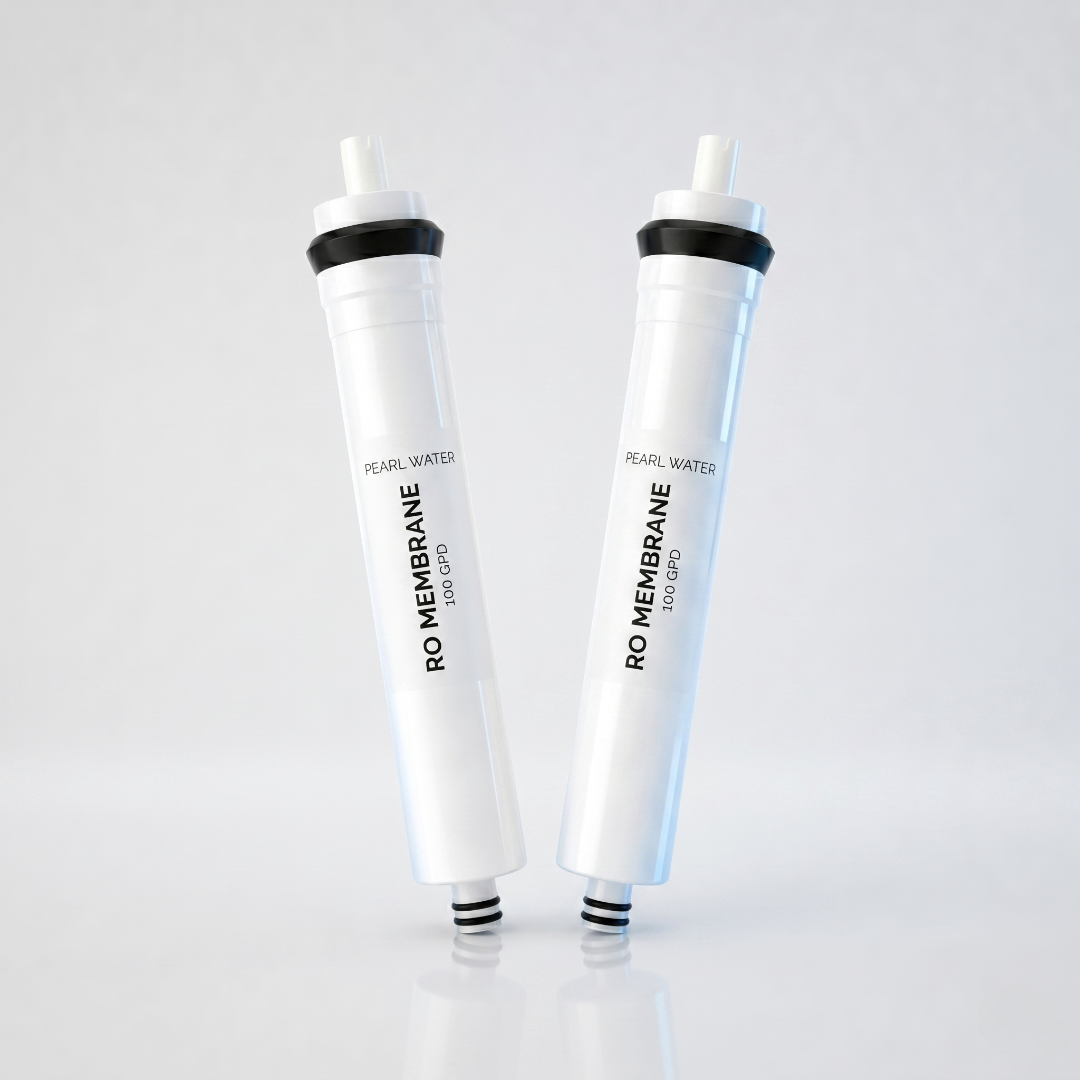
100 GPD RO Membrane Ultra with Flow Resistor – Solid Filter Cartridge for All Domestic Purifiers
If your RO water purifier is producing slow, low-quality, or bad-tasting water, the membrane is usually the first component to check. The 100 GPD RO Membrane Ultra with Flow Resistor from Pearl Water Technologies is built as a solid filter cartridge suited to all kinds of domestic water purifier systems, with an integrated flow restrictor to help regulate reject-water flow and maintain balanced membrane pressure.
What This Product Is
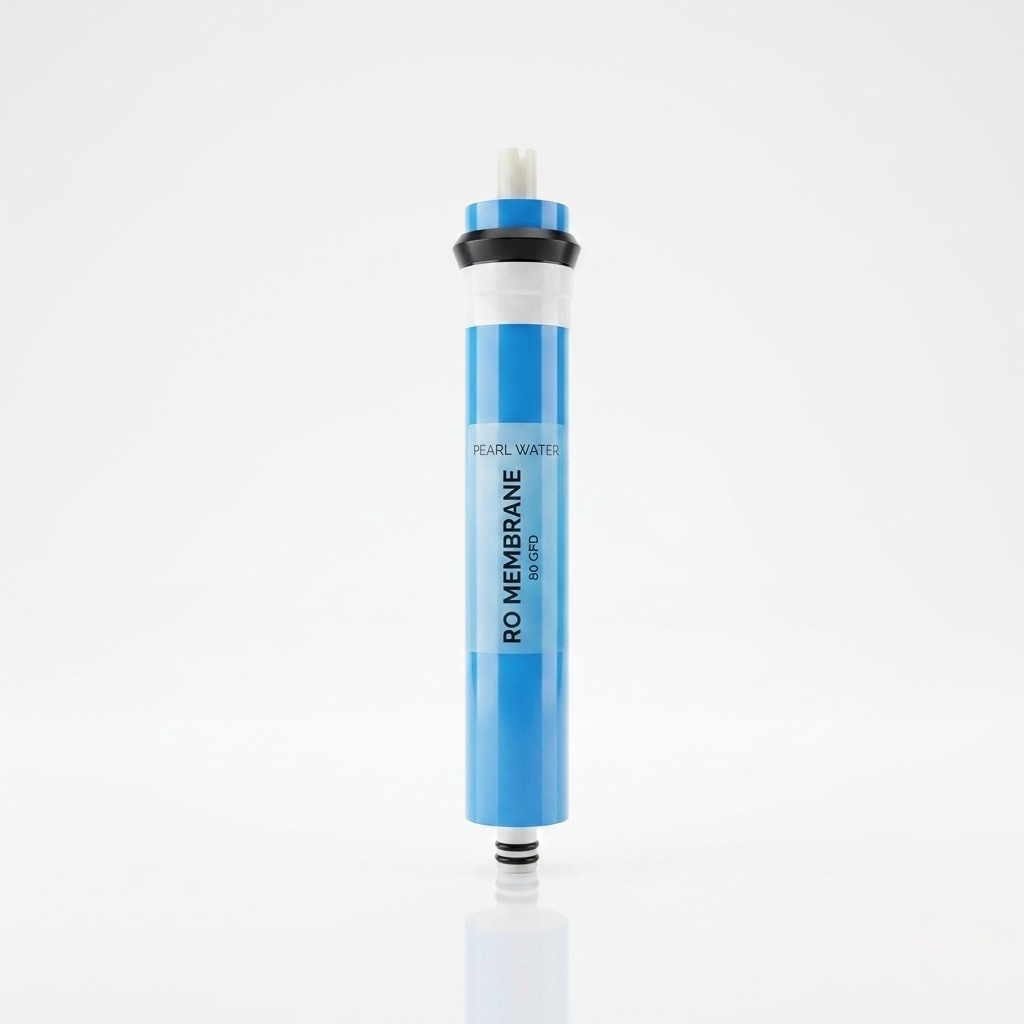
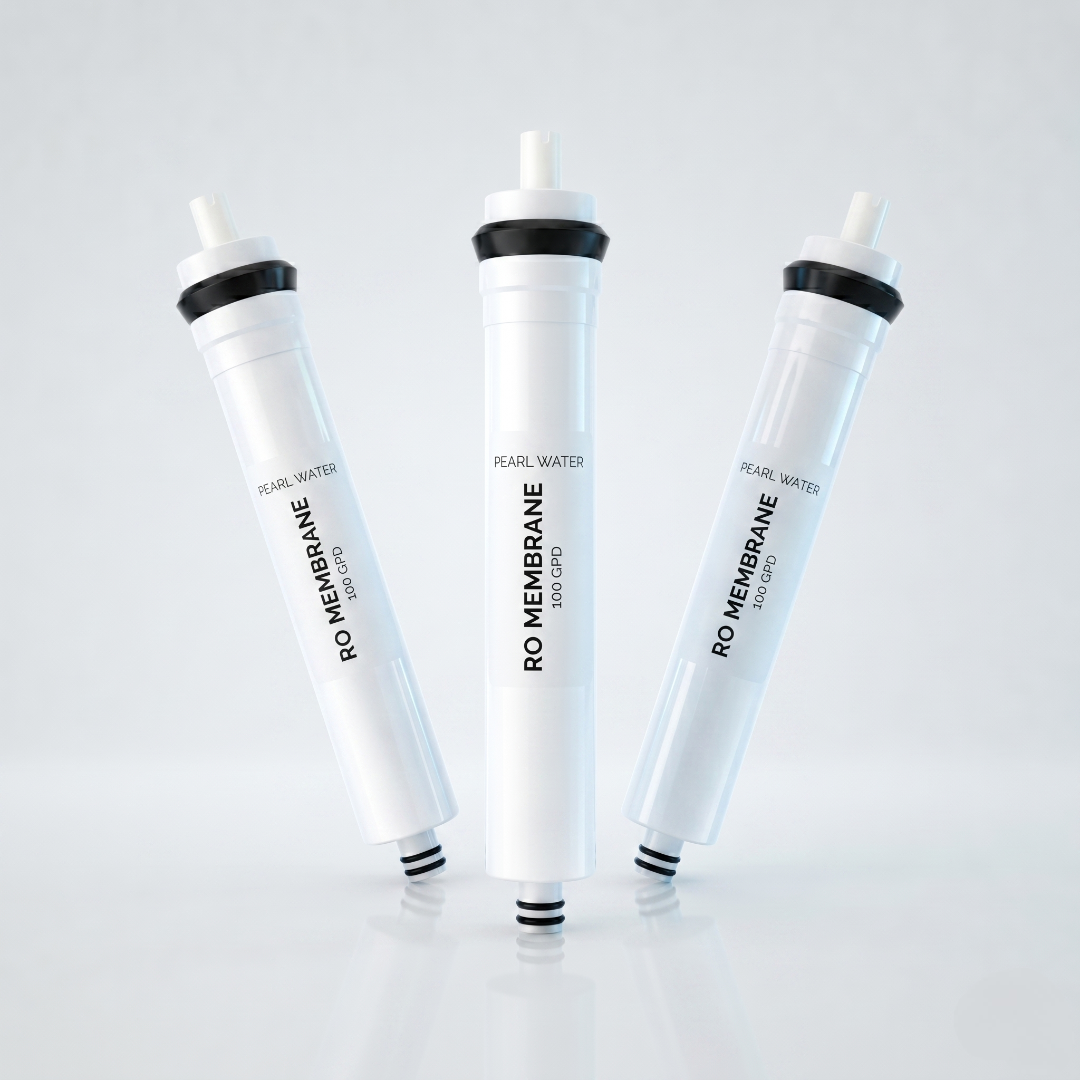
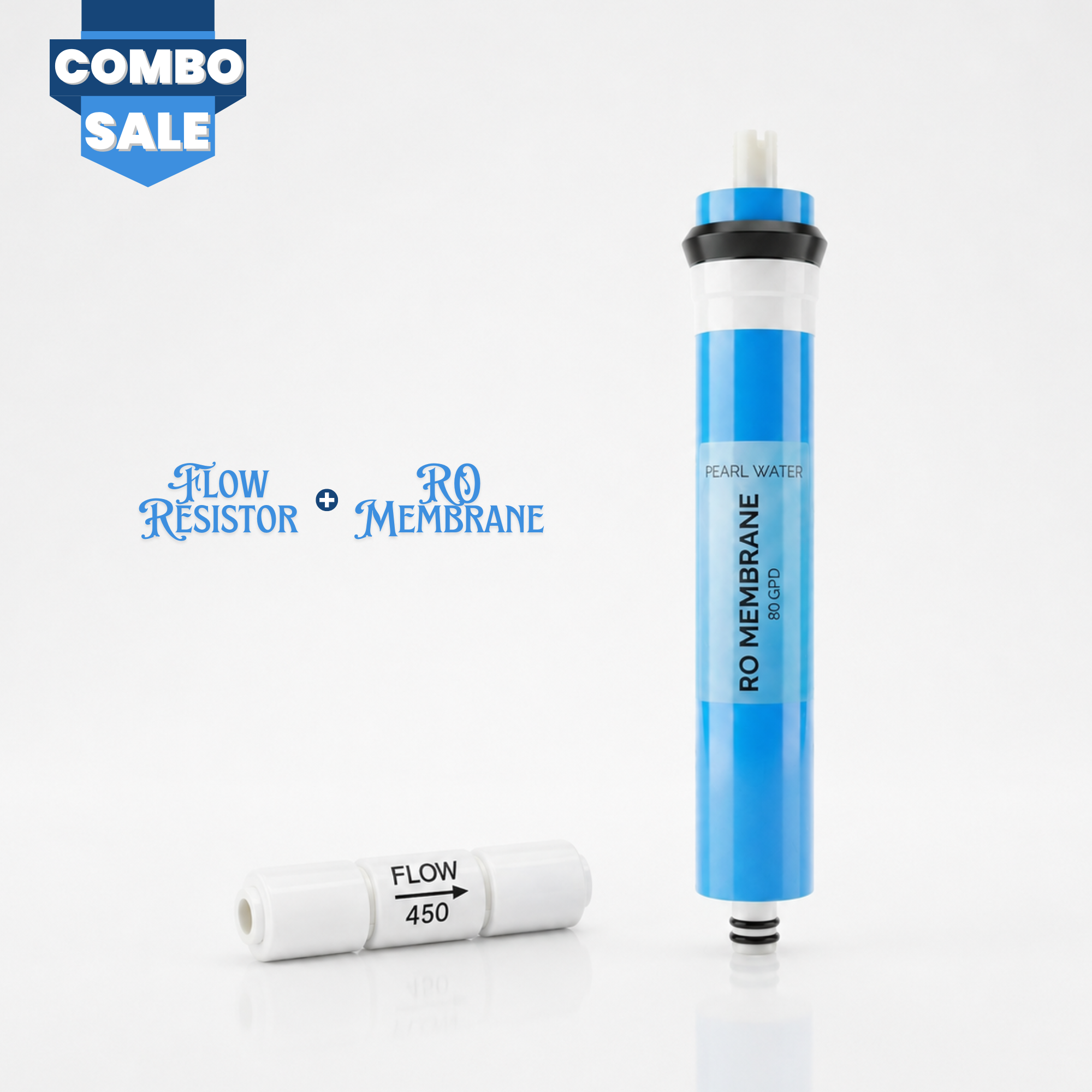
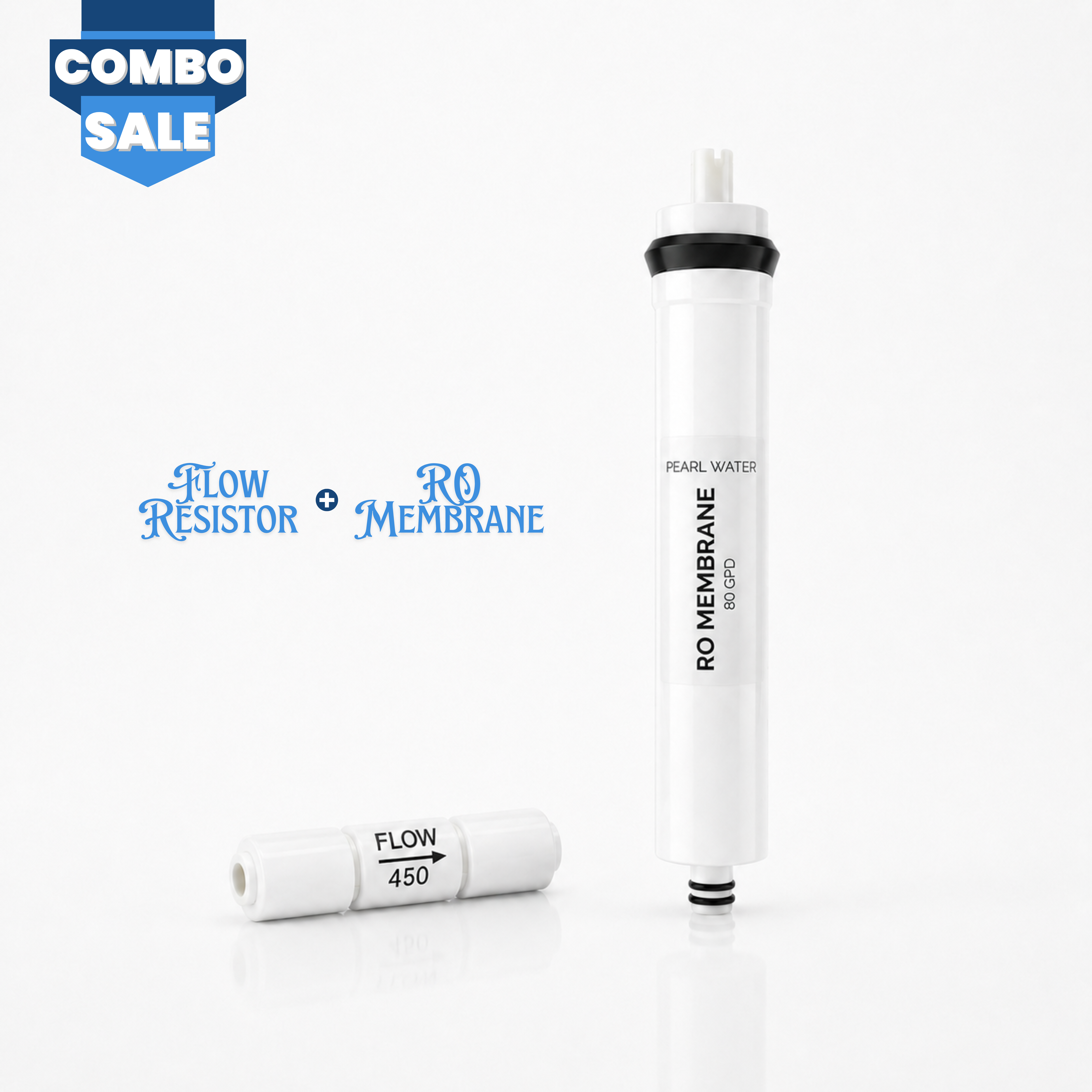
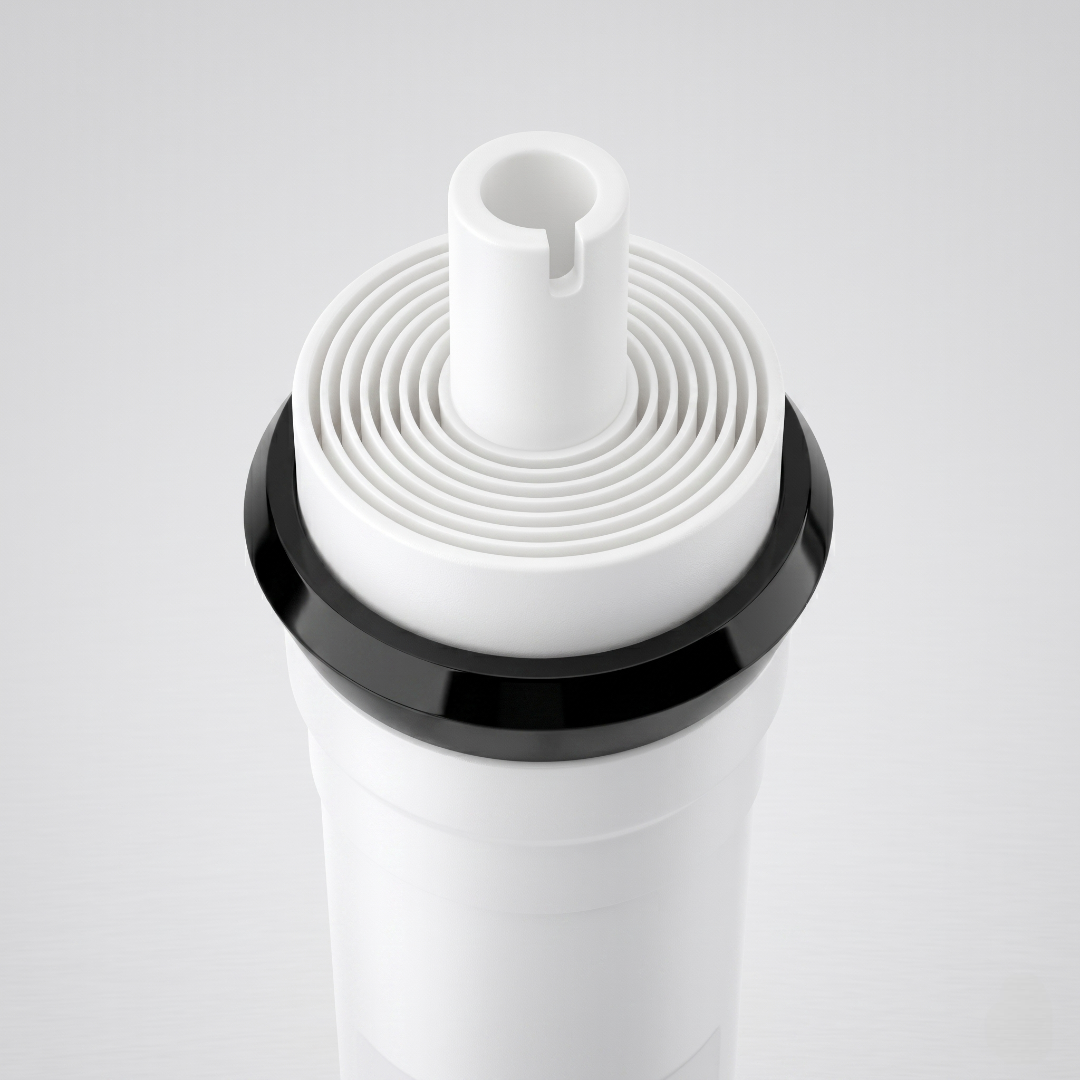
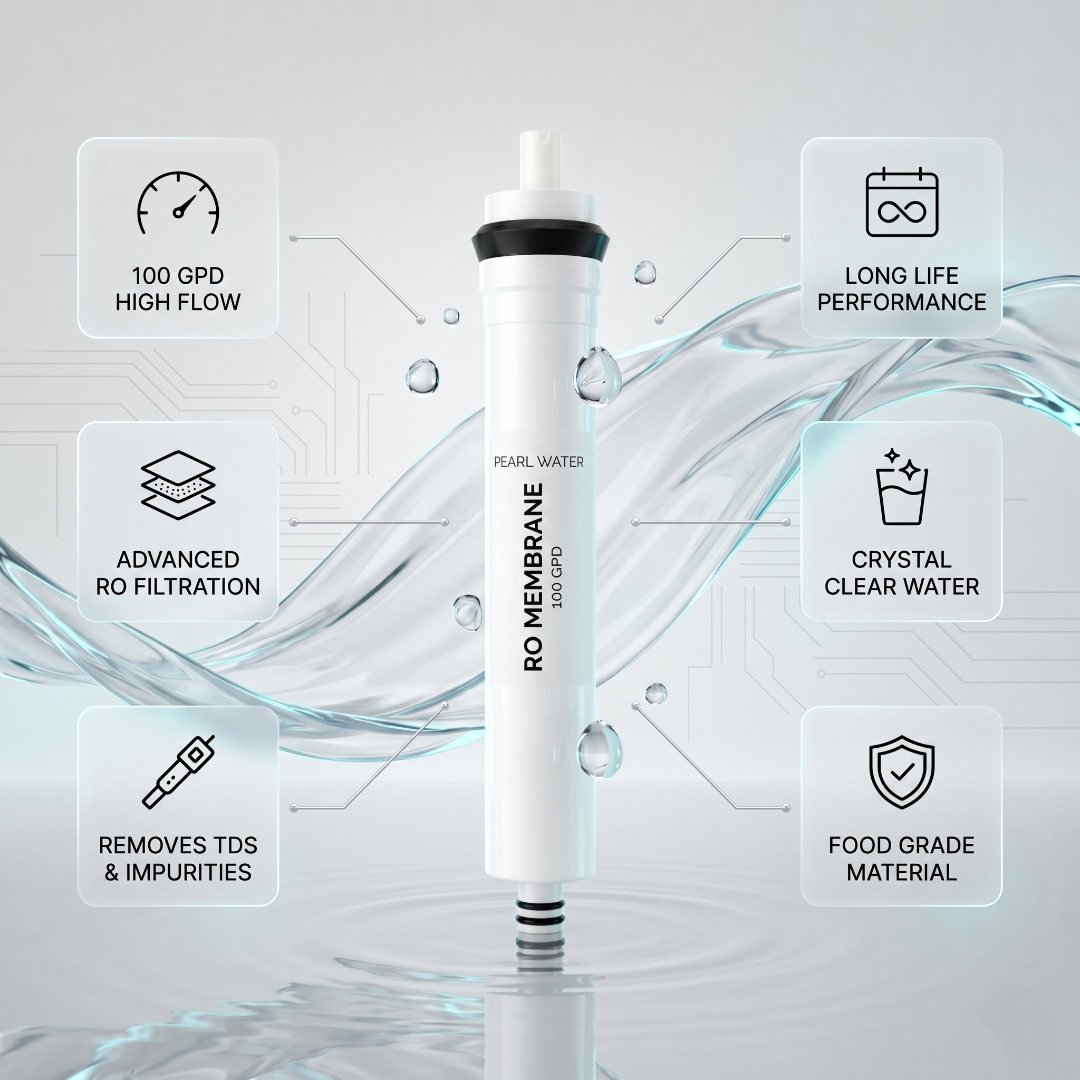
This is a 12-inch, 2-inch diameter TFC (Thin Film Composite) RO membrane, built as a solid, single-piece filter cartridge with a flow resistor. It carries a 20 LPH (litres per hour) flow rate, translating to a 100 GPD (gallons per day) rated capacity, and filters at a pore size of 0.0005 micron — fine enough to reject dissolved salts, heavy metals, bacteria, and most dissolved solids from tap or borewell water. It's built with a food-grade housing and an anti-bacterial membrane sheet, and is manufactured in India under Pearl Water Technologies' quality standards.
How an RO Membrane Works
At the core of every RO purifier is the membrane. Source water is pushed under pressure against a semi-permeable membrane surface. Pure water molecules pass through the microscopic pores, while dissolved salts, contaminants, and larger molecules are blocked and flushed out as reject water. This is why an RO membrane is the single most important component determining your purifier's output quality and TDS reduction.
What the Flow Resistor Does
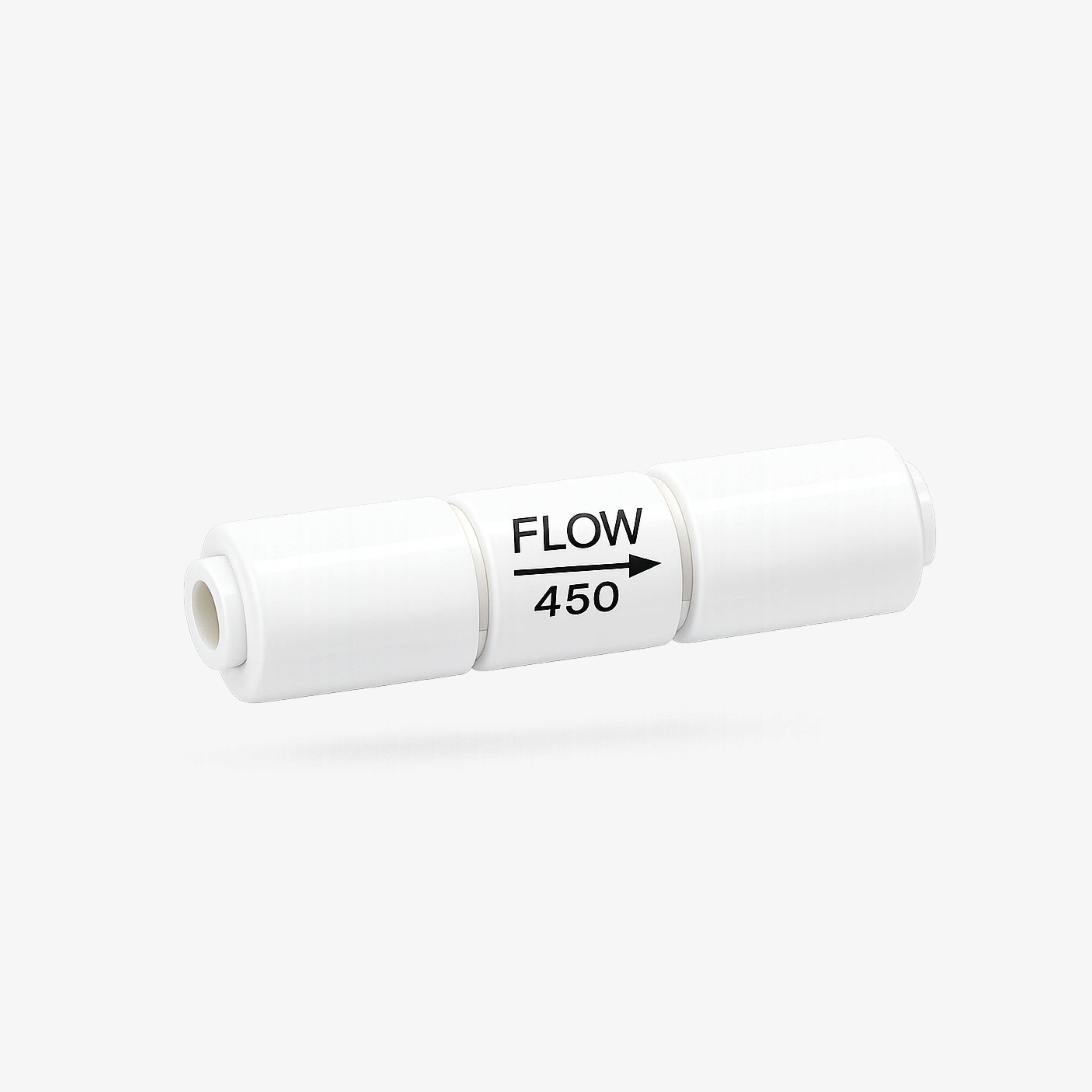
A flow resistor (also called a flow restrictor) is a small component that regulates the ratio between purified (permeate) water and reject (waste) water passing through the system. By maintaining consistent back-pressure at the membrane, it helps the membrane operate within its intended pressure range, supporting steady output and more efficient use of the membrane's rated capacity. This is especially useful in domestic systems where reject-water flow needs to stay controlled for the membrane to perform consistently.
Why Choose a 20 LPH / 100 GPD Membrane
A 20 LPH rating means the membrane is engineered to process a higher volume of water per hour compared to lower-rated membranes, which matters when your input water has a high TDS level. Membranes rated for high TDS input (up to 2000 PPM here) are built with a tighter TFC layer that can consistently reject dissolved salts even from harder source water — common in many parts of India where borewell or municipal water carries elevated TDS.
Solid Filter Cartridge Construction
Built as a solid filter cartridge, this membrane is designed for straightforward handling and installation — a single, self-contained unit that fits directly into standard RO membrane housings without needing separate assembly of the flow-control component.
Water Quality, Performance, and Durability
With a total service life of 8500 litres, this membrane is built for sustained daily use in an average household. Its anti-bacterial membrane sheet helps limit microbial growth on the membrane surface, supporting more consistent purification performance over its lifespan. The food-grade housing ensures the material in contact with your drinking water meets safety expectations for domestic use.
Applications
This membrane works well in homes, apartments, offices, restaurants, clinics, schools, and small businesses — anywhere a standard domestic RO purifier is already installed and TDS reduction is a priority.
Maintenance Tips
Rinse the membrane housing before installation, ensure correct O-ring seating to prevent leaks, and monitor your purifier's TDS output periodically. Replacing sediment and carbon pre-filters on schedule extends the membrane's usable life, since unfiltered particles are one of the most common causes of premature membrane fouling.
Buying Confidence
The 100 GPD RO Membrane Ultra with Flow Resistor ships with a 1-year warranty and a 10-day replacement policy, giving you assurance on quality and fit. It is designed to be compatible with all standard domestic RO water purifier systems using the common 12-inch, 2-inch housing format, and installation is straightforward enough for DIY setup without needing a technician visit in most cases.
For households dealing with hard or high-TDS water who want a membrane with built-in flow regulation, this solid filter cartridge is a practical, well-specified upgrade path — restoring purification performance without the cost of a full purifier replacement.
|
Flow Rate |
20 LPH |
|
Capacity |
100 GPD |
|
Micron Rating |
0.0005 Micron |
|
Working TDS |
Up to 2000 PPM |
|
Material |
TFC (Thin Film Composite) |
|
Cartridge Type |
Solid Filter Cartridge |
|
Additional Component |
Integrated Flow Resistor |
|
Size |
12 Inch (30 cm) |
|
Diameter |
2 Inch |
|
Total Service Life |
8500 Litres |
|
Pack Size |
1 Piece (Single Unit) |
|
Installation |
Easy DIY Installation |
| Customer Rating | |
| Price |
₹584
|
| Availability |
10 in stock
|
Compatibility:
Is this membrane compatible with my RO purifier? Yes — the 100 GPD RO Membrane Ultra with Flow Resistor is built for all kinds of domestic water purifier systems that use the common 12-inch length, 2-inch diameter membrane housing. This sizing is used across the vast majority of domestic RO units sold in India.
Installation guidance:
Turn off the RO purifier and close the water inlet valve.
Open the housing and remove the old membrane.
Rinse the new membrane briefly under clean water before fitting.
Insert the solid filter cartridge into the housing, ensuring the O-rings sit correctly to prevent leaks.
Confirm the flow resistor is properly seated in its designated fitting, as it regulates reject-water flow.
Close the housing, reopen the inlet valve, and power on the unit.
Run the purifier for a few minutes and discard the first batch of water before regular use.
If you're unsure about your purifier's housing size or flow resistor fitting, check your existing membrane's markings or consult your purifier's manual before ordering.
How It Works:
What is reverse osmosis? Reverse osmosis (RO) is a water purification process that pushes water through a semi-permeable membrane under pressure, separating pure water from dissolved salts and contaminants.
Step-by-step process:
Water enters the system – Raw tap or borewell water is drawn into the purifier and passes through pre-filters (sediment and carbon) to remove larger particles and chlorine.
Pressure is applied – A pump pushes the pre-filtered water against the RO membrane at a specific pressure.
Membrane separation occurs – The 0.0005 micron TFC membrane allows only water molecules to pass through, while dissolved salts, heavy metals, and microorganisms are blocked.
Flow resistor regulates output – The integrated flow resistor manages the ratio of permeate to reject water, helping the membrane maintain consistent working pressure.
Purified water is collected – The filtered water passes into a storage tank, ready for drinking.
Rejected water is flushed out – The concentrated impurities that didn't pass through the membrane are carried away as reject/waste water.
Post-filtration (in most purifiers) – Some systems pass the RO water through a final carbon or mineral cartridge before it reaches the tap, improving taste.
Benefits:
Health: Reduces dissolved salts, heavy metals, and microbial contamination, supporting safer drinking water.
Water Taste: Lowering excess TDS and dissolved impurities typically results in noticeably better-tasting water.
RO Efficiency: The integrated flow resistor helps maintain balanced pressure across the membrane, supporting steady, consistent purification output.
Long-Term Savings: Replacing a worn membrane on schedule is significantly cheaper than replacing the entire purifier or dealing with repeated strain on other components.
High Purification: 0.0005 micron filtration combined with 2000 PPM TDS handling addresses both hardness and dissolved impurity concerns in one component.
Easy Maintenance: DIY-friendly installation and a solid, single-piece cartridge design mean you don't need to schedule a technician visit for routine membrane changes.
Buying Guide:
Who should buy this product? Anyone using a standard domestic RO purifier — especially one that requires a flow resistor for proper reject-water regulation — who is experiencing reduced output, higher TDS in filtered water, or is due for scheduled membrane replacement.
When to replace the membrane: Most domestic RO membranes need replacement every 12–24 months, depending on source water quality and usage. Households with high-TDS input water often see shorter membrane life and should monitor performance more closely.
Signs replacement is needed:
Noticeably slower water flow from the purifier
Rising TDS reading in the purified water
Unusual taste or odour in the filtered water
The purifier running longer than usual to fill the storage tank
It has been more than a year since the last membrane change
Expected lifespan: Rated for a total service life of 8500 litres, translating to roughly 12–18 months of typical household use, depending on source water TDS and daily consumption.
Required fields are marked *
1. How long does this RO membrane last? The 100 GPD RO Membrane Ultra with Flow Resistor has a total service life of 8500 litres, which typically works out to about 12–18 months of regular household use. Actual lifespan depends on your source water quality — higher TDS or more sediment in the input water can shorten the membrane's effective life. Regular pre-filter maintenance helps extend it. Monitoring your purifier's output TDS periodically is the best way to know when it's approaching the end of its usable life.
2. Can it fit my RO purifier? It's built for all kinds of domestic water purifier systems using the standard 12-inch length, 2-inch diameter membrane housing, which is the most common size across domestic RO systems sold in India. Before ordering, check your current membrane's size markings or your purifier's manual to confirm the housing dimensions match. If your current membrane is 12x2 inches, this replacement will fit directly into the same housing.
3. Is it compatible with Kent purifiers? Kent domestic RO purifiers that use the standard 12-inch, 2-inch membrane housing are generally compatible with this membrane. Since Kent offers multiple models, we recommend checking your specific unit's existing membrane size before ordering. If your current membrane matches these dimensions, this replacement will fit without modification.
4. Can it fit Aquaguard purifiers? Yes, in most cases. Aquaguard domestic RO units that use the standard 12x2 inch membrane housing size are compatible with this membrane. As Aquaguard has various models, confirming your existing membrane's size against your purifier's housing before purchase is recommended for a guaranteed fit.
5. Can it fit Livpure purifiers? This membrane is compatible with Livpure domestic RO purifiers that use the standard 12-inch, 2-inch housing format, which covers most Livpure models sold for home use. As with any purifier brand, checking your unit's current membrane dimensions beforehand ensures a correct fit.
6. How often should the membrane be replaced? Generally every 12–24 months, depending on your source water's TDS level and daily water consumption. Households with high-TDS or hard water tend to need more frequent replacement, while those with better source water quality can often stretch closer to 18–24 months. Tracking your purifier's output TDS is the most reliable way to judge timing rather than relying on a fixed calendar date.
7. Can I install this membrane myself? Yes, this membrane is designed for easy DIY installation. Most domestic RO purifiers allow you to open the membrane housing, remove the old membrane, and fit the new one without needing a technician. The process typically takes a few minutes — just ensure the O-rings and flow resistor are properly seated to avoid leaks, and flush the system before regular use.
8. What TDS level can this membrane handle? This membrane is rated to work effectively with source water up to 2000 PPM TDS, making it suitable for areas with hard or high-mineral water, including many borewell and municipal supplies across India. Its TFC construction is built to maintain consistent rejection performance even at these higher input TDS levels.