


29-Mar-2023
Written by the Pearl Water Technologies Technical Team | Last Updated: July 2026 Reviewed for accuracy based on 10+ years of water treatment installation experience across residential and industrial projects in India.
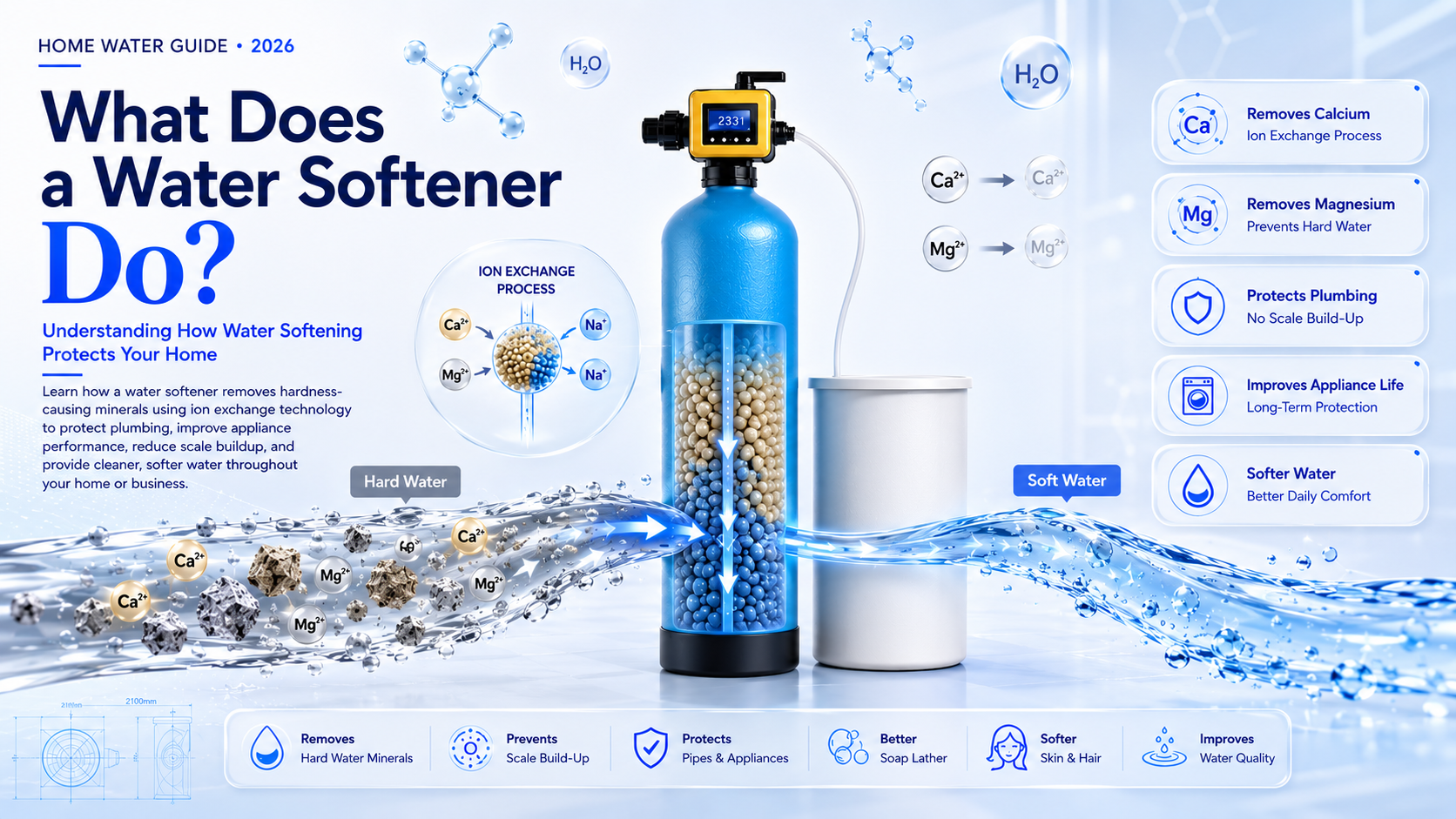
A water softener removes calcium and magnesium minerals from hard water through a process called ion exchange, swapping them for sodium ions as water passes through a resin-filled tank. This prevents limescale buildup in pipes and appliances, improves soap and detergent performance, and extends the life of geysers, washing machines, and RO systems.
If you've noticed white scale around your taps, dull laundry, or soap that just won't lather properly, you're likely dealing with hard water — and a water softener is the standard fix used across Indian homes and businesses. This guide covers exactly what a water softener does, how the process works step by step, its core components, and the real benefits you can expect.
A water softener is filtration equipment used to remove hardness-causing mineral ions — mainly calcium and magnesium — from water through ion exchange. Hard water forms when groundwater passes through mineral deposits like limestone and chalk, picking up these dissolved minerals along the way. This is extremely common across large parts of India, particularly in areas served by borewell or groundwater sources.
Left untreated, hard water causes:
A water softener plant addresses all of these issues at the source, before hard water ever reaches your taps or appliances. In our experience installing softeners across residential societies, independent homes, and commercial sites in India, borewell-fed properties in regions with limestone-rich groundwater see the most dramatic improvement within the first week of installation.
A water softener works through ion exchange — a chemical process that swaps hardness minerals for sodium ions. Here's the step-by-step process:
For a closer look at how installation and this regeneration cycle are maintained long-term, see our guide on water softener installation and maintenance.
A hard water softener consists of three core components working together:
This is the main chamber where softening actually happens. Hard water enters from the supply line, flows through the resin bed, and exits as softened water. Tank size (measured in LPH — litres per hour) determines how much water can be treated before regeneration is needed.
The control valve regulates water flow through the mineral tank and tracks volume using a built-in meter. It automatically initiates regeneration once resin capacity is depleted, so the system continues softening effectively without manual intervention (in automatic models).
A shorter tank positioned next to the mineral tank, the brine tank holds the salt solution used for regeneration. Softener salt needs to be manually topped up periodically — if the brine tank runs dry, the unit stops softening water even though it may still appear to be running normally.
Better-tasting water — A water softener for home improves the taste and odor of hard water, making it more pleasant for daily drinking and cooking use.
Cleaner, softer laundry — Soft water rinses soap and detergent residue far more effectively, resulting in cleaner, softer clothes and linens with less fading over time.
Reduced soap and detergent usage — Because soft water lathers more easily, households typically use noticeably less soap, shampoo, and detergent — which also reduces the environmental impact of runoff.
Longer-lasting appliances — By preventing scale build-up, a water softener extends the working life of geysers, washing machines, dishwashers, and RO systems — reducing repair and replacement costs over time.
Improved water flow and pressure — Scale buildup narrows pipes over the years; soft water prevents this, maintaining consistent flow and pressure throughout your plumbing.
Skin and hair benefits — Many users report less dryness and irritation after switching to soft water, since hard water minerals can strip natural oils from skin and hair.
Without a Water Softener |
With a Water Softener |
Visible limescale on taps, showerheads, geysers |
Minimal to no scale buildup |
High soap/detergent consumption |
20–30% less soap and detergent needed |
Appliances fail faster (geyser, washing machine) |
Appliances last significantly longer |
Dry skin, dull hair |
Noticeably softer skin and hair |
Spotty dishes and glassware |
Clear, spot-free dishes |
Not every home needs one — it depends on your water source and hardness level. Borewell and groundwater-fed homes are far more likely to have hard water than those on treated municipal supply, though this varies by city and locality. A simple water hardness test (available from most suppliers, including Pearl Water) will confirm your hardness level in parts per million (ppm) and help determine the right capacity softener for your needs. For a full breakdown of current pricing across home sizes, see our water softener price guide for 2026.
What does a water softener actually remove from water? A water softener removes calcium and magnesium ions — the minerals responsible for water "hardness" — by exchanging them for sodium ions through the resin bed.
Does a water softener make water safe to drink? A water softener isn't a purification system — it targets hardness minerals, not contaminants, bacteria, or dissolved solids. For drinking water safety, it's typically paired with an RO purification system.
How often does a water softener need regeneration? This depends on water hardness and daily usage, but most automatic softeners regenerate every 2–7 days. Metered (demand-based) systems regenerate only when needed, which saves salt compared to fixed timer-based units.
Can a water softener run out of salt? Yes. If the brine tank runs dry, the unit will continue passing water through without softening it, since no sodium ions are available for the ion exchange process. Regular salt top-ups are essential.
Is soft water safe for drinking, given the added sodium? For most healthy adults, the small amount of sodium added during softening isn't a concern. Those on strict low-sodium diets should consult a doctor, or consider a separate RO tap for drinking water.
Do water softeners work on all types of hard water? Ion-exchange softeners are effective against the two most common hardness minerals, calcium and magnesium, which account for the vast majority of hard water cases in India. Water with unusually high iron content may need an additional iron removal filter alongside the softener.
What size water softener does a home need? Sizing depends on household size, daily water usage, and incoming hardness level (ppm). A basic hardness test is the most reliable way to determine the right capacity before purchase — see our capacity selection guidance for details.
A water softener is one of the most effective, low-maintenance solutions to India's widespread hard water problem. By removing calcium and magnesium through ion exchange, it protects your appliances, improves everyday water quality, and reduces long-term maintenance costs for your home or business.
Pearl Water Technologies has supplied and installed water softening systems for residential and commercial customers across India, ranging from single-bathroom homes to large housing societies and industrial facilities.
Ready to solve your hard water problem? Browse Pearl Water Technologies' range of domestic, commercial, and industrial water softeners →
Leave A Comment