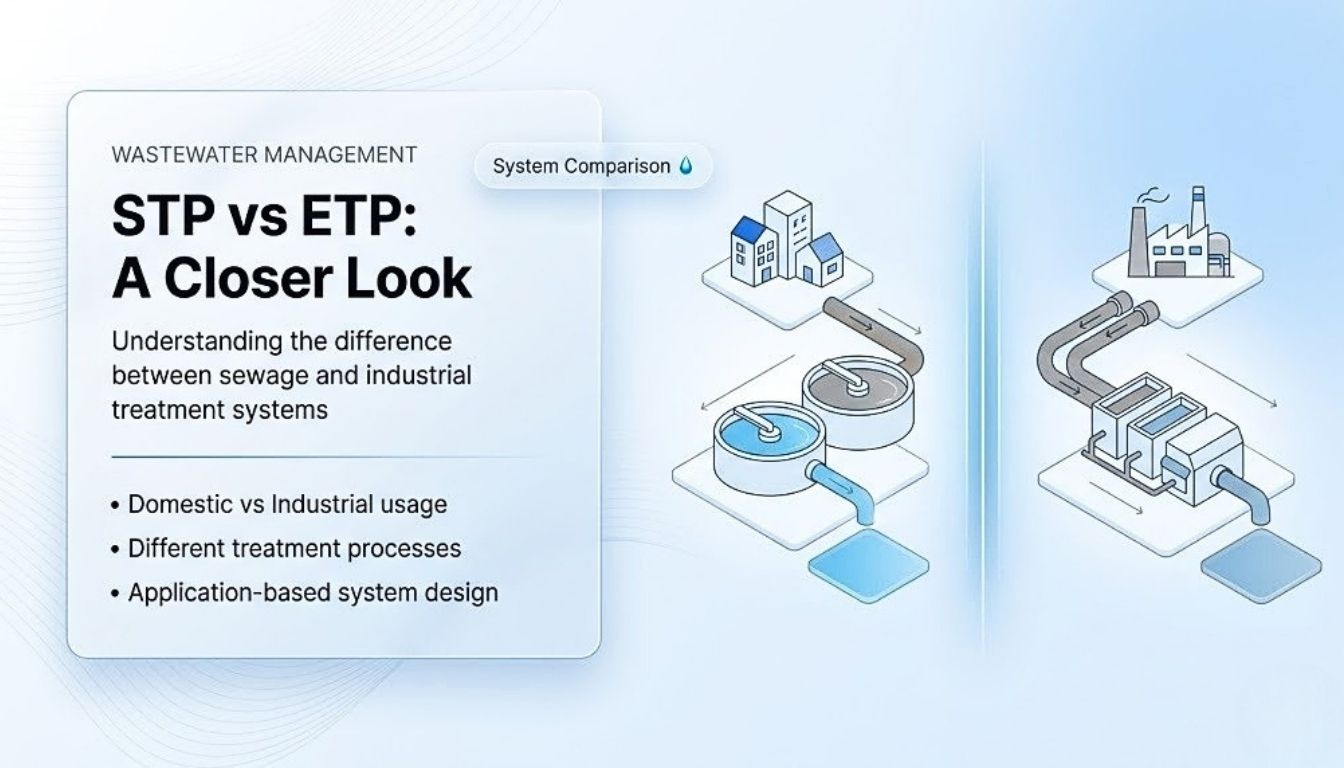
Wastewater management plays a crucial role in maintaining environmental sustainability and public health. In this context, Sewage Treatment Plants (STPs) and Effluent Treatment Plants (ETPs) are two vital components that aid in the purification of wastewater before it is released into the environment. While both STPs and ETPs serve the common purpose of treating wastewater, they cater to different sources and types of effluents, each with its own distinct characteristics and treatment processes. In this article, we delve into the finer details of STP and ETP technologies, highlighting their differences and importance in wastewater management.
Sewage Treatment Plants (STPs): STPs primarily handle domestic sewage or wastewater generated from households, commercial establishments, and municipal facilities. This wastewater contains a mix of organic matter, nutrients, pathogens, and suspended solids. The treatment process in an STP typically involves multiple stages:
- Preliminary Treatment: In this phase, large debris, grit, and solids are removed using screens, grit chambers, and sedimentation tanks.
- Primary Treatment: Here, suspended solids are further settled and removed through sedimentation tanks. This stage reduces the overall pollutant load.
- Secondary Treatment: Also known as biological treatment, this stage employs microorganisms to break down organic matter. Aerobic or anaerobic biological processes like activated sludge, trickling filters, or sequencing batch reactors are employed.
- Tertiary Treatment: This optional stage involves advanced treatment methods like sand filtration, chemical coagulation, and disinfection to further improve water quality before discharge.
Explore our Ro filter kit which are comaptible with all types of ro water purifiers.
Effluent Treatment Plants (ETPs): ETPs, on the other hand, are designed to treat industrial effluents. These effluents can contain a wide range of pollutants, including toxic chemicals, heavy metals, oils, and various industrial byproducts. The treatment approach in an ETP is often tailored to the specific composition of the effluent:
Physical Treatment: Similar to STPs, ETPs begin with the removal of large solids and suspended particles through screening and sedimentation.
- Chemical Treatment: Many industrial effluents require chemical treatment to neutralize or precipitate contaminants. Coagulants and flocculants are added to facilitate the removal of heavy metals and other pollutants.
- Biological Treatment: Some industrial effluents can undergo biological treatment after initial chemical processes. Specialized microbial cultures are used to degrade organic pollutants.
- Advanced Treatment: Depending on the complexity of the effluent, advanced treatment methods like membrane filtration, ion exchange, and adsorption may be employed for further purification.
Key Differences:
- Source of Wastewater: The fundamental difference between STPs and ETPs lies in the source of wastewater. STPs handle domestic and municipal wastewater, while ETPs cater to industrial effluents.
- Composition of Wastewater: Domestic wastewater is generally less complex and contains organic matter, nutrients, and pathogens. Industrial effluents can contain a diverse range of contaminants, including toxic substances and heavy metals.
- Treatment Complexity: ETPs often require more complex treatment processes due to the varied and potentially hazardous nature of industrial effluents. STPs focus more on organic matter degradation and pathogen removal.
- Regulatory Compliance: Industrial effluents are subject to stricter regulatory guidelines due to their potential environmental and health impacts. This necessitates comprehensive treatment in ETPs to meet compliance standards.
Conclusion: In the realm of wastewater management, both STPs and ETPs play indispensable roles. While STPs focus on domestic sewage treatment to protect public health, ETPs address the challenges posed by industrial effluents to safeguard the environment. Understanding the differences between these two treatment approaches is essential for designing effective wastewater management strategies that ensure clean waterways and a sustainable future.


Leave A Comment