3 WAYS TO GET RID OF HARD WATER STAINS IN YOUR BATHROOM
22-Oct-2024
Hard water stains can be a persistent issue in bathrooms, leading to unsightly buildup on sinks, tubs, and fixtures. One of the most effective long-term solutions is using a water softener. Here are three ways to eliminate hard water stains and keep your bathroom looking fresh with the help of a water softener. Hard water coats your shower tiles with an Iron and Calcium deposit. These deposits are initially undetectable to the human eye, but if left unattended, they will layer over time, producing ugly dark stains on your tile and/or grout. Moreover, the brown stains on bathroom tiles not only steal away the aesthetic appeal of your bathroom but are also difficult to remove. The reason is bathrooms hold a lot of standing water on a daily basis. Read the entire blog to know more about hard water stains and the problems caused by them.
This hard water can block your water pipes, it can lower the efficiency of bathroom appliances, and even make your soaps, shampoos, and detergent work less effectively. And you will require more water to cleanse that sticky watery feel from all over your bathroom. So, before going ahead with what should be done to clean the hard water bathroom stains, we should all be aware of the possible stains and the threats caused by hard water in the bathroom.
What causes Hard water stains?
A high concentration of calcium and magnesium makes water hard. When the water in your bathroom or any other area evaporates, it leaves a very thin coating on the bathroom tiles. This ultra-thin coating, which comprises calcium and magnesium is initially invisible on the surface of your bathroom. When you don’t clean the deposits on a regular basis, every time you shower, the dirt particles mix with fresh mineral crystals. Eventually, you end up with a layer of hard water deposits and dirt, leaving brown stains all over the bathroom.
Difficulties faced by Hard water stains :
Cleaning becomes difficult: Lime scales are the hard deposits stuck after hard water dries. These minerals are hard to remove, and they can create chemical reactions that reduce the effectiveness of cleaning solutions.
Hair becomes dull: Hard water can create build-up in the hair, causing it to frizz, look lifeless, and feel rough.
Clogged showers: You may notice that usually, after a point of time, your shower stops releasing the amount of water it used to before. You may decide to call the plumber to fix it. But wait, this is actually because of the calcium and magnesium sedimentation in the shower nozzles. Hence, you receive fewer sprinkles. And that is also evident with tiny, white stains lying all over the shower head.
Irritation and a layer on the skin: Having a shower or bath in hard water with soap can leave a layer on your skin, preventing debris and bacteria from being removed. This layer has the potential to irritate the skin.
White Spots:There is a famous quote, “Morning shows the day”. But imagine starting your morning in a dirty bathroom, with a hard water odor and tiny calcium spots all over your shower curtains, mirrors, tiles, taps, and where not. Surely, such a scenario is not expected, that too on a daily basis.
Clogged Drains: Did you notice that your washbasin drain is not functioning properly? The reason behind this is hard water. The excessive mineral content in hard water leaves its residues behind resulting in clogged drains and pipes. You will also notice tiny, dried water spots on your washbasin.
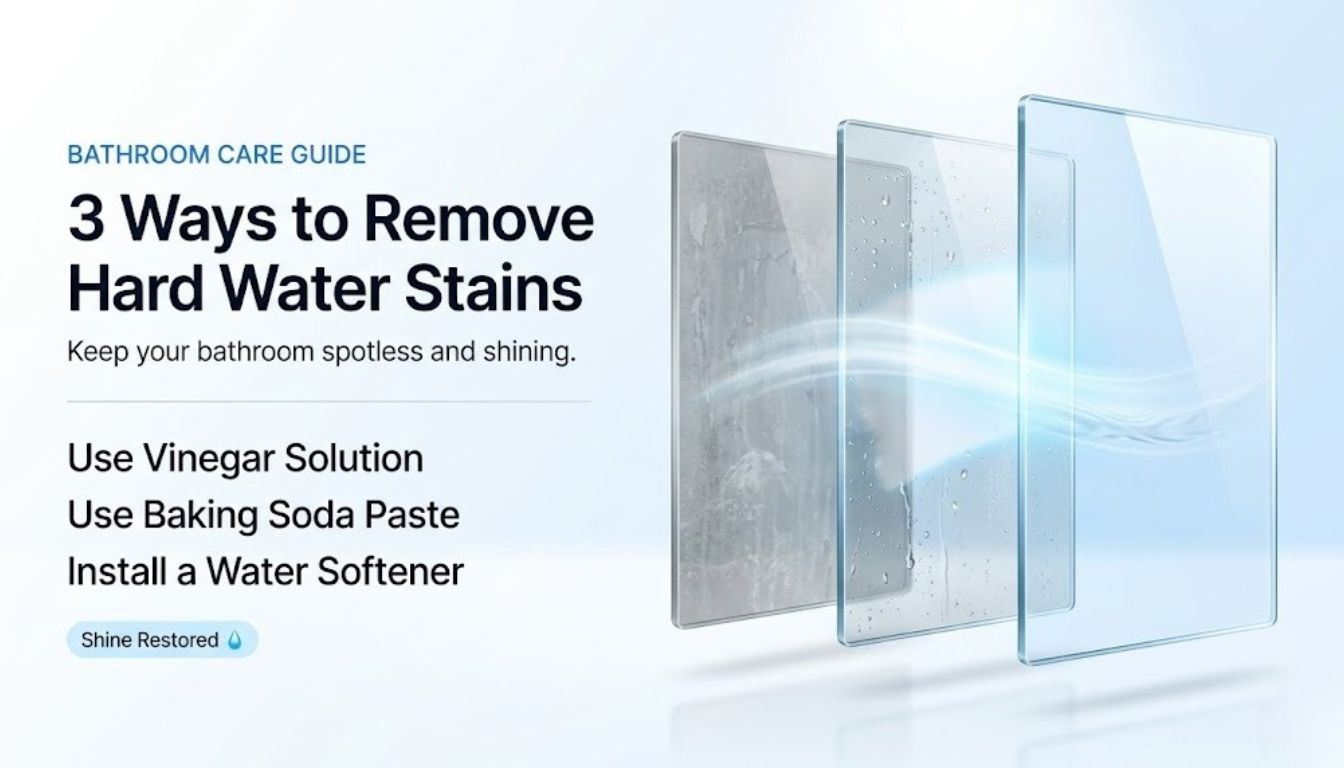
3 effective and useful ways to remove Hard water Stains from your Bathroom:
Water Softener - Using a softener ensures that hard water doesn’t cause any more damage. The hardwater softener is easily attached to the source of the water supply so that you get soft water for all your work. Household water softeners use an ion exchange process to replace excess calcium and magnesium with the ions of sodium or potassium to provide you with soft water for different uses. Depending on your need you can go for a whole-house water softener, which is installed before the overhead storage tank, or a point-of-use water softener. The water that you use in the bathroom will be free of hardness, thereby reducing stains from the tiles.
Salt - Salt is another useful kitchen ingredient for cleaning bathroom tiles. Salt helps in cutting down the most stubborn hard water stains on your bathroom tiles. A great disinfectant, salt also kills the germs present in your bathroom. When using salt to remove the stains, make sure the bathroom floor is wet. Sprinkle salt on the bathroom floor and leave it for half an hour or more. Scrub off the salt using a brush or sponge. The longer the salt stays on the bathroom tiles, the more effective it is in removing the stains.
Vinegar- Vinegar is one of the most useful kitchen ingredients you can use to remove hard water stains from bathroom tiles. The all-purpose cleaner is mildly acidic in nature and perfect for removing stains from your bathroom. White vinegar also prevents the growth of germs, mold, and mildew in the bathroom. Make a solution of an equal amount of vinegar and water. Store the solution in a spray bottle and sprinkle the solution on the bathroom tiles. Allow the solution to stay on the tiles for some time before scrubbing off the solution using a brush or sponge. If the stains are too stubborn, add some baking soda to the solution.
Conclusion:
Using a water softener is one of the most effective strategies for eliminating hard water stains in your bathroom. Whether you choose a whole-house system, a portable unit for targeted cleaning, or commit to regular maintenance, these approaches will help you achieve a cleaner, more inviting bathroom. By tackling hard water at its source, you can enjoy sparkling surfaces and prolonged fixture life for years to come.
A water softener for the house will help you increase the durability of all the appliances and also reduce the risk of staining the tiles and other appliances.


Leave A Comment