|
Type |
Digital |
|
Measurement range |
0–9,990 ppm |
|
Temperature range |
0.1°C to 80.0°C |
|
Accuracy |
±2% |
|
Battery life |
Approx. 3 months (typical use) |
|
Power source |
1 lithium battery (included) |
|
Color options |
White, Black |
|
Included items |
1 TDS Meter, 1 Carrying Pouch |
|
Warranty |
1 Year |
|
Replacement window |
10 days |
₹ 199 ₹ 399


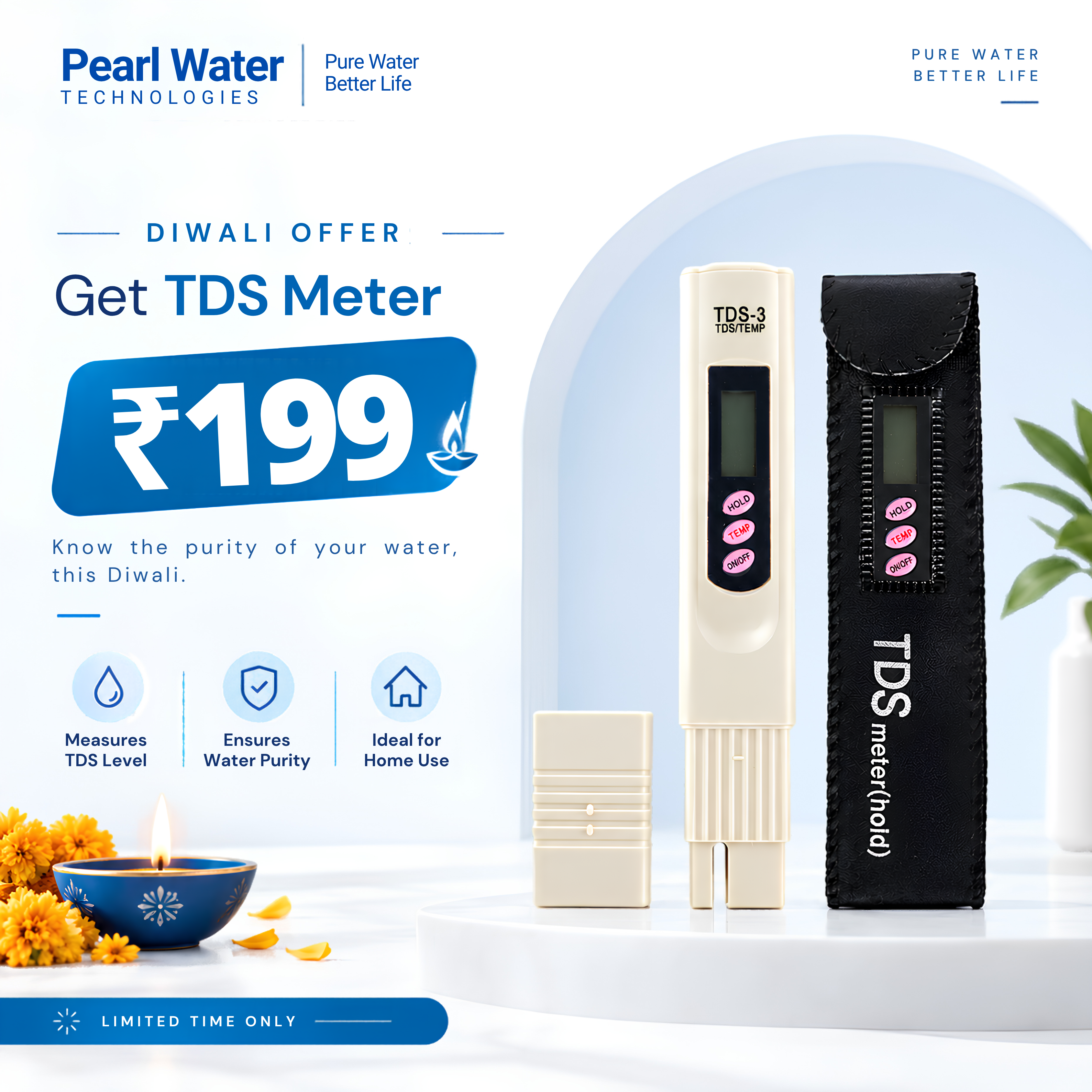
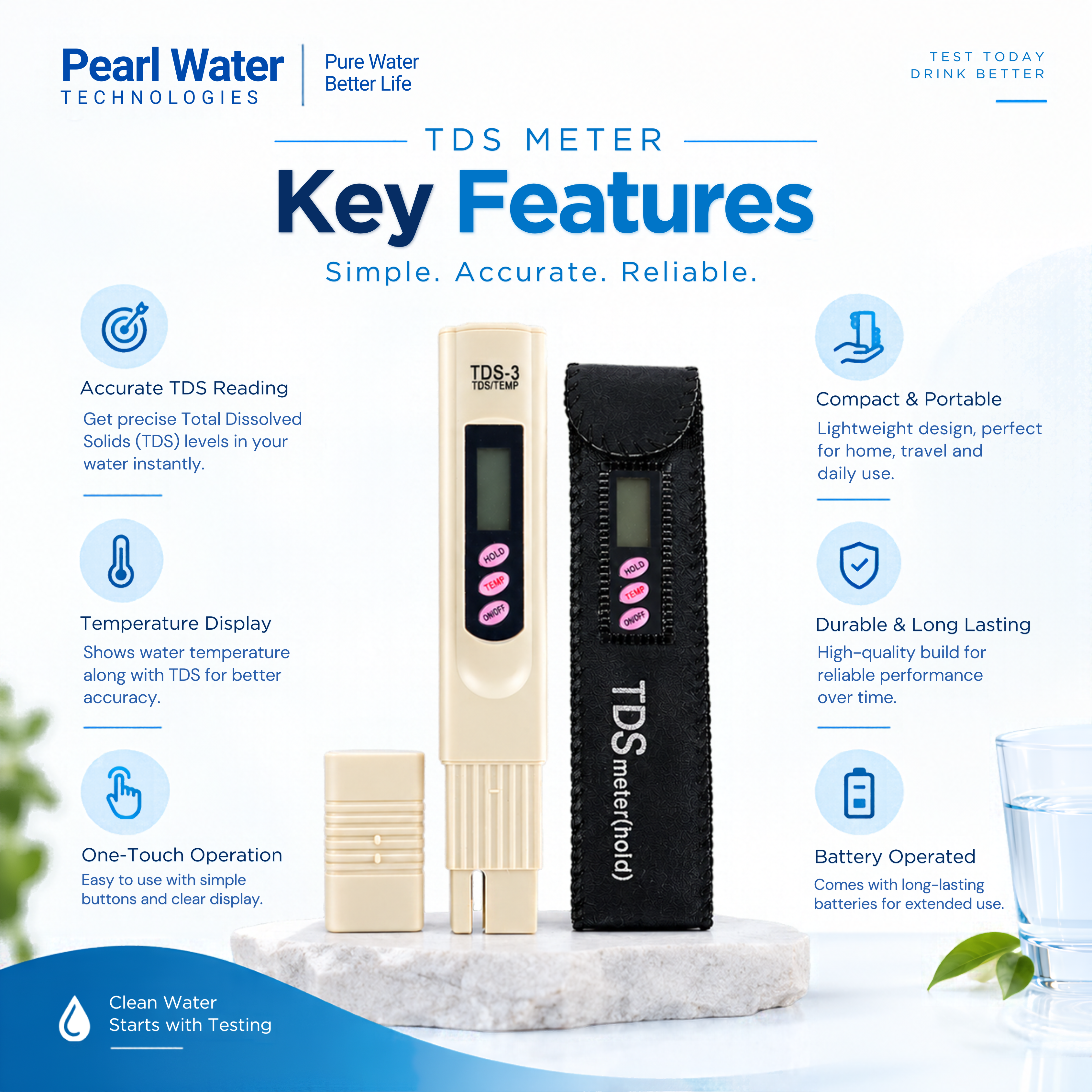
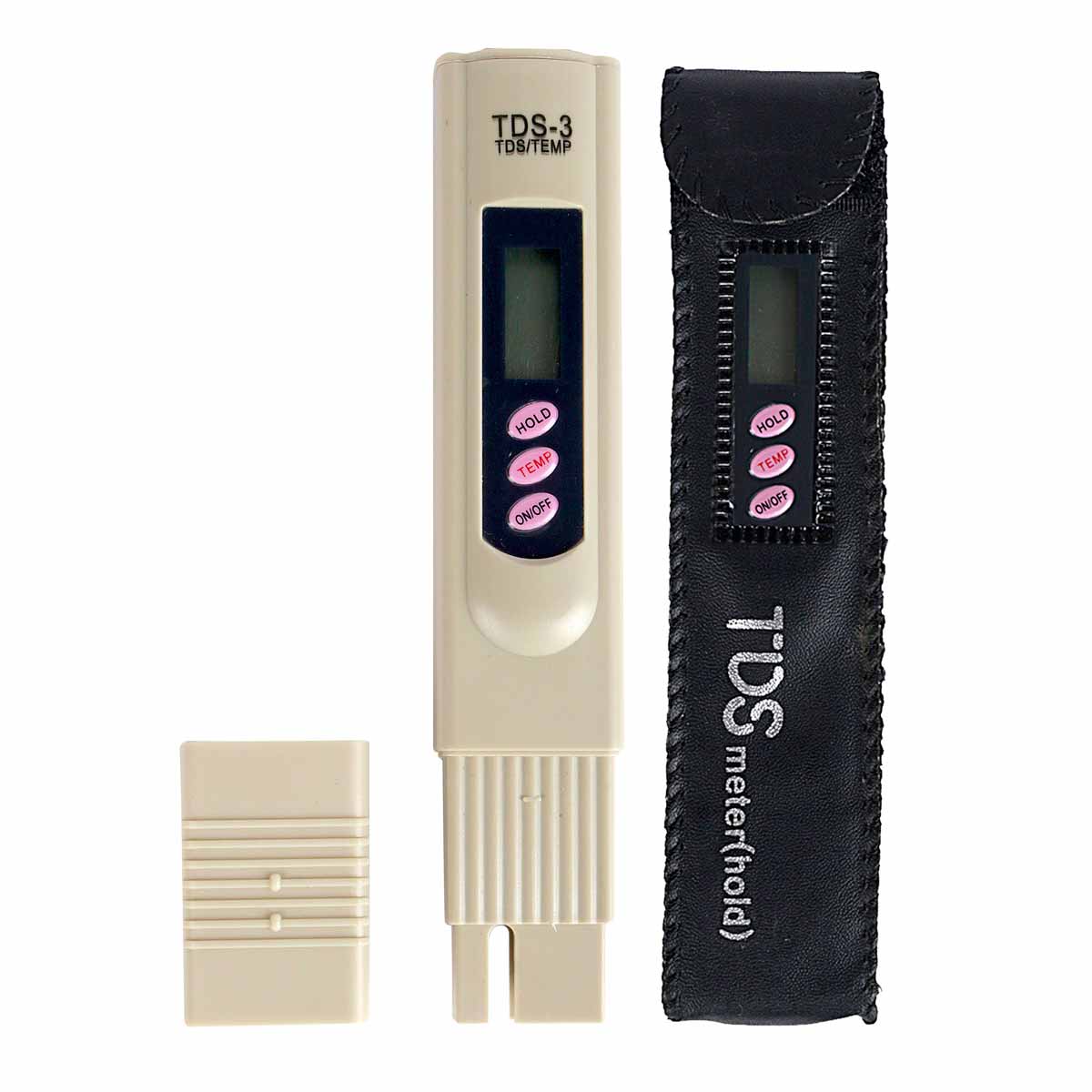
If you've ever wondered whether your RO purifier is actually working the way it's supposed to, a TDS meter is the fastest way to find out. The Pearl Water TDS Meter is a compact, digital handheld water tester that measures Total Dissolved Solids in seconds — dip it in, get a reading, done. With a measurement range of 0 to 9,990 ppm, ±2% accuracy, and a built-in thermometer reading from 0.1°C to 80°C, it's precise enough for both quick household checks and more regular testing by anyone servicing RO systems. You can use it to check your raw input water before it enters a purifier, or the purified output afterward, which is exactly how you'd catch a failing membrane, a saturated cartridge, or a miscalibrated TDS controller before your water quality quietly slips without you noticing.
What Is a TDS Meter and Why Do You Need One?
TDS stands for Total Dissolved Solids — the combined measure of minerals, salts, and other dissolved substances present in water, expressed in parts per million (ppm) or milligrams per liter. A TDS meter is a small electronic device that estimates this by measuring the water's electrical conductivity, since dissolved ions conduct electricity, and more dissolved solids generally means higher conductivity. Pearl Water's complete guide to understanding TDS covers this measurement in more depth if you want the fuller picture.
For anyone running an RO purifier, a TDS meter isn't just a curiosity — it's the only real way to verify the system is doing its job. RO membranes typically reduce TDS dramatically, so testing your output water and comparing it to your input reading tells you directly how effectively your purifier is performing. A rising output TDS over time, even gradually, is usually the first sign that a membrane is wearing out or that a filter needs attention — Pearl Water's guide on how to know it's time to replace your RO membrane explains what this kind of reading typically means. Without a meter, you're relying purely on taste, which is a much less reliable signal until the problem has already become fairly serious.
How to Use the TDS Meter
Testing water with this meter takes under a minute:
Remove the protective cap from the meter's sensor end.
Turn the meter on.
Immerse the meter into the water up to the marked maximum immersion level.
Lightly stir the meter to dislodge any trapped air bubbles, then wait a few seconds for the display reading to stabilize.
Press the hold button to lock in the reading once it's stable, then lift the meter out of the water to read it clearly.
Turn the meter off, wipe the electrode dry, and replace the protective cap before storing it.
For the most useful comparison, test both your raw input water and your purified RO output, ideally at the same time, so you're comparing readings taken under similar conditions rather than across different days or temperatures.
Related Products
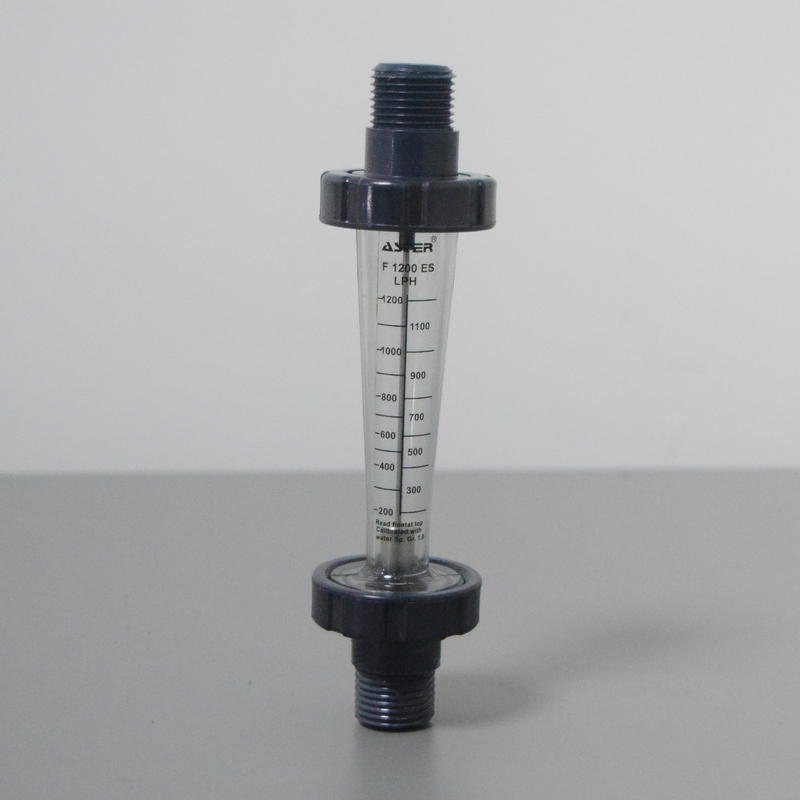
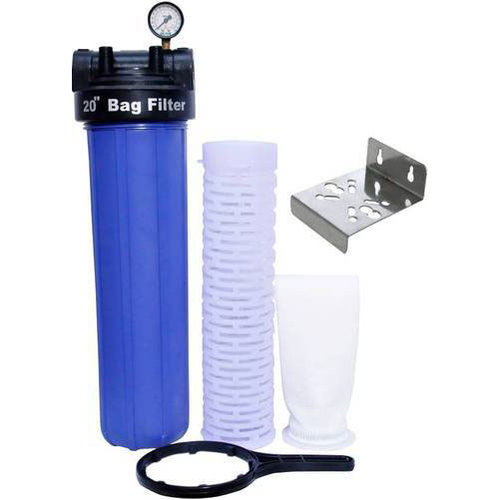
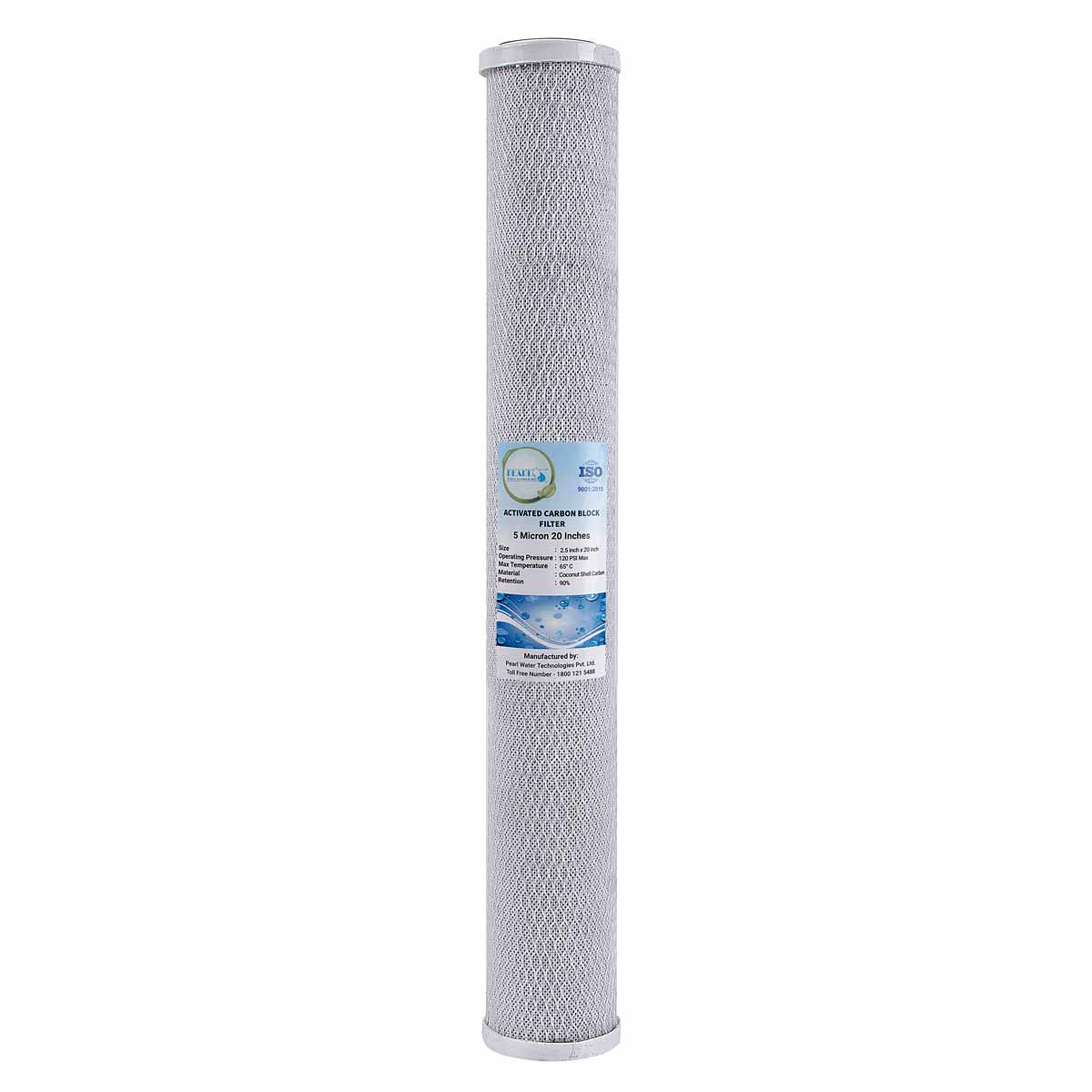
If your RO output is testing high, it's worth checking your TDS Controller to see if it's set correctly, or reviewing your RO membrane if a replacement seems overdue. For general RO system upkeep, Pearl Water also stocks Rotameters for flow monitoring, Pressure Gauges for system pressure checks, and a full range of cartridge filters and carbon blocks for larger or commercial systems. Browse the full Industrial RO Spares range for other testing and maintenance accessories, or visit RO Water Purifiers if you're evaluating a new system.
Know What's Actually in Your Water
Guessing your water quality by taste only tells you when something's already gone noticeably wrong. The Pearl Water TDS Meter gives you a fast, accurate reading whenever you want one — whether that's a quick monthly check or a full diagnostic when something seems off. Order yours today and stop wondering how well your purifier is really doing its job.
|
Type |
Digital |
|
Measurement range |
0–9,990 ppm |
|
Temperature range |
0.1°C to 80.0°C |
|
Accuracy |
±2% |
|
Battery life |
Approx. 3 months (typical use) |
|
Power source |
1 lithium battery (included) |
|
Color options |
White, Black |
|
Included items |
1 TDS Meter, 1 Carrying Pouch |
|
Warranty |
1 Year |
|
Replacement window |
10 days |
| Customer Rating | |
| Price |
₹199
|
| Availability |
10 in stock
|
Buying Guide: What to Look For in a TDS Meter
Measurement range. A 0–9,990 ppm range covers virtually every practical household and light commercial use case, from pure RO output to fairly hard raw water.
Accuracy rating. ±2% is a solid, dependable accuracy level for regular household or service use — this isn't laboratory-grade equipment, but it's precise enough to catch meaningful trends and problems.
Ease of reading. A clear LCD display with a hold function matters more than it sounds — without hold, readings can fluctuate right as you're trying to read them, especially in colder or warmer water.
Portability. A compact meter with a carrying pouch is easy to keep near your purifier or in a service kit, encouraging more regular testing rather than occasional guesswork.
Pre-calibration. A meter that's ready to use out of the box removes a step that many people skip entirely, which can otherwise lead to inaccurate early readings.
Reading Your TDS Results: What's a Healthy Range?
Once you have a reading, the natural next question is what to actually do with it. As a general guide:
Below 50 ppm — Very low TDS, typical of fresh RO output; some water quality guidance considers extremely low TDS not ideal for regular long-term drinking, since it can also mean minerals have been stripped out.
50–150 ppm — Often considered a comfortable, better-tasting range for RO purified drinking water.
150–300 ppm — Generally acceptable, according to broader water quality guidance from bodies like the World Health Organization, which classifies water under 300 mg/L as excellent.
300–600 ppm — Still considered acceptable by WHO guidance, though taste may become noticeably different.
Above 600 ppm — Getting into a range many people find less palatable, and worth investigating if this is your RO purified output rather than raw input water.
Pearl Water's guide on the recommended TDS level for RO water purification goes deeper into these ranges and what they mean for your specific setup.
Required fields are marked *
How accurate is this TDS meter? It's rated to ±2% accuracy, which is dependable for household and general servicing use, though it isn't laboratory-grade equipment intended for certified water quality testing.
Do I need to calibrate the meter before first use? No, this meter comes pre-calibrated and is ready to use straight out of the box.
Can I use this to test both RO input and output water? Yes, that's one of its most useful applications — testing both lets you directly see how much your RO system is reducing TDS, which tells you whether it's performing correctly.
What TDS reading indicates my RO membrane needs replacing? There's no single universal number, since it depends on your input water TDS and system, but a gradual rise in output TDS over time — especially if it climbs well above your usual reading — is a common early sign of membrane wear. Watching the trend over several tests matters more than any single reading.
How long does the battery last? Approximately 3 months under typical use, and the meter includes an auto-off function after 10 minutes of inactivity to help conserve battery life between uses.
Is this meter suitable for testing water other than RO purified water? Yes, it can test any water source — tap water, borewell water, aquarium water, or even nutrient solutions for gardening — anywhere a TDS reading is useful.
What's a good TDS reading for drinking water? Many people find water in the 50–150 ppm range to taste best after RO purification, while the World Health Organization considers water under 300 mg/L excellent and up to 600 mg/L acceptable. Extremely low readings can indicate water that's been stripped of most minerals, which some water quality guidance considers less than ideal for regular long-term drinking.
Why does my reading change slightly with water temperature? TDS readings are conductivity-based, and conductivity shifts slightly with temperature, which is why this meter includes a built-in thermometer — comparing readings taken at similar temperatures gives you a more consistent basis for tracking changes over time.
Can this meter test hot water? It has a temperature measurement range of 0.1°C to 80°C, but it's generally best practice to let very hot water cool closer to room temperature before testing, both for the meter's longevity and for a more standard, comparable reading.
How do I know if my water purifier needs a filter change based on this meter? If your output TDS is significantly higher than usual for your system, or if you notice a steady upward trend across multiple tests over weeks or months, it's a reasonable signal to inspect your cartridges, carbon filter, and membrane rather than waiting for a taste change to become obvious.
Does a low TDS reading mean my water is completely safe to drink? Not necessarily on its own. TDS measures dissolved solids, not bacteria, viruses, or all specific contaminants, so a low TDS reading confirms good mineral filtration but doesn't replace microbiological safety measures like UV treatment or a properly functioning RO membrane.
Is this meter useful if I don't have an RO purifier? Yes, it's equally useful for testing municipal tap water, borewell water, or tanker-supplied water to get a general sense of your water's dissolved solids content, even without a purification system in place.