Added to wishlist.

How Frequently Should I Add Chlorine?

15-Sep-2026

How Frequently Should I Add Chlorine?

Quick Answer

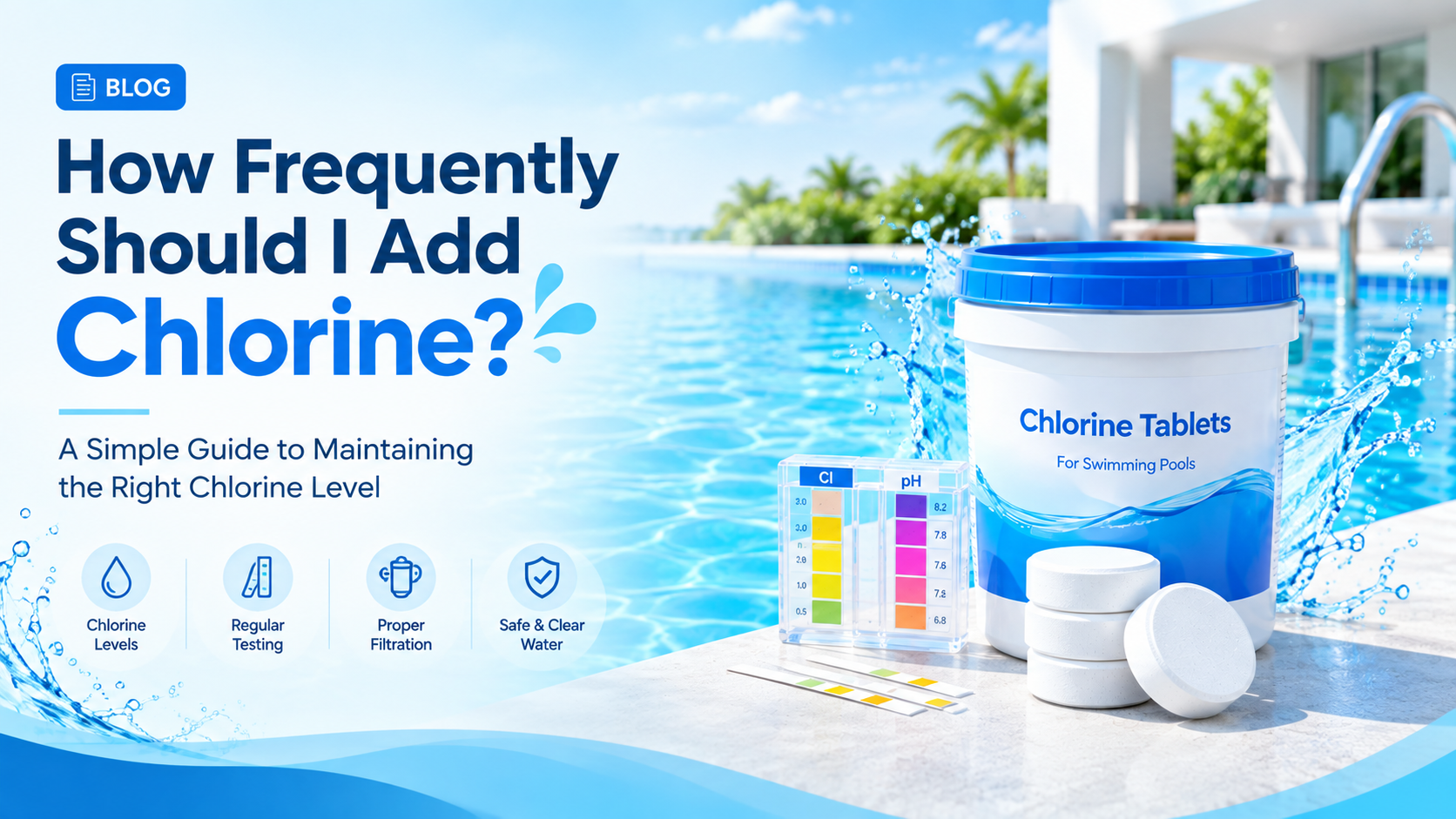
If you use a chlorine tablet floater or automatic chlorinator, you're not adding chlorine daily — you're replacing tablets roughly every 5–7 days as they dissolve, while testing 2–3 times a week to confirm levels hold. If you dose manually with granules or liquid (no floater), you'll typically need to add chlorine every 2–3 days in peak season, since nothing is continuously releasing it between doses. Either way, frequency should follow your test readings, not a fixed calendar — the schedule below adjusts for season, bather load, and method.


Frequency by Dosing Method

Method

Typical Frequency

Why

Tablet floater / automatic chlorinator

Replace tablet(s) every 5–7 days

Tablets are designed to dissolve slowly and release chlorine continuously

Manual granules (no floater)

Every 2–3 days in peak season

No continuous release between doses — chlorine depletes steadily until topped up

Liquid chlorine

Daily to every 2 days

Degrades fastest in sunlight/heat of any chlorine form

Shock treatment (any form)

As-needed, not scheduled

Only when algae, cloudiness, or a large chloramine gap shows up on a test

Salt chlorine generator

Continuous (automatic)

Chlorine is generated on-site; "frequency" applies to salt top-ups, not chlorine dosing itself

For the chemistry behind why tablets and granules behave so differently here, see What Kind of Chlorine Goes in My Pool?


Test First, Then Decide — Don't Dose on a Fixed Calendar

The frequency numbers above are starting points, not rules. The only reliable way to know if it's time to add chlorine is a test reading, not a calendar reminder — a pool with unusually high bather load or intense sun exposure can burn through chlorine faster than the "typical" schedule assumes, while a lightly used pool in mild weather might hold steady longer than expected. Test free chlorine 2–3 times a week during peak season using a testing kit suited to how often you check, and let the reading — not the day of the week — decide when to add more.


What Changes Chlorine Frequency

Season and temperature. Hot, sunny months burn through unstabilized chlorine fastest and generally increase demand overall — expect to test and dose more often in peak summer than in cooler months.

Bather load. More swimmers introduce more organic contaminants (sweat, sunscreen, body oils), consuming chlorine faster — a pool that just hosted a party needs rechecking sooner than its normal schedule would suggest.

Rain. Heavy rain dilutes chlorine directly and washes in organic debris — retest after any significant rainfall rather than waiting for your next scheduled check.

pH. High pH weakens chlorine's actual sanitizing power even when the ppm reading looks normal, which can make it seem like you need to dose more often than you actually do — see Pool pH vs Chlorine: Complete Water Chemistry Guide for why fixing pH first often solves what looks like a frequency problem.

Stabilizer (cyanuric acid) level. Properly stabilized chlorine (like TCCA 90) resists sunlight breakdown far better than unstabilized forms, directly extending how long a dose lasts — see What Is a TCCA 90 Chlorine Tablet? Complete Guide.


A Sample Weekly Schedule (Tablet/Floater Method, Peak Season)

  • Monday: Test free chlorine and pH

  • Wednesday: Test again; top up tablet if noticeably smaller

  • Friday or Saturday: Test again, especially before a weekend with heavier pool use

  • After any pool party or heavy rain: Test immediately, don't wait for the next scheduled day

This is a starting template, not a fixed rule — see How to Maintain a Swimming Pool Step by Step: The Complete Guide for how this fits into your full maintenance routine alongside pH and filtration.


Frequently Asked Questions

Do I need to add chlorine every single day?

Not with a tablet floater or chlorinator — tablets are built to release chlorine continuously over about a week. Daily dosing is really only typical with manual liquid chlorine, which degrades fastest.

How do I know if I'm adding chlorine too often?

Consistently high free chlorine readings (well above the 1–3 ppm target) or a persistent strong chlorine smell can indicate overdosing — cut back and retest rather than continuing on the same schedule.

Should I add chlorine more often in winter?

Generally less often — lower temperatures and less bather load reduce chlorine demand. Some regions still need light, periodic dosing through cooler months, but expect noticeably less frequent attention than peak summer.

Why does my chlorine seem to run out faster than the schedule suggests?

This is often a stabilizer, pH, or bather-load issue rather than a true frequency problem — see Why Won't My Chlorine Tablet Dissolve? if the tablet itself seems to be disappearing unusually fast, or check pH first if the reading looks low despite recent dosing.

Is it better to add a little chlorine often, or a lot less frequently?

For routine maintenance, steady and frequent (via a tablet floater) is generally more stable than large infrequent doses, which cause bigger swings between highs and lows. Large, infrequent doses are appropriate for shock treatments, not routine sanitizing.


Conclusion

Knowing how frequently to add chlorine to your swimming pool is essential for keeping the water clean, clear, and safe for swimmers. In general, chlorine levels should be checked regularly and maintained within the recommended range rather than adding chlorine on a fixed schedule. Factors such as pool usage, sunlight, rainfall, water temperature, and the type of chlorine used can affect how often chlorine is needed.

For best results, test the pool water frequently, adjust chlorine according to the test results, and follow the product dosage instructions. Regular filtration, proper pH balance, and periodic shock chlorination can also help maintain effective sanitation and prevent algae or cloudy water.

Share:

Leave A Comment

Thank You for subscribing our newsletter.