Added to wishlist.

What Is Pool Chlorine and Do You Really Need It?

10-Aug-2026

What Is Pool Chlorine and Do You Really Need It?

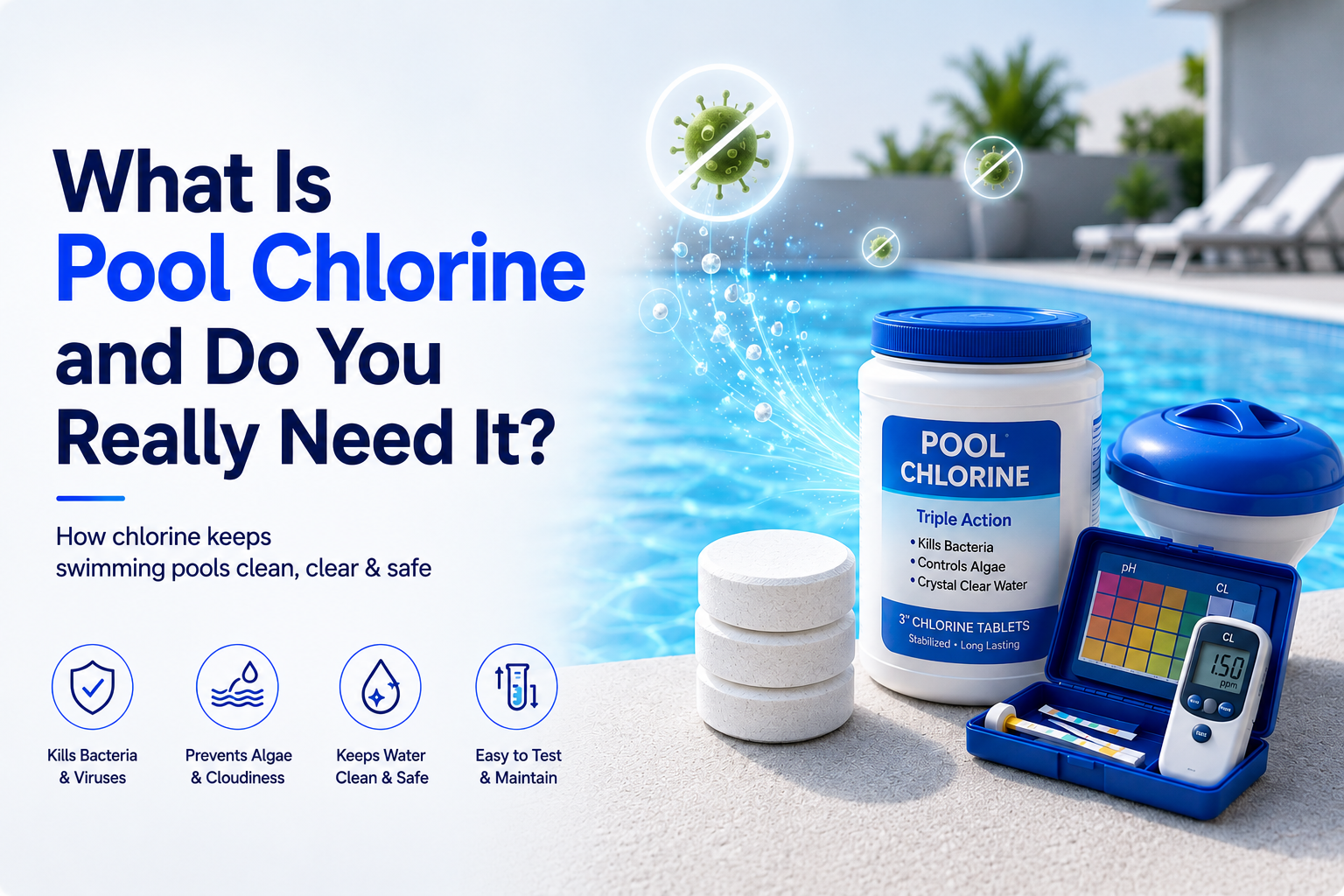
Quick answer: Pool chlorine is a sanitizing chemical — usually sold as tablets, granules, or liquid — that kills bacteria, viruses, and algae in swimming pool water. Almost every pool needs some form of chlorine (or a chlorine-generating system) because it's the most reliable, affordable way to keep water safe to swim in. Without it, pool water becomes cloudy, smells stale, and can carry recreational water illnesses within days.

If you own a pool, are setting one up for the first time, or manage a commercial facility, this guide walks through exactly what pool chlorine is, how it works, the chlorine levels health authorities recommend, and how to decide which type of chlorine is right for your pool.


What Is Pool Chlorine, Exactly?

Pool chlorine is a category of chemical sanitizers that release hypochlorous acid into water — the compound that actually destroys bacteria, viruses, algae, and other organic contaminants. "Chlorine for pool" use doesn't come in one single form; it's sold as several different compounds, each suited to different pool types and maintenance routines:

  • Trichlor (TCCA) tablets/pucks — slow-dissolving, stabilized, and the most common choice for residential and commercial pools. TCCA 90 Chlorine Tablets contain around 90% available chlorine and are used through a floater or an automatic feeder.

  • Chlorine granules (dichlor or cal-hypo) — dissolve faster than tablets, making them useful for quick dosing or shocking a pool. See TCCA 90 Chlorine Granules for a granular option.

  • Liquid chlorine (sodium hypochlorite) — unstabilized, fast-acting, and popular for large or commercial pools with automated dosing systems.

  • Cal-hypo shock — a concentrated granular chlorine used periodically to "shock" the pool and clear out chloramine buildup.

Most residential pool owners in India rely on chlorine tablets because they're easy to dose, store, and don't require daily handling.


How Does Pool Chlorine Actually Work?

When chlorine dissolves in water, part of it becomes free chlorine — the active sanitizer still available to attack contaminants. As it reacts with sweat, oils, urine, and organic debris, it turns into combined chlorine (chloramines), which is far less effective and is actually responsible for the strong "chlorine smell" people associate with pools. A properly maintained pool with correct free chlorine levels should have very little smell at all — a strong odor usually signals too little free chlorine, not too much.


Do You Actually Need Chlorine in Your Pool?

Short answer: yes, in some form. Every pool needs a sanitizer to stay safe, and chlorine remains the most cost-effective, widely available, and proven option. That said, "needing chlorine" doesn't always mean tablets specifically — here's how the common sanitizing approaches compare:

Approach

How it works

Best for

Chlorine tablets (trichlor)

        Slow-release stabilized chlorine via floater/feeder

        Most residential & commercial pools

Chlorine granules

       Fast-dissolving, used for dosing or shock

       Quick top-ups, shocking after heavy      use

Saltwater chlorination

        A pool chlorinator converts salt into chlorine automatically

       Owners who want lower manual handling

Bromine

       An alternative sanitizer, gentler smell, costlier

        Indoor pools, hot tubs

Non-chlorine (PHMB, ozone, UV)

      Alternative oxidizers, often used alongside a small chlorine residual

        Chlorine-sensitive swimmers

Even saltwater pools aren't truly "chlorine-free" — a salt chlorinator simply manufactures chlorine on-site through electrolysis. So in almost every case, the real question isn't chlorine or no chlorine, it's which chlorine delivery method fits your pool.


Is Pool Chlorine Safe?

Yes, when dosed within recommended ranges, pool chlorine is safe and is the reason public health bodies consider chlorinated pools low-risk for waterborne illness. The U.S. Centers for Disease Control and Prevention advises that pools without a stabilizer keep at least 1 ppm free chlorine, rising to at least 2 ppm for pools using stabilized products such as trichlor or dichlor. The Association of Pool and Spa Professionals recommends a slightly tighter working range of roughly 2.0–4.0 ppm free chlorine for both pools and hot tubs.

Practical, real-world pool chlorine levels most professionals recommend:

  • Free chlorine: 1–4 ppm (2–4 ppm is a comfortable residential target)

  • pH: 7.0–7.8, ideally close to 7.4–7.6 for chlorine to work efficiently

  • Combined chlorine (chloramines): should stay well below 0.5 ppm

Chlorine only becomes a genuine irritant — burning eyes, itchy skin, strong odor — when it's poorly balanced: either too low (letting chloramines build up) or spiked far above the working range. That's why routine testing, not avoiding chlorine altogether, is the actual safety practice.


How Much Chlorine Does a Pool Need?

Dosage depends on pool volume, bather load, sunlight exposure, and water temperature — there's no single universal number. As a general framework:

  1. Test first. Use test strips or a liquid kit to check current free chlorine and pH before adding anything.

  2. Dose to your target range, not to a fixed amount — 2–4 ppm free chlorine is the standard residential target.

  3. Re-test after 4–6 hours once chlorine has had time to circulate and react.

  4. Increase dosing in hot weather or after heavy pool use, since sunlight (UV) and bather load both consume chlorine faster.

  5. Shock periodically with a granular or liquid chlorine to clear chloramine buildup, especially after parties, storms, or heavy rain.

For tablet-based dosing, a TCCA 90 Chlorine Tablet floater or automatic feeder set correctly for your pool's litre capacity will typically maintain chlorine levels with minimal daily attention — you're mainly checking and topping up rather than dosing from scratch every day.


Choosing the Right Pool Chlorine Product

If you've decided your pool needs chlorine (almost every pool does), the next decision is format and pack size:


Frequently Asked Questions

What is pool chlorine made of?

Most pool chlorine tablets are made from trichloroisocyanuric acid (TCCA), a stabilized compound that releases active chlorine gradually as it dissolves. Granular and liquid forms use related compounds such as dichlor, calcium hypochlorite (cal-hypo), or sodium hypochlorite.

Do I need chlorine if I have a saltwater pool?

Yes. A saltwater pool still uses chlorine — a chlorinator converts dissolved salt into chlorine automatically through electrolysis, so you're not adding tablets manually, but the pool is still chlorine-sanitized.

Is pool chlorine safe for skin and eyes?

At properly balanced levels (roughly 2–4 ppm free chlorine, pH 7.2–7.6), chlorine is safe for regular swimming. Irritation is usually a sign of imbalanced water — either chloramine buildup from too little free chlorine, or levels spiking well above the recommended range.

How often should I add chlorine to my pool?

It depends on pool use, weather, and dosing method. Tablet floaters or feeders often need refilling every 1–2 weeks, while manual granular or liquid dosing is typically done every few days based on test results — always dose to your test reading, not a fixed calendar schedule.

What's the difference between chlorine tablets and chlorine granules?

Tablets dissolve slowly and are used for steady, ongoing sanitation through a floater or feeder. Granules dissolve quickly and are better for fast top-ups or shocking the pool after heavy use, rain, or a green-water episode.

Can I use pool chlorine for drinking water treatment?

TCCA-based chlorine is used in some drinking water and emergency disinfection contexts, but dosage must strictly follow local health regulations — pool-grade dosing guidance does not apply directly to drinking water treatment.


Conclusion

Pool chlorine is one of the most important chemicals for maintaining clean, clear, and hygienic swimming water. It works by destroying harmful bacteria, viruses, algae, and other contaminants that can make pool water unsafe. While chlorine levels need to be carefully balanced, completely avoiding chlorine can lead to cloudy water, algae growth, unpleasant odors, and potential health risks.

So, do you really need pool chlorine? For most swimming pools, the answer is yes. The key is not using excessive chlorine but maintaining the correct free chlorine level along with balanced pool pH, alkalinity, and water chemistry. Regular testing, proper dosing, and good filtration will help keep your pool safe, clear, and comfortable for swimmers.

Share:

Leave A Comment

Thank You for subscribing our newsletter.