


04-Jun-2025

EXPOSED: The SHOCKING Truth About Your Drinking Water in India! (And How RO Membranes Can SAVE Your Life & Wallet in 2025!)
India’s water crisis is no secret. With 70% of surface water polluted and rapid urbanization straining resources, access to safe drinking water is a growing concern. This is where Reverse Osmosis (RO) technology steps in. It’s not just a luxury—it’s a necessity for millions of households, businesses, and industries.
At the heart of every RO system is the RO membrane, a tiny but mighty component that filters out impurities like dissolved salts, heavy metals, and bacteria. Choosing the right membrane can make all the difference in water quality, system efficiency, and long-term costs. This guide breaks down everything you need to know about RO membranes in India—types, pricing, regional challenges, and how to pick the best one for your needs.
2. How RO Membranes Work: The Science Simplified
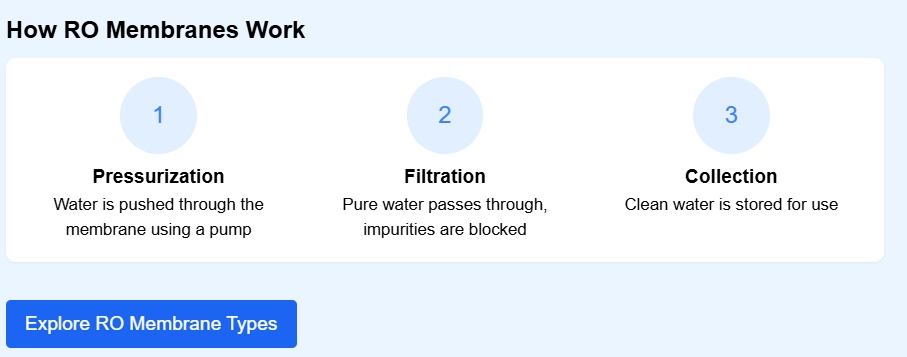
An RO membrane is like a super-fine sieve. Made from synthetic materials, it allows only water molecules (as small as 0.0001 microns) to pass through while blocking contaminants. Here’s how it works:
Key Performance Metrics:
These factors determine efficiency and cost. For example, a membrane with high recovery saves water, crucial in drought-prone areas.
3. Types of RO Membranes in India: Which One’s Right for You
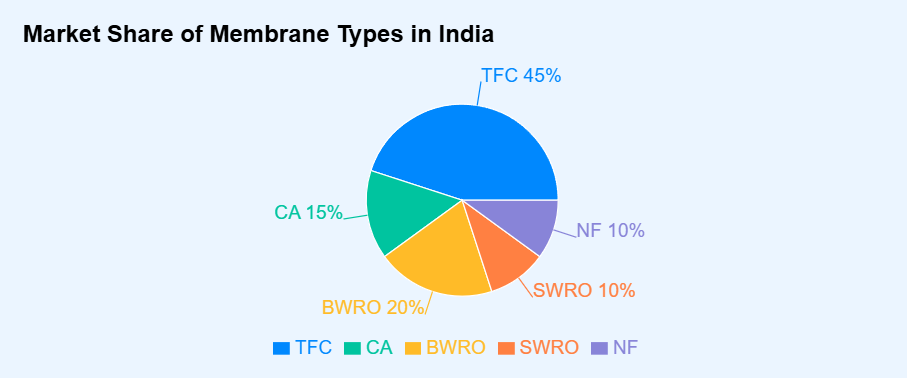
India’s diverse water problems call for different RO membranes. Here’s a quick rundown:
|
Type |
Best For |
Pros |
Cons |
|
Thin Film Composite (TFC) |
Bomes, offices, industries |
High salt rejection, long lifespan |
Sensitive to chlorine, needs pre-filtration |
|
Cellulose Acetate (CA) |
Budget systems, chlorinated water |
Cheap, chlorine-tolerant |
Shorter lifespan, struggles with high TDS |
|
Low-Pressure RO |
Rural areas, solar-powered systems |
Energy-efficient, gentle on pumps |
Slightly lower rejection rate |
|
Brackish Water RO (BWRO) |
Borewells, industrial use |
Handles high TDS (1,000-3,000 ppm) |
Needs strong pressure |
|
Seawater RO (SWRO) |
Coastal regions, desalination |
Removes salt from seawater |
Very high energy use |
|
Nanofiltration (NF) |
Softening water, keeping minerals |
Retains calcium/magnesium |
Doesn’t remove all salts |
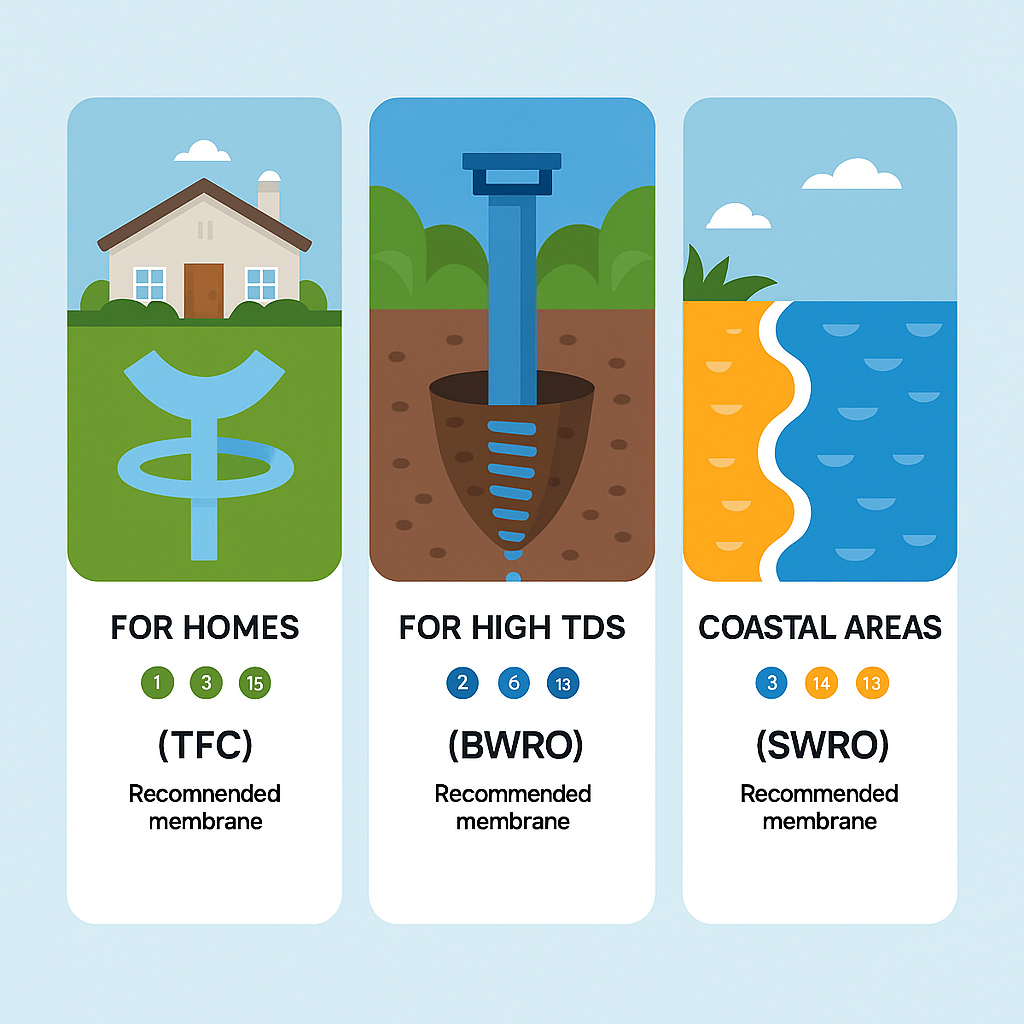
Example: If you’re in Delhi with hard, high-TDS water, a BWRO membrane is ideal. For coastal Chennai, SWRO is a must.
4. Regional Water Challenges & Membrane Recommendations
India’s water quality varies wildly. Here’s what to watch for in your region:
Pro Tip: Always test your water first! A 500-3,000 lab test can save you from buying the wrong system.
5. Top RO Membrane Brands in India (2025)
International Brands:
• Dow FilmTec (USA): Premium quality, long lifespan (3-4 years). Prices: 1,200-35,000.
• Toray (Japan): Industrial-grade, anti-fouling. Prices: 11,000-35,000.
• LG Chem (South Korea): Great balance of price and performance. Prices: 10,000-32,500.
Indian Brands (Budget-Friendly):
• Pearl Water Technologies:
Pearl Water Technologies: A trusted name in RO membranes, offering a range of high-quality options for both residential and commercial use. Check out their products at Pearl Water Membranes and explore more solutions at Pearl Water Technologies.
Rule of Thumb: Premium brands cost more upfront but last longer, saving money over time.
6. How to Choose the Right RO Membrane
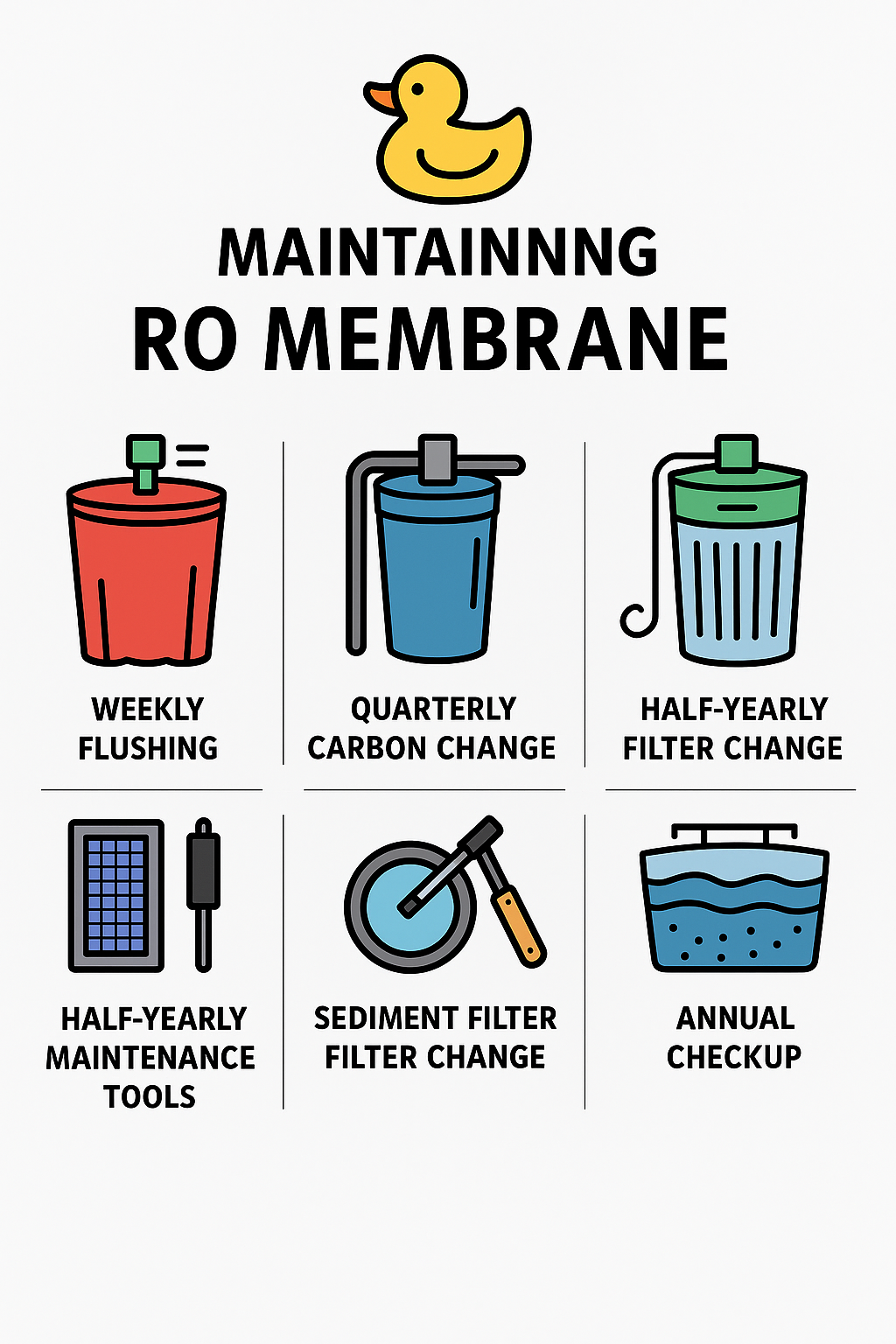
7. Maintenance Tips to Extend Membrane Life
Cost-Saving Hack: Proper maintenance can double your membrane’s lifespan (saving 1,000-25,000 on replacements).
8. Cost Analysis: Is an RO System Worth It
Residential RO System:
Verdict: While bottled water remains more expensive, RO systems provide better long-term value with superior water quality control. The breakeven point comes faster when considering health benefits and convenience.
9. Future Trends: What’s Next for RO in India
By 2030, India’s RO market is expected to hit 25,000 crores, with innovations making systems cheaper and greener.
10. Final Advice: Making the Smart Choice
Remember: The cheapest membrane isn’t always the best. Invest in quality pre-treatment and maintenance to save money long-term.
For reliable RO membrane options, visit Pearl Water Technologies and explore their range at Pearl Water Membranes.
*Abbreviations used
Need Help Consult a local water expert for a tailored solution. Clean water isn’t just a purchase—it’s an investment in health and peace of mind.
Leave A Comment