Added to wishlist.

What Is a Swimming Pool Filter System? (Complete 2026 Guide)

02-Sep-2026

What Is a Swimming Pool Filter System? (Complete 2026 Guide)

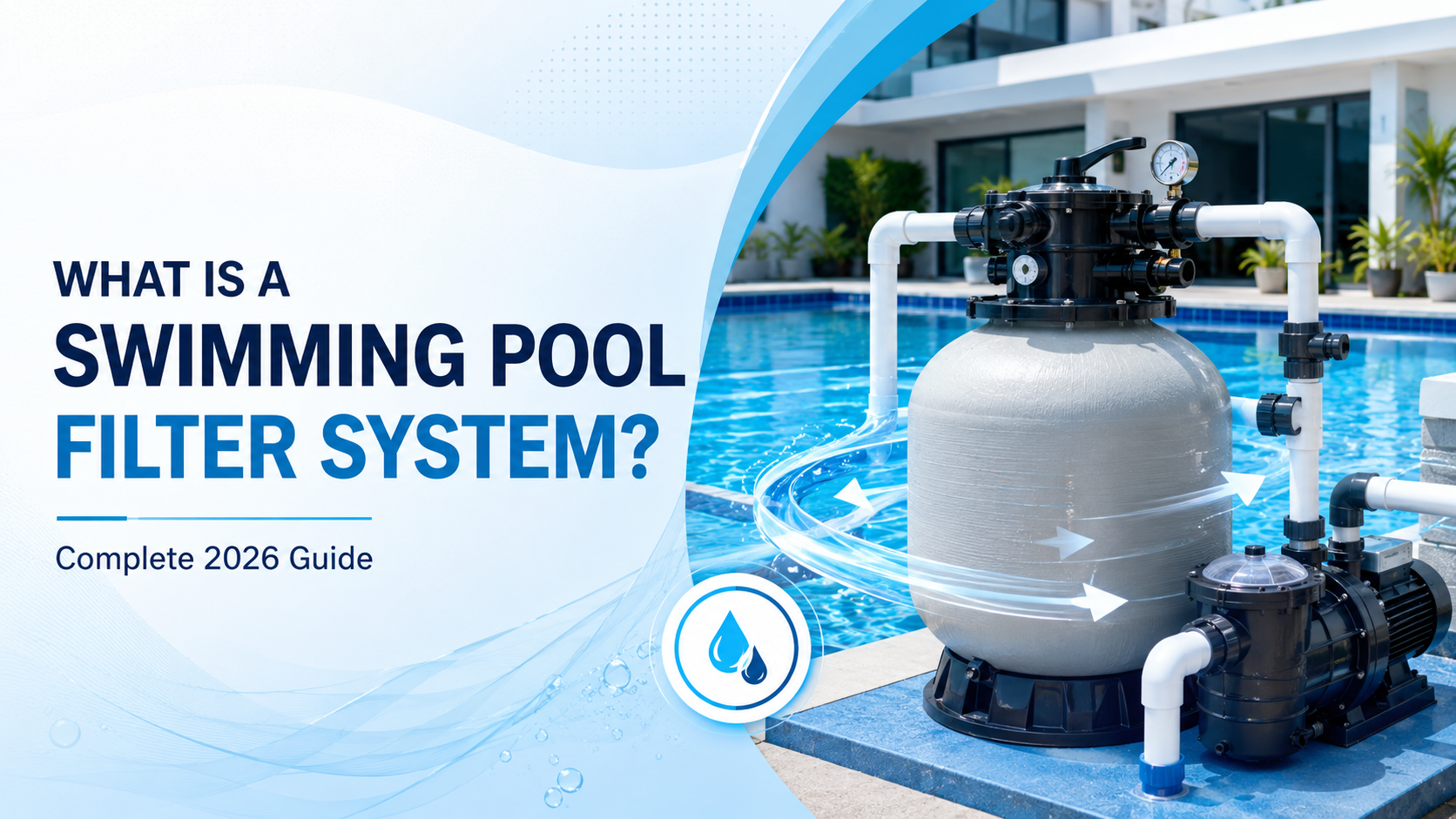
Quick answer: A swimming pool filter system is the complete set of equipment that keeps pool water clean, clear, and safe by continuously circulating it through a filtration process. It's made up of four core parts working together: the pump (which draws and pushes water through the system), the filter tank (which physically traps dirt and debris), the valve (which controls filtration mode — filter, backwash, rinse), and the plumbing (skimmers, main drain, and return jets that move water in and out of the pool). The filter tank alone is often what people mean when they say "pool filter," but it only works as part of this larger system.

The rest of this guide breaks down each component, how they work together, and what to check when sizing or troubleshooting a system as a whole — not just the filter tank.


The 4 Core Components of a Pool Filter System

1. The Pump

The pump is the system's engine — it draws water out of the pool through the skimmers and main drain, then pushes it through the rest of the system under pressure. Without adequate pump output, even a well-built filter tank can't process water at its rated capacity. Pump and filter sizing need to be matched to each other, not chosen independently.

2. The Filter Tank

This is the component most people picture when they hear "pool filter" — typically an FRP (Fiberglass Reinforced Plastic) tank containing a filtration medium (most commonly silica sand). As water enters under pressure from the pump, it passes through this medium, which physically traps dirt, algae, dust, and other suspended particles before clean water continues through the system.

3. The Valve

Sitting on top of the filter tank in most residential and commercial systems, the multiport valve controls which mode the system operates in — Filter (normal operation), Backwash (cleaning), Rinse (post-backwash flush), Waste (draining without filtering), Recirculate, and Closed. Understanding these settings is essential, since running the wrong mode at the wrong time can send unfiltered water straight into the pool. Our dedicated guide on what a top mount pool filter with a multiport valve does covers every setting in detail.

4. The Plumbing

Skimmers pull surface debris and water into the system; the main drain pulls water from the pool floor; return jets push filtered water back in, typically positioned to promote even circulation across the whole pool rather than leaving "dead zones" where debris settles. Poorly positioned or undersized plumbing can bottleneck even a well-matched pump and filter.


How a Pool Filter System Works, Step by Step

  1. Water is drawn from the pool through the skimmers (surface) and main drain (floor)

  2. The pump pushes this water toward the filter tank under pressure

  3. Water passes through the filtration medium inside the tank, trapping debris

  4. Filtered water exits the tank through the multiport valve (in "Filter" mode)

  5. Clean water returns to the pool through the return jets

  6. The cycle repeats continuously while the system runs, gradually turning over the pool's full water volume

A well-sized system achieves one full water turnover roughly every 6–8 hours of daily operation for a typical residential pool.


Why the "System" Framing Matters (Not Just the Filter)

A common mistake is treating filter tank capacity as the only sizing decision that matters. In reality, a system is only as effective as its weakest matched component:

If this is undersized...

...this happens

Pump

Filter never receives its full rated flow — water clarity suffers even with a good filter

Filter tank

Pump output is wasted; water passes through too fast for effective trapping

Plumbing (pipe diameter)

Restricts flow regardless of pump/filter capacity, and increases pump strain

Return jet placement

Creates uneven circulation and "dead zones" even with adequate total flow

This is why buying "the biggest filter you can afford" isn't automatically the right strategy — the whole system needs to be sized together. Our FRP pool filter buying guide covers this sizing relationship in more depth.


How to Size a Complete Filter System

  1. Calculate your pool's total water volume (litres or cubic meters)

  2. Choose a filter/pump flow rate (CBM or m³/hr) that achieves a full turnover within roughly 6–8 hours of daily operation

  3. Confirm your plumbing pipe diameter can actually carry that flow rate without excessive restriction

  4. Match valve rating to your chosen flow rate — a valve undersized for the rest of the system becomes the bottleneck

Pearl Water's FRP filter range spans multiple capacities to match different pool sizes — from the compact 400mm 6 CBM model for small pools, to the 500mm 8 CBM for medium residential pools, up to the 650mm 16 CBM for larger homes and light-commercial use. See the complete range to compare all available capacities.


Filtration and Water Chemistry: Two Different Jobs

A filter system removes physical debris — it does not sanitize water chemically. Chlorine (or another sanitizer) handles bacteria and algae control, while filtration handles suspended particles. The two work together, not as substitutes: a clean, well-maintained filter actually reduces how much sanitizer you need, since less organic debris means less chlorine demand. Our guide on pool pH vs chlorine explains this relationship in detail, and our pool chemicals range covers the sanitizing side of a complete maintenance routine.


Keeping Your System Running: Maintenance Basics

A filter system needs coordinated maintenance across all four components, not just occasional filter cleaning:

  • Pump: check for unusual noise, priming issues, or reduced output over time

  • Filter tank: backwash when pressure reads 0.2–0.4 bar above clean baseline; replace sand every 3–5 years

  • Valve: inspect O-rings periodically for leaks at the tank/valve connection

  • Plumbing: keep skimmer baskets and pump strainer baskets clear of debris that restricts flow before it even reaches the filter

For the full week-by-week and season-by-season maintenance routine, see our step-by-step swimming pool maintenance guide. If your system's performance has been declining despite regular maintenance, our guide on signs your swimming pool filter needs replacement will help you determine whether the filter tank itself — rather than another component — is the actual cause.


Frequently Asked Questions

What are the main parts of a pool filter system?

Four core components: the pump (circulates water), the filter tank (traps debris), the multiport valve (controls operating mode), and the plumbing (skimmers, main drain, and return jets that move water through the system).

Is the "pool filter" the same as the "filter system"?

Not quite. The filter tank is one component of the larger filter system, which also includes the pump, valve, and plumbing. A filter tank alone can't function without the rest of the system supporting it.

How do I know if my filter system is properly sized?

Check that your filter's rated flow rate achieves a full water turnover within 6–8 hours of daily operation for your pool's total volume, and confirm your pump and plumbing can actually deliver that flow rate without restriction.

Why is my water still cloudy even though my filter runs every day?

This usually points to a mismatch somewhere in the system — insufficient daily run time, undersized pump or plumbing limiting actual flow, worn filter media, or a chemistry imbalance rather than a filtration problem specifically.

Do I need a filter system if I already use pool chemicals?

Yes. Chemicals sanitize the water biologically; the filter system removes physical debris. Skipping either one leads to poor water quality even if the other is done correctly.

How often should the whole system be serviced, not just the filter?

Beyond routine filter backwashing, inspect the pump and valve seals periodically (every few months) and check skimmer/strainer baskets weekly during active swimming season — small blockages here are one of the most common causes of "filter isn't working" complaints that actually trace back to restricted flow before the water even reaches the filter tank.


Why Trust This Guide

This guide is published by Pearl Water Technologies, a manufacturer of FRP swimming pool filtration systems supplying residential, hotel, resort, and institutional pools across India. The system-level guidance above reflects how we engineer and specify complete filtration systems — not just filter tanks in isolation — for our customers. For model-specific specifications, always refer to the datasheet of the exact filter you're considering on our pool filter product range.

Share:

Leave A Comment

Thank You for subscribing our newsletter.