Added to wishlist.
Pearl Water Logo

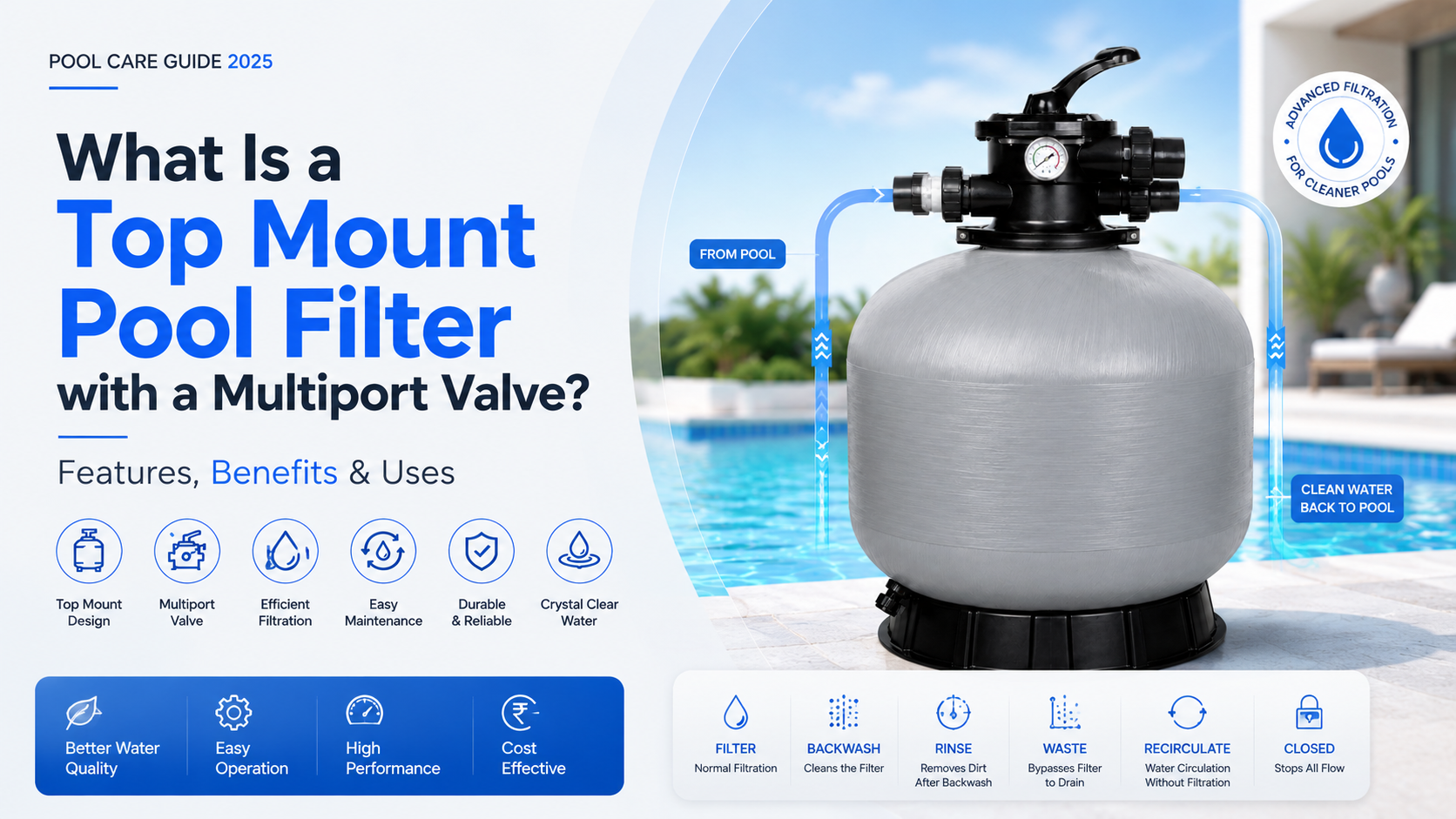
What Is a Top Mount Pool Filter with a Multiport Valve? Features, Benefits & Uses

29-Jul-2026

What Is a Top Mount Pool Filter with a Multiport Valve? Features, Benefits & Uses

If your pool water looks cloudy, your pump pressure keeps creeping up, or you're simply shopping for a new FRP swimming pool sand filter, you've probably run into the term "top mount pool filter with a multiport valve." It sounds technical, but it's actually one of the simplest and most reliable filtration setups a pool owner can have.

In this guide, we'll break down exactly what a top mount multiport valve filter is, how it works, its main features, the benefits it offers over other valve configurations, and the situations where it makes the most sense — so you can decide with confidence whether it's the right choice for your pool.


What Is a Top Mount Pool Filter?

A top mount pool filter is a sand or DE (diatomaceous earth) filter where the control valve — the multiport valve — is installed directly on top of the filter tank, rather than on its side. Water enters and exits the tank through a single mounted assembly at the top, instead of through separate side-mounted plumbing connections.

This design is most common on sand filters and is popular with residential above-ground and inground pools because it's compact, easy to access, and simple to plumb.


What Is a Multiport Valve?

A multiport valve (MPV) is the "control center" of your pool's filtration system. It's a single valve with multiple internal channels, or "ports," that direct water to different destinations depending on the position you select. Instead of needing several separate valves and manually redirecting hoses, one multiport valve handles it all with a simple turn of a handle.

A typical multiport valve has 6–7 settings:

  • Filter – Normal operation. Water passes through the filter media and returns clean to the pool.

  • Backwash – Reverses water flow to flush trapped dirt and debris out through the waste line.

  • Rinse – Resettles filter media and clears any residual debris after backwashing, before returning to normal filtration.

  • Waste – Sends water directly to the waste line, bypassing the filter entirely (useful for vacuuming heavy debris or lowering water level).

  • Recirculate – Circulates water through the plumbing without passing through the filter media.

  • Closed – Shuts off flow completely, typically used during equipment servicing.

  • Winterize – A semi-open position that relieves internal pressure before seasonal shutdown, protecting the valve from freeze damage.


How a Top Mount Multiport Valve Works

When you turn the valve handle, an internal diverter (sometimes called a rotor or spider gasket assembly) rotates to align with different port openings inside the valve body. This determines whether water flows down through the filter media and back to the pool, or reverses direction for cleaning.

Because the valve sits on top of the tank, it connects to the filter bed through a flange gasket rather than separate bulkhead unions, which simplifies installation and reduces the number of connection points that could potentially leak.

Important safety note: Never turn a multiport valve handle while the pump is running. Doing so under water pressure can damage the internal gasket and cause cross-port leaks, resulting in unfiltered water bypassing the filter media.


Key Features of a Top Mount Pool Filter with Multiport Valve

1. Single-Point Control

All filtration functions — filtering, backwashing, rinsing, waste, recirculation, and winterizing — are managed from one handle, eliminating the need for multiple manual valves.

2. Compact, Space-Saving Footprint

Because the valve sits directly on the tank rather than extending out to the side, top mount filters typically take up less horizontal space, which is ideal for tight equipment pads.

3. Simplified Plumbing

With the valve mounted on top, pipe runs are often shorter and more direct, reducing installation complexity and the number of fittings (and potential leak points).

4. Easy Accessibility

Top-mounted valves are generally easier to reach for inspection, adjustment, and maintenance compared to some side-mount configurations tucked beside the tank.

5. Durable Thermoplastic Construction

Most modern multiport valves are built from reinforced, UV- and chemical-resistant plastic designed to withstand constant pressure cycling and outdoor exposure.

6. Available in Multiple Sizes

Multiport valves commonly come in 1.5" and 2" port sizes to match different pump flow rates and plumbing diameters — 2" valves support higher flow rates for larger pools. For smaller residential and above-ground pools, a compact option like the 400mm sand filter for pools up to 6 CBM pairs well with a 1.5" top mount valve.


Benefits of a Top Mount Multiport Valve Filter

Easier maintenance. Backwashing and rinsing take seconds — just turn the handle to the correct setting and run the pump for the recommended time.

Better water clarity and hygiene. Regular backwashing flushes trapped dirt, oils, and fine debris out of the filter media, keeping your pool consistently clear.

Versatile water management. Settings like Waste and Recirculate give you extra control for tasks like manual vacuuming of heavy debris, draining excess water after rain, or running the pump without filtering during startup or algae treatment.

Lower long-term maintenance costs. Proper use of backwash and rinse cycles extends the life of your filter media and reduces strain on the pump, which can help you avoid premature equipment replacement.

Winter protection. The Winterize setting relieves pressure inside the valve, helping prevent cracks from ice expansion during pool closing season.

Straightforward troubleshooting. Because all flow paths run through one visible valve, diagnosing leaks or flow issues is often more straightforward than with multi-valve systems. If your filter is still underperforming after backwashing and cleaning, it may be time to check the signs your swimming pool filter needs replacement.


Top Mount vs. Side Mount Multiport Valve: What's the Difference?

Feature

Top Mount Valve

Side Mount Valve

Filter compatibility

Sand filters

Sand and DE filters

Installation

Flange-mounted on tank top

Bulkhead/union mounted on tank side

Accessibility

Easier to service

Can be more compact for tight spaces

Typical cost

Often lower

Can be higher, especially for DE systems

Best for

Most residential sand filter setups

Larger systems or DE filtration needs

If you have a sand filter for a residential pool, a top mount valve is usually the simpler, more budget-friendly option. Side mount valves are typically required for DE filters and are sometimes preferred on larger commercial-style systems.


When Should You Use a Top Mount Pool Filter with a Multiport Valve?

A top mount multiport valve filter is a strong fit if:

  • You own a residential above-ground or inground pool with a sand filter.

  • You want a simple, all-in-one control system without multiple manual valves.

  • Your equipment pad has limited space.

  • You're looking for an easy-to-install, budget-conscious filtration setup.

  • You want the flexibility to backwash, rinse, drain to waste, or recirculate without disconnecting plumbing.

It may be less ideal if you specifically need a DE filtration system, since most DE filters use side-mounted valves instead.


Frequently Asked Questions

What does a multiport valve do on a pool filter?

A multiport valve directs pool water through different pathways — such as filtering, backwashing, rinsing, or draining to waste — using a single handle, without requiring separate valves or manual plumbing changes.

Is a top mount or side mount valve better?

Neither is universally "better" — it depends on your filter type and setup. Top mount valves are generally easier to install and access on sand filters, while side mount valves are required for DE filters and can suit tighter side-clearance installations.

How often should I backwash a top mount sand filter?

Most pool professionals recommend backwashing when the pressure gauge reads 8–10 PSI above the clean, start-up pressure, rather than on a fixed schedule, since flow conditions vary by pool.

Can I turn the multiport valve while the pump is running?

No. Always shut off the pump before switching the valve position to avoid damaging the internal diverter gasket and causing leaks.

What size multiport valve do I need?

Multiport valves typically come in 1.5" and 2" sizes. Smaller filters and pumps generally use 1.5" valves, while larger pools with higher flow rates use 2" valves — always match the valve size to your existing plumbing and pump capacity.


Conclusion

A top mount pool filter with a multiport valve combines simplicity, durability, and versatile water control in one compact package. For most residential sand filter setups, it offers an easy way to manage filtering, cleaning, and seasonal maintenance — all from a single handle. Understanding how each valve setting works, and matching the right valve size to your system, will help you keep your pool water clear and your equipment running efficiently for years to come.

Share:

Leave A Comment

Thank You for subscribing our newsletter.

Success

Action completed successfully.