


12-Aug-2026
Published: 12 Aug 2026 | Pearl Water Technologies
You drink from the same tap or the same purifier every day without thinking about it — until one day, the water just tastes... off. Maybe it's slightly salty, a bit metallic, flat, or has a faint smell you can't quite place. Nothing changed on your end, so why does the water taste different all of a sudden?
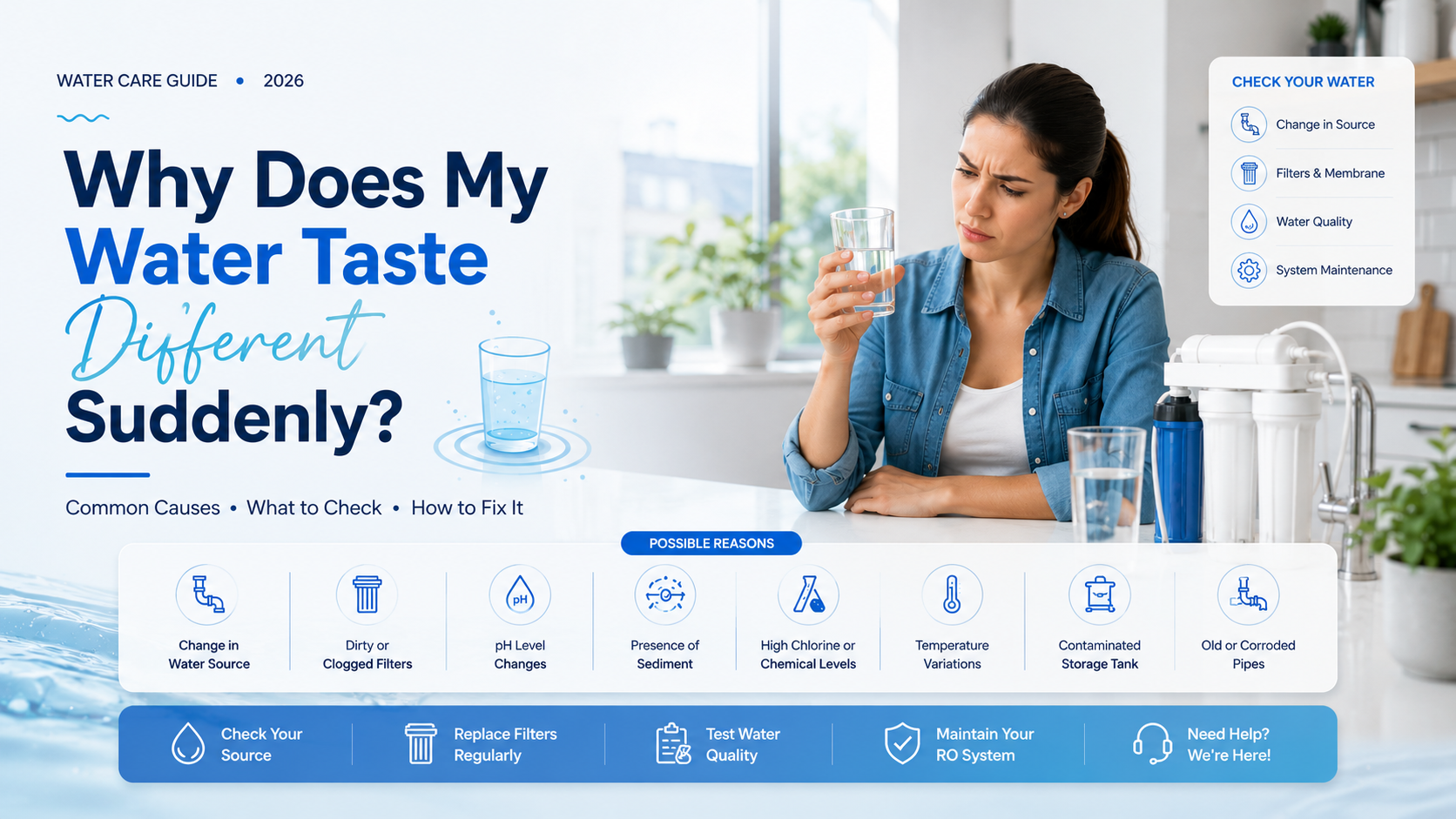
The good news: a sudden taste change is almost never random. It's usually your water — or your purification system — telling you something specific changed upstream. Below are the 7 most common real-world causes, roughly in order of how often we see them, and exactly what to check for each.
Taste is closely tied to Total Dissolved Solids (TDS) — the minerals and salts dissolved in your water. Even a jump of 100–150 ppm is enough for most people to notice a difference, especially if it pushes water into a saltier or more "mineral-heavy" taste.
Common triggers for a sudden TDS shift:
If you suspect this is the cause, the fastest way to confirm it is a quick TDS meter check on your raw (source) water — compare it to what you remember from before, and check it against the safe range in our guide on Ideal TDS Level for Drinking Water.
If only your purified water tastes different — while water from another tap in the house tastes the same as always — the purifier itself is the more likely culprit, not the source. This is the most common reason for the search "why does my RO water taste different suddenly."
This usually comes down to one of:
We cover exactly what your purifier's output number should look like, and how to tell if it's drifted, in What TDS Should Come Out of Your RO Purifier? — that guide includes a full troubleshooting checklist if your output tastes or reads differently than usual. If you're also seeing common symptoms like reduced flow or unusual noise, our Common Problems with RO Membranes guide covers the wider list of what can go wrong.
If you're on municipal/corporation water supply, a sudden "swimming pool" or bleach-like taste usually means the water utility has temporarily increased chlorine dosing — often done after heavy rain, a contamination scare, or routine pipeline maintenance in your area. This is a very common cause of the complaint "why does my tap water taste and smell different."
This isn't usually a sign your water is unsafe — if anything, it means it's being treated more heavily than normal. But it does make water taste noticeably different, especially straight from the tap. A working carbon filter stage (built into most RO purifiers as pre-filtration) handles this well — check our Carbon Filter range if yours is due for a change.
If you store water in an overhead or underground tank, the tank itself is a very common — and often overlooked — source of a sudden water taste change:
Fix: If it's been more than 6 months since your last tank cleaning, that's the first thing to check — it's the single most common cause of "my water suddenly tastes earthy or musty" complaints we hear.
A metallic or "bloody" taste that appears suddenly, especially after water has sat in the pipes overnight (like first-thing-in-the-morning water), often points to corrosion in old galvanized or copper piping, or a recent plumbing repair that disturbed built-up sediment inside the pipes. This is the most common explanation behind "why does my water taste metallic all of a sudden."
Running the tap for 20–30 seconds before use, especially first thing in the morning, usually clears this. If the metallic taste persists throughout the day, it's worth getting the water tested, since it could indicate elevated iron or lead levels from aging infrastructure — see Is Your Water Making You Sick? for warning signs worth taking seriously.
Sometimes what feels like a sudden "taste change" is actually a sudden increase in water hardness — dissolved calcium and magnesium — rather than overall TDS. Hard water often carries a slightly chalky or heavy mouthfeel rather than a salty one, and tends to show up alongside other clues like soap not lathering well or white scale on your taps. Our guide on how to know if your area has hard water and the difference between hard and soft water can help you tell the two apart. If hardness is the culprit, a water softener — not just an RO purifier — is the right fix.
Even without an obvious trigger, filters and membranes degrade gradually — and the taste change you're noticing "suddenly" may actually be the final, noticeable stage of a slow decline that's been building for weeks. Sediment and carbon pre-filters typically need replacement every 3–6 months, and RO membranes every 12–24 months depending on your input water quality.
If it's been a while since your last filter change, this is often the simplest explanation. Browse our RO Filter Kits to check what's due for replacement, follow our RO purifier maintenance tips, or get a quick diagnostic through our RO Service.
Ask yourself these, in order, to narrow down the cause fast:
Why does my RO water taste different all of a sudden? Most often it's an aging membrane, a filter overdue for replacement, or a TDS controller that's drifted from its usual setting. Compare your purifier's current output TDS against what it used to read — see our RO output TDS guide for the ideal range.
Why does my tap water taste salty suddenly? This usually points to a rise in TDS at the source — common during summer as groundwater TDS climbs, or if your building has switched to a different water source like a tanker or borewell.
Why does water taste different after rain? Heavy rain can temporarily raise turbidity and shift TDS in groundwater and reservoirs, and municipal utilities sometimes increase chlorine dosing afterward as a precaution — both can noticeably change taste for a few days.
Can a dirty storage tank change water taste? Yes — it's one of the most common causes. Algae growth, sediment buildup, or leftover cleaning chemicals in an overhead or underground tank can all cause musty, earthy, or chemical aftertastes.
Why does my water taste metallic all of a sudden? Usually corrosion or disturbed sediment in old plumbing, especially noticeable in water that's sat in the pipes overnight. If it persists past the first draw of the day, get the water tested.
Is a sudden taste change in water dangerous? Not always, but it shouldn't be ignored either. A metallic taste that persists, or any taste change paired with discoloration or odor, is worth getting your water tested for. When in doubt, get a quick diagnostic done rather than guessing — see Is Your Water Making You Sick? for red flags to watch for.
Not sure what's behind your water's taste change? Our RO Service team can test your source water, check your purifier's output TDS, and tell you exactly what's changed. Or explore our RO Water Purifiers, RO Membrane, and Water Softener ranges if it's time for an upgrade.
Leave A Comment