Added to wishlist.

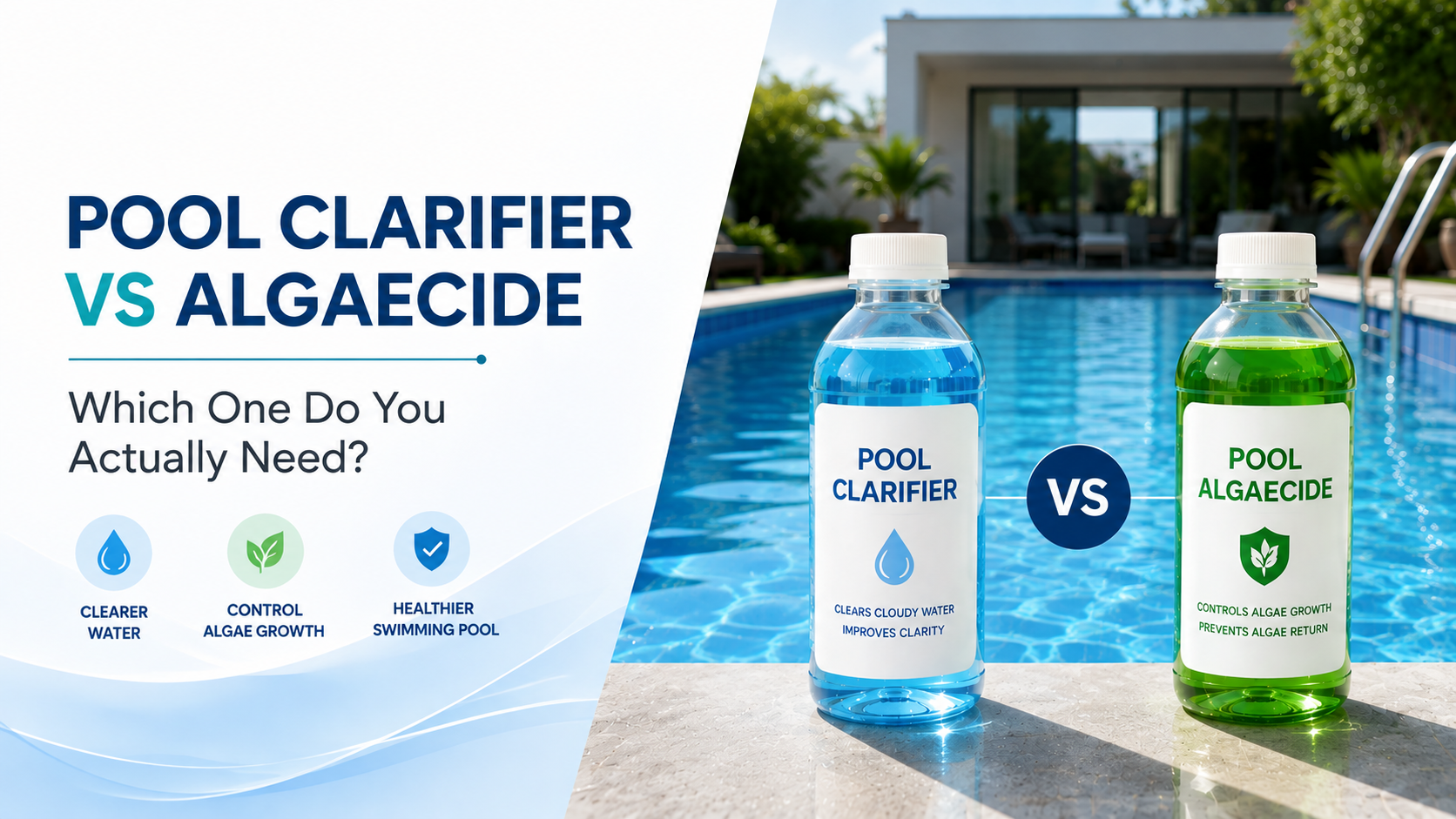
Pool Clarifier vs Algaecide: Which One Do You Actually Need?

03-Aug-2026

Pool Clarifier vs Algaecide: Which One Do You Actually Need?

Quick answer

 A pool clarifier fixes cloudy water by clumping tiny debris particles together so your filter can catch them. A pool algaecide fixes (and prevents) algae by weakening or killing algae cells so chlorine can finish the job. Cloudy but algae-free water? Use a clarifier. Green, slimy, or algae-prone water? Use an algaecide alongside chlorine shock. Many pool owners eventually need both — just not usually on the same day.

If you've stood in the pool aisle staring at two bottles that both promise "crystal clear water," you're not alone. Clarifier and algaecide get lumped together constantly, but they solve two completely different problems. Grabbing the wrong one wastes money and can leave your pool exactly as cloudy — or as green — as when you started.

This guide breaks down exactly what each product does, how to tell which one your pool needs right now, and how to use them safely (including whether you can use them together). Browse our full range of pool chemicals if you're stocking up while you're at it.


What Is a Pool Clarifier?

A pool clarifier is a water-clarity product, not a disinfectant. It works through a process called coagulation: the clarifier carries a positive electrical charge that attracts and binds together the microscopic negatively-charged particles — dust, oils, sunscreen residue, dead algae, pollen — that are too small for your filter to trap on their own.

Once bound into larger clumps (called "floc"), those particles are big enough for your filter to catch, leaving you with clear water again, usually within 24–48 hours.


What a clarifier does:

  • Clumps microscopic debris into filterable particles

  • Restores clarity after a cloudy spell, heavy bather load, or rainstorm

  • Helps your filter run more efficiently


What a clarifier does NOT do:

  • It does not kill algae

  • It does not sanitize or disinfect

  • It does not prevent algae blooms

A close cousin of the clarifier is flocculant ("floc"), which works the same way but drops particles all the way to the pool floor for vacuuming instead of filtering — better for extreme cloudiness, like after a big algae kill or a storm, since it doesn't overload your filter.


What Is a Pool Algaecide?

A pool algaecide is designed to attack algae directly — disrupting cell membranes, energy transport, or cell division so the algae weakens, stops multiplying, and becomes easier for your chlorine to finish off. Contrary to popular belief, most algaecides don't fully "kill" algae on their own; chlorine shock does the actual killing, and algaecide handles prevention and support. If you've been shocking your pool and the algae still won't budge, read Why Isn't Chlorine Killing Algae in My Pool? to troubleshoot what's going wrong.


There are three main types you'll see on shelves:

Type

Best For

Watch Out For

Quats (Quaternary Ammonium)

       Preventing algae before it starts

           Can cause foaming

Polyquats

       Killing existing algae, longer-lasting

            Pricier than quats

Copper-based

          Heavy-duty algae control

      Can stain pool surfaces if misused

For step-by-step dosing, timing, and application instructions, see our full guide: How to Use Pool Algaecide Correctly: Step-by-Step Guide. You'll find quats, polyquats, and copper-based options in our pool chemicals range.


What an algaecide does:

  • Prevents algae growth (used weekly as maintenance)

  • Weakens existing algae so chlorine shock works faster

  • Helps stop algae from returning after a bloom


What an algaecide does NOT do:

  • It does not clear cloudiness caused by dirt, oils, or debris

  • It's not a substitute for chlorine or regular sanitizer


Pool Clarifier vs Algaecide: Side-by-Side Comparison


Clarifier

Algaecide

Main job

Clears cloudy water

       Prevents/weakens algae

How it works

Binds fine particles for filtering

       Disrupts algae cell function

Kills algae?

No

      Not fully — chlorine does the killing

Best used

After cloudiness, heavy use, or rain

      Weekly for prevention; after shocking for algae

Common issue

      Can clog filter if overdosed

        Quats can foam; copper can stain


How to Tell Which One You Need

Ask yourself what your water actually looks like:

  • Hazy, milky, or dull water with no green or brown tint ? You need a clarifier. This is almost always a debris or filtration issue, not a living-organism problem.

  • Green, yellow/mustard, or black tint, slimy walls, or water that turns green fast in sunlight ? You have an algae problem. Shock the pool with chlorine first, then use an algaecide to prevent recurrence.

  • Water is cloudy after you cleared an algae bloom ? This is where people get confused. The cloudiness left behind by a dead algae bloom is a job for a clarifier or flocculant, not more algaecide.

  • Water was clear last week and is fine now, no algae history ? A weekly maintenance-dose algaecide is a smart preventative, especially in hot weather or a high-bather-load pool.


Can You Use Clarifier and Algaecide Together?

Yes, but not simultaneously in the same dose, and order matters. The general best practice is:

  1. Test and balance your water chemistry first (pH, alkalinity, chlorine).

  2. Shock the pool if algae is present, and let chlorine levels return to normal — if algae keeps coming back even after shocking, our Why Isn't Chlorine Killing Algae in My Pool? guide covers the most common causes.

  3. Add algaecide to knock down and prevent algae regrowth, following the dosing steps in How to Use Pool Algaecide Correctly.

  4. Wait a day or two, then add clarifier (or flocculant, if the water is extremely cloudy) to clear out the dead algae and debris left behind.

  5. Never mix chemicals directly together in a bucket — always add separately, straight into the pool, per label instructions.

Many all-in-one products (like combined "algaecide + clarifier" formulas) exist for maintenance use, but for an active algae bloom or stubborn cloudiness, treating each problem individually usually works faster and more predictably.


Frequently Asked Questions

Does pool clarifier get rid of algae?

No. Clarifier only clumps particles for filtering — it doesn't kill or prevent algae. For algae, you need chlorine shock plus an algaecide.

Will algaecide clear cloudy water?

Not on its own. If the cloudiness isn't caused by algae, algaecide won't fix it — you need a clarifier or flocculant instead.

How long does it take for a pool clarifier to work?

Most clarifiers show visible improvement within 24–48 hours, depending on dose, filter run time, and how cloudy the water was to start.

Why is my pool still cloudy after adding algaecide?

Because algaecide isn't designed to clear cloudiness — it targets algae. If your water is cloudy and algae-free, switch to a clarifier.

Is it safe to swim after adding clarifier or algaecide?

Always check the specific product label, but many clarifiers allow swimming shortly after dosing, while algaecide-treated pools (especially after a shock) typically need a wait period until chlorine returns to a safe range (roughly 1–4 ppm). Confirm timing on your product's label.

Can I use clarifier and algaecide on the same day?

It's best to space them out. Add algaecide first (after shocking, if algae is present), let it circulate for a day or two, then follow with clarifier to clean up the leftover debris. For exact dosing and timing, see How to Use Pool Algaecide Correctly: Step-by-Step Guide. Adding both at once can overwhelm your filter.

What's the difference between a clarifier and a flocculant?

Both bind fine particles together, but clarifier makes particles small enough to filter out, while flocculant makes larger clumps that sink to the pool floor for vacuuming. Flocculant is better for severe cloudiness, like after a big algae bloom or a storm.

Do I need algaecide if I already keep my chlorine level consistent?

Not always. Well-maintained chlorine levels prevent most algae on their own. Algaecide is most useful as extra insurance during hot weather, heavy bather loads, or if your pool has a history of algae problems.


Conclusion

  • Cloudy water, no algae ? Clarifier (or flocculant for severe cases)

  • Green or algae-prone water ? Chlorine shock + algaecide

  • General weekly maintenance ? A small preventative dose of algaecide, plus occasional clarifier after storms or heavy pool use

Understanding the difference between these two products isn't just semantics — it's the difference between a pool that clears up in a day and one that stays stubbornly cloudy or green no matter how much chemical you throw at it. Test your water, diagnose the actual problem, then reach for the right bottle.

Ready to stock up? Shop our full range of pool chemicals — including clarifiers and algaecides — or dig deeper with our How to Use Pool Algaecide Correctly and Why Isn't Chlorine Killing Algae in My Pool? guides.

Share:

Leave A Comment

Thank You for subscribing our newsletter.