Added to wishlist.

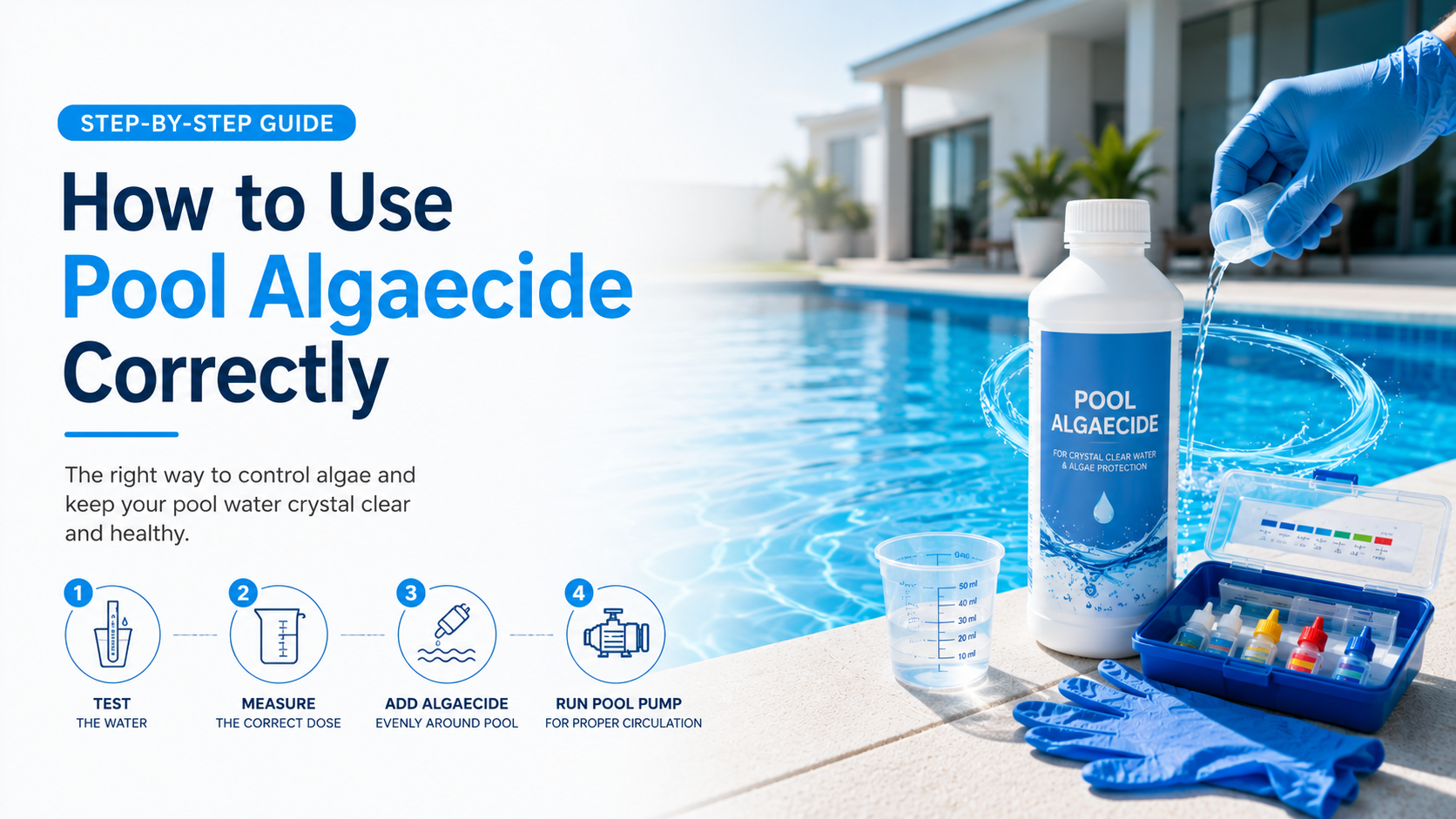
How to Use Pool Algaecide Correctly: Step-by-Step Guide

28-Jul-2026

How to Use Pool Algaecide Correctly: Step-by-Step Guide

Quick Answer

Algaecide works best as a supplement to chlorine, not a replacement: balance pH and alkalinity first, shock the pool with chlorine if algae is already visible, brush affected surfaces, then dose algaecide according to the product label based on your exact pool volume, with the filter running continuously. Never skip the chlorine shock step for an active bloom — algaecide alone rarely clears established algae. The sections below walk through the full sequence and the safety details that most guides skip.


Step-by-Step: How to Use Algaecide Correctly

  1. Test and balance pH and alkalinity first. Algaecide (and chlorine) both work less effectively in unbalanced water. Target pH 7.2–7.6 and alkalinity 80–120 ppm — see the full Pool pH and Alkalinity Guide if you haven't checked this recently.

  2. Brush visible algae off walls and floor. This breaks up algae colonies so both chlorine and algaecide can actually reach them — see How to Brush Algae Off Pool Walls and Floor Correctly.

  3. Shock the pool with chlorine if algae is already visible. Algaecide is a supplement, not a substitute, for a proper chlorine shock on an active bloom — see How to Shock a Pool: Step-by-Step Guide and dose with chlorine granules.

  4. Let chlorine levels normalize before adding algaecide. Very high chlorine right after a shock can degrade certain algaecide types, especially metal-based formulas — check your specific product's label for same-day compatibility, and when in doubt, wait until the next day.

  5. Calculate the correct dose for your exact pool volume. Algaecide concentration varies significantly by product and type — never estimate; measure your pool's gallons/litres and follow the label's dosing chart precisely. Overdosing is the leading cause of foaming and staining complaints.

  6. Broadcast the algaecide evenly around the pool perimeter with the pump and filter running, rather than pouring it in one spot.

  7. Run filtration continuously for at least 24 hours after dosing to help distribute the algaecide and filter out dead algae debris.

  8. Retest and brush again the next day. Persistent patches usually mean the original brushing or shock dose wasn't thorough enough, not that the algaecide failed — see Why Does Algae Keep Coming Back After I Treat It? if algae returns after this process.

  9. Check the product label for swim wait time before getting back in — this varies by algaecide type and dose (see FAQ below).

  10. Consider a low, regular maintenance dose going forward if your pool is prone to recurring algae — many algaecides have a separate, lower weekly maintenance dosing schedule distinct from the initial treatment dose.


Types of Pool Algaecide, Compared

Type

How It Works

Best For

Watch Out For

Polyquat (quaternary ammonium, polymer-based)

Disrupts algae cell membranes

General-purpose use, most pool types, low foaming

Slightly higher cost than basic quats

Simple Quat (quaternary ammonium)

Similar mechanism to polyquat, older formulation

Budget option, spas, small pools

Can cause foaming, especially with pool jets/water features

Metal-based (copper or silver algaecide)

Metal ions are toxic to algae cells

Long-lasting residual protection, stubborn algae

Can stain pool surfaces or discolor light-colored hair if overdosed or pH is low

Sodium bromide-based

Converts to bromine in chlorinated water, boosting oxidation

Severe, stubborn algae blooms

Not ideal for routine use; can complicate standard chlorine testing/readings

Choosing the right type matters as much as using it correctly — see Best Algaecide for Pool Algae: When and How to Use It for guidance matched to specific algae types like black algae or mustard algae.


Common Mistakes That Make Algaecide "Not Work"

  • Skipping the chlorine shock. Algaecide added to an active, established bloom without shocking first rarely clears it — it's built to prevent and support, not to replace breakpoint chlorination. See Breakpoint Chlorination Explained.

  • Guessing the dose instead of calculating it. Underdosing does little; overdosing causes foaming or, with metal-based products, staining.

  • Adding it into unbalanced water. High pH weakens both chlorine and algaecide effectiveness — see Does High pH Really Stop Chlorine From Working?

  • Not brushing first. Algaecide reaching only the water column does little against algae anchored to walls and floors, especially black or mustard algae with a protective outer layer.

  • Ignoring phosphates. Algaecide kills existing algae but doesn't remove its food source — if algae keeps returning, see What Are Phosphates and Why They Cause Algae Blooms?


Frequently Asked Questions

How long after adding algaecide can I swim?

This varies significantly by product and dose — always check the label. Routine maintenance doses of polyquat algaecide often allow swimming after roughly 15–20 minutes, while higher shock-level doses or metal-based products may require several hours. When in doubt, wait longer rather than less.

Can I use algaecide and chlorine at the same time?

Generally yes for ongoing maintenance dosing once water is balanced, but avoid adding a large algaecide dose immediately during or right after a high-level chlorine shock, since very high chlorine can reduce the effectiveness of some algaecide types, particularly metal-based ones.

Why did my pool start foaming after I added algaecide?

Foaming is most common with quaternary ammonium (quat) algaecides when overdosed, or when combined with certain pool jets and water features that aerate the water. Reduce the dose next time and confirm you calculated it against your actual pool volume.

Is copper-based algaecide safe for vinyl or fiberglass pools?

Generally yes at the correct dose, but overdosing or using it in low-pH water increases the risk of staining or, in rare cases, green-tinted hair from copper deposits. Keeping pH in the 7.2–7.6 range reduces this risk significantly.

Does algaecide work without shocking the pool first?

For a small, early-stage algae presence, sometimes. For a visible, established bloom, algaecide alone rarely clears it — shock with chlorine granules first, then use algaecide as a follow-up and preventive measure.

How much algaecide do I need for my pool?

This depends entirely on the specific product's concentration and your pool's exact volume — there's no universal ppm target across brands. Always calculate against your pool's gallons/litres using that product's dosing chart rather than a general rule of thumb.

Share:

Leave A Comment

Thank You for subscribing our newsletter.