Added to wishlist.

Why Is not Chlorine Killing Algae in My Pool?

25-Jul-2026

Why Is not Chlorine Killing Algae in My Pool?

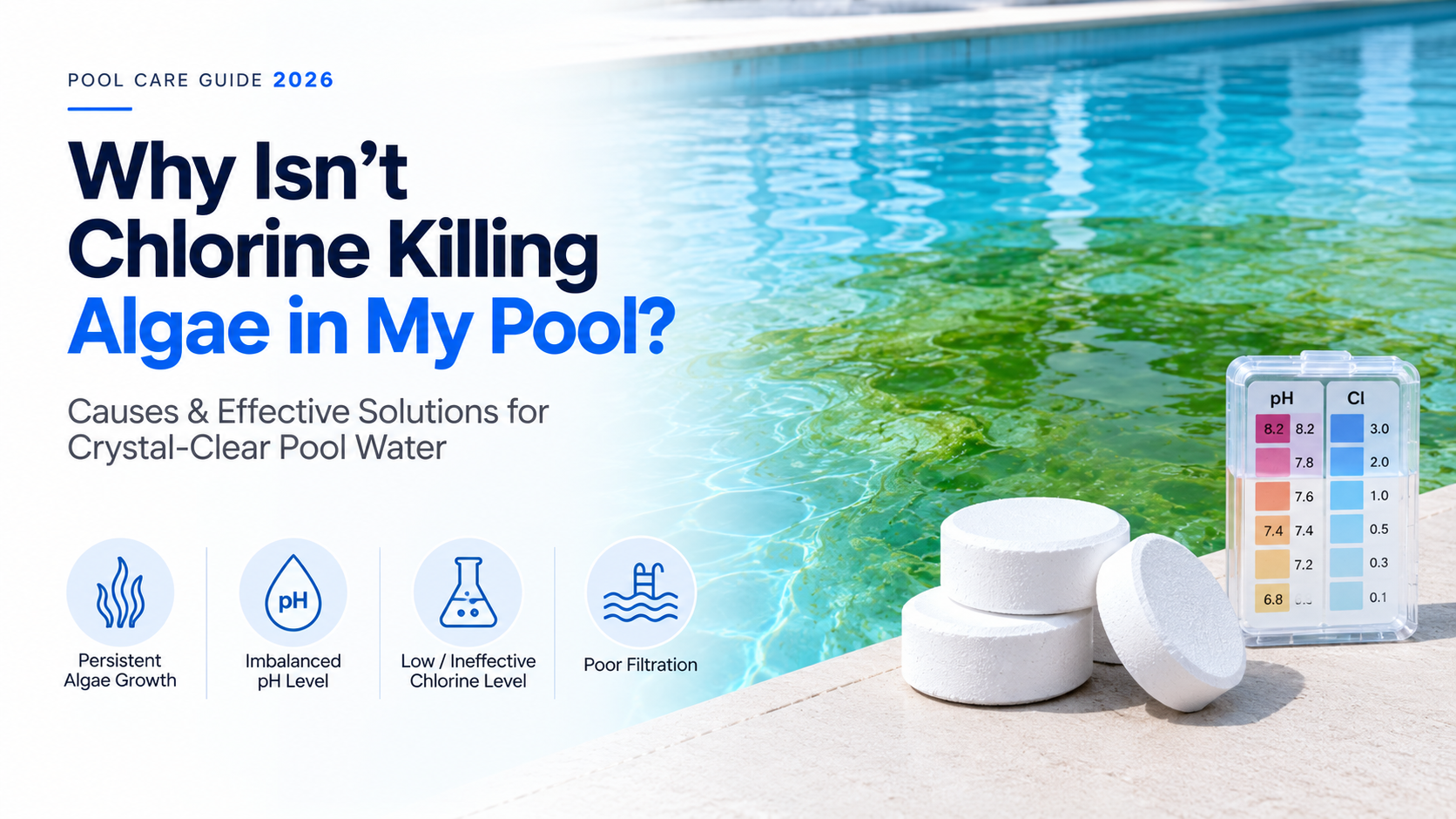
Why Isn't Chlorine Killing Algae in My Pool?

If you've added chlorine — even shocked the pool — and algae is still there, something specific is blocking it. Here are the 7 real causes and how to fix each one.

Quick Answer

Chlorine usually fails to kill algae for one of three reasons: there isn't enough free chlorine actually available (it's being consumed by chloramines, high pH, or high stabilizer/"chlorine lock"), the algae is outpacing your dose (a heavy bloom needs a full shock, not a top-up), or something is feeding the algae faster than chlorine can work (phosphates, poor circulation, or a resistant algae type like black or mustard algae). Test free chlorine directly, correct pH first, then shock at the right dose — the sections below walk through exactly how.


7 Reasons Chlorine Isn't Killing Your Algae

#

Cause

Why It Blocks Chlorine

Fix

1

You're reading total chlorine, not free chlorine

Total chlorine includes "used up" combined chlorine — it can look fine while free chlorine (the part that actually kills algae) is near zero

Test free chlorine specifically — see Free Chlorine vs Total Chlorine

2

Chlorine lock (high cyanuric acid)

Stabilizer buildup from overusing trichlor tablets suppresses chlorine's killing power even when ppm looks normal

Dilute with fresh water; see Chlorine Lock: Causes & Fix

3

High pH

Chlorine's active (hypochlorous acid) form drops sharply above pH 7.6, weakening its effect on algae

Bring pH down to 7.2–7.6 before shocking

4

Underdosing for a heavy bloom

A dose sized for maintenance can't out-pace an active algae bloom consuming chlorine as fast as you add it

Shock at a higher dose with fast-dissolving granules, not tablets

5

High phosphate levels

Phosphates are algae's food source — chlorine can kill existing algae but new algae keeps regrowing while phosphates remain

Use a phosphate remover alongside chlorine shock

6

Poor circulation or filtration

Chlorine can't reach dead spots (corners, behind ladders, low-flow zones) where algae keeps a foothold

Brush affected areas manually; run your pool filter continuously during treatment

7

Resistant algae type (black/mustard algae)

These forms have a protective outer layer that ordinary dosing can't penetrate

Brush vigorously to break the layer, then shock; may need repeat treatments


Start Here: Are You Actually Testing Free Chlorine?

This is the single most common reason people think "chlorine isn't working" when it actually is. Pool test kits report free chlorine and total chlorine separately — free chlorine is the active sanitizer still available to kill algae and bacteria; total chlorine includes chlorine that's already reacted and is now inert (combined chlorine/chloramines). If you've only been checking total chlorine, or a strip that doesn't clearly separate the two, you may have near-zero free chlorine while the number you're looking at looks "normal."

Full explanation and how to test both correctly: Free Chlorine vs Total Chlorine: What's the Difference? and How to Test Pool Chlorine Levels at Home.


Check for Chlorine Lock Before You Add More Chlorine

If you keep dosing chlorine and free chlorine still won't hold a reading, high cyanuric acid (stabilizer) is a common culprit — commonly called chlorine lock. This builds up gradually from repeated use of stabilized chlorine like trichlor tablets, and once stabilizer climbs too high, chlorine's ability to actually oxidize algae drops sharply even though your ppm reading might look acceptable. The only real fix is diluting the pool with fresh water — no chemical removes excess stabilizer.

Full breakdown: What Is Chlorine Lock and How Do You Fix It?


Fix pH First — Chlorine Barely Works Above 7.6

Chlorine's algae-killing power comes from hypochlorous acid, the active form chlorine takes at the right pH. As pH climbs above 7.6, more of your chlorine converts to a much weaker form that barely touches algae — so you can have a technically "normal" chlorine reading and still watch algae spread. Test and correct pH to 7.2–7.6 before shocking; dosing chlorine into high-pH water wastes a large share of the dose.


Shock at the Right Dose — Not a Maintenance Top-Up

A heavy algae bloom consumes chlorine far faster than a clean pool does — a normal maintenance dose gets consumed by the algae itself before it can build up enough "extra" chlorine to actually kill it (this threshold is sometimes called breakpoint chlorination). If you're topping up with a chlorine tablet and expecting it to clear visible algae, that's the mismatch — tablets are built for slow, steady maintenance, not a rapid knockout dose.

For active algae, shock with fast-dissolving chlorine granules, broadcast directly into the water with the pump running, and retest after several hours rather than expecting an overnight fix on the first try. Full steps: How to Shock a Pool: Step-by-Step Guide.

If the water turns cloudy or green during this process, that's usually dead algae releasing pigment, not a sign of failure — see Why Is My Pool Cloudy After Adding Chlorine? and Green Pool After Shock: Causes and Fast Fixes.


Phosphates: The Algae Food Source Chlorine Doesn't Touch

Chlorine kills algae cells directly, but it does nothing to phosphates — a nutrient source that washes in from fertilizer runoff, decaying leaves, and even some tap water sources. High phosphate levels mean algae keeps regrowing shortly after each shock, even when your dosing is otherwise correct. If algae keeps returning within days of a successful shock, test phosphate levels and treat with a phosphate remover alongside your normal chlorine routine — chlorine and phosphate control solve different halves of the same problem.


Circulation, Dead Spots, and Resistant Algae Types

Chlorine only works where it actually reaches. Poor circulation — a clogged or undersized pool filter, low pump runtime, or awkward pool geometry — leaves dead zones where algae can hide from even a strong chlorine dose. Brush visible algae patches by hand to break up the colony before and during treatment; this is especially critical for black algae and mustard algae, which form a protective outer layer that ordinary dosing struggles to penetrate. Brush vigorously, shock immediately after brushing while the colony is disrupted, and expect to repeat the process over 2–3 days for stubborn cases.


Frequently Asked Questions

Why is my pool green even though the chlorine reading is high? 

You're likely reading total chlorine rather than free chlorine, or pH is high enough that most of your chlorine has converted to a weak form that doesn't effectively kill algae. Test free chlorine specifically and correct pH before adding more chlorine.

Can too much chlorine actually stop it from killing algae?

 Not directly — but if your stabilizer (cyanuric acid) is very high from repeated tablet use, that's a separate issue called chlorine lock, which does reduce chlorine's effectiveness regardless of how much you add.

Should I use algaecide instead of chlorine for algae? 

Algaecide can help as a supplement for stubborn cases, but it's not a replacement for correctly dosed chlorine — most algae problems are solved by fixing pH, dosing at shock level with granules, and improving circulation, not by switching products entirely.

How long does it take for chlorine to kill algae after shocking? 

Visible improvement often starts within a few hours, but full clearing (including filtering out dead algae) typically takes 24–48 hours with continuous filtration. Heavier blooms may need a second shock.

Why does algae keep coming back after I shock the pool? 

This usually points to high phosphate levels feeding new algae growth, or poor circulation leaving pockets where old algae survived the shock. Treating phosphates and improving filter runtime alongside chlorine dosing breaks the cycle.

Is it normal for chlorine tablets to not clear algae?

 Yes — tablets are designed for slow, steady maintenance dosing, not the rapid, high-concentration dose an active algae bloom needs. Use fast-dissolving granules for shock treatment, then return to tablets for ongoing maintenance once the water is clear.


Share:

Leave A Comment

Thank You for subscribing our newsletter.