Added to wishlist.

Everything you need to know about industrial RO Membrane

04-Jul-2024

Everything you need to know about industrial RO Membrane

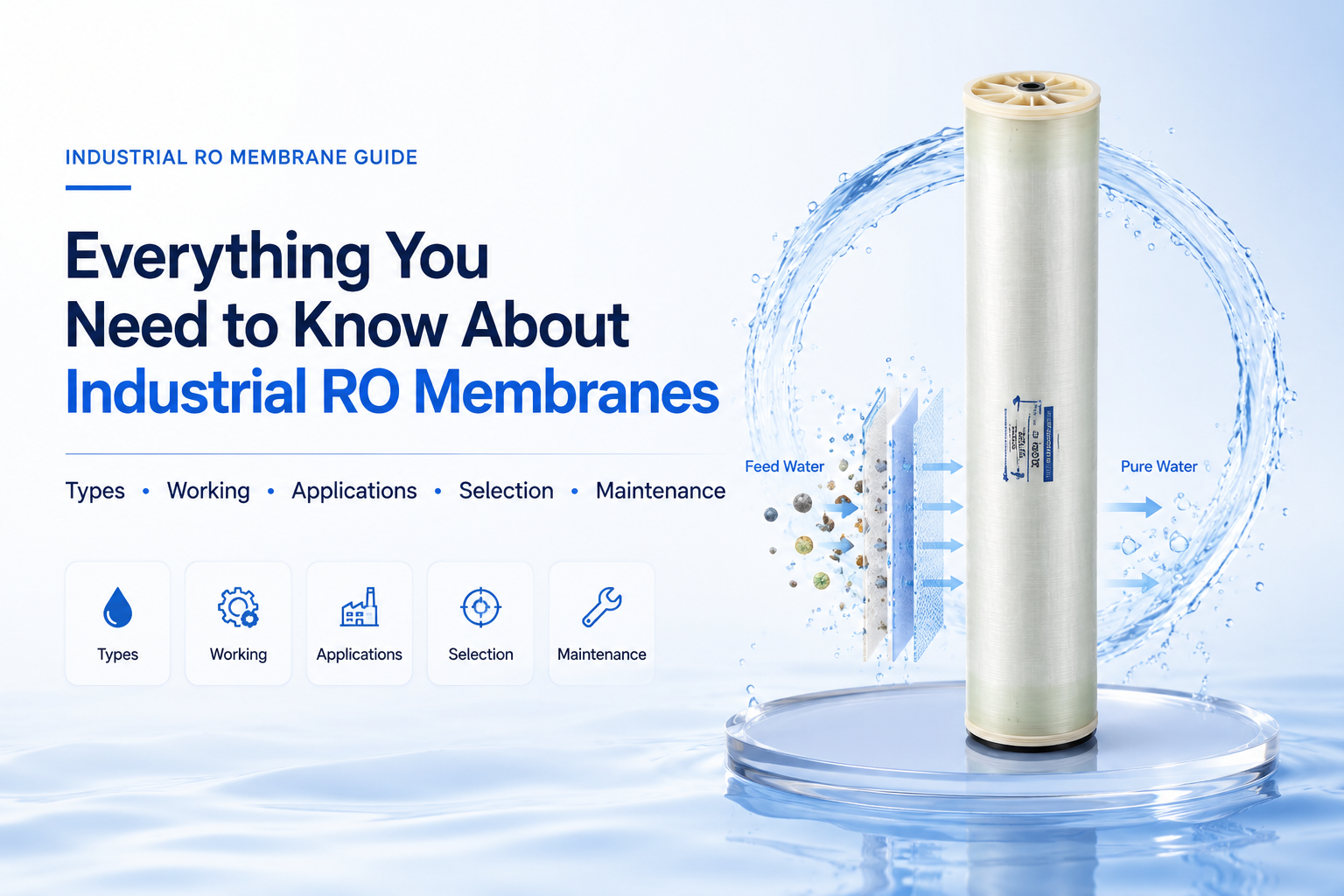
 Industrial RO membranes are a great technology for water treatment and purification. But what are they? Why have they become so important in the various industries? We will look at it in this way, industrial RO membrane is one of the types of filters that take out dirt from water. They matter because they help in generating clean water to be used around. Let's talk about how it works, its importance functionally, and its applications.

How RO Membranes Work

Basic Principles In the process of reverse osmosis, there is only a simple idea that operates because there is utilization of some membrane that is not easily penetrated by certain substances. However, exerting pressure makes water molecules pass through this membrane and leave impurities behind. The RO membrane filter plays a crucial role in this process.

The Process of Reverse Osmosis

1.    The first process is pre-treatment, which removes chlorine and large particles from water.
2.    Next, the water already treated is pumped at high pressure.
3.    This is followed by separation whereby molecules of water pass through the pores of a semi-permeable membrane leaving behind impurities.
4.    Lastly, the purified water is collected while the rest of the contaminants are subjected to further treatment or disposal.

Types of Industrial RO Membranes

Cellulose Acetate Membranes: The Cellulose acetate membrane is the first type of membrane used and is still used because of its low price. They are less durable and have low chemical resistance is we compared to modern membranes.
Thin-film Composite Membranes: Thin-film composite membrane is currently the most popular choice due to their high performance, durability, and resistance to various types of chemicals. They are used in almost all industries nowadays.
Other Types: High flux membranes, low-fouling membranes, nanocomposite membranes, etc. Each type has its advantages and uses in different applications.

Applications of Industrial RO Membranes

Water Purification: The Industrial RO membranes are mainly used for water purification. They are important in making clean drinking water, especially in regions with scarce freshwater supplies.
Wastewater Treatment: The RO membrane is crucial for processing industrial wastewater by removing impurities and allowing the safe disposal or reuse of water.
Food and Beverage Industry: In the food and drink industry, RO membranes are employed to concentrate juices, milk, and other items as well as cleanse water used in manufacturing.
Pharmaceuticals: The medical industry depends on RO membranes to create ultra-clean water necessary for making medications and health products.

Advantages of Using RO Membranes

High-efficiency: RO membranes are very efficient and remove 99% of dissolved salts, particles, and other microorganisms from water.
Budget-friendly: Despite initial investment, RO systems can be budget-friendly in the long run because of their low operation costs and low maintenance.
Nature-friendly: RO membranes help reduce the environmental impact of industrial processes by purifying water and treating waste effectively.

The Key Component of an RO System

Membrane Elements: The backbone of the RO system, these elements are where impurities' main separation occurs.
Pressure Vessels: A pressure vessel is a hollow tube engineered to safely contain the cylindrical membrane elements through which raw feedwater will be forced under pressure.
Pumps and Motors: Pumps and motors are important in creating necessary pressure, they are the components of an RO system.
Pre-treatment System: To protect the RO membranes and ensure efficient operation, pre-treatment systems remove large particles and other pollutants from the water.

Installation and Operation

Installation Guidelines: Proper installation is essential for an RO system to work efficiently. This includes ensuring correct pressure level, proper alignment of components, and sufficient pre-treatment.
Operating Parameters: Monitoring important factors like pressure, flow rates, and water quality is essential for keeping the RO system.
Monitoring and Control: Advanced monitoring and control systems help to control the operation of the RO system, and stable water quality and good performance.

Maintenance of RO Membranes

Cleaning Procedures: Routine cleaning is necessary to remove sediments and blockage from the membranes. This can involve chemical cleaning or physical cleaning methods.
Replacement Schedules: Replacement schedules depend on the application and water quality, RO membranes need to be changed frequently for good-quality water. The RO membrane price can vary depending on the quality and type of membrane used.
Common Issues: Common issues like drainage, poor quality water, and high consumption of energy. Early detection and management of these issues can prevent system outages and costly repairs.

Environmental Impact of RO Systems

Water Conservation: RO systems help to conserve water by recycling treated wastewater, and because of that wastewater is recycled, it reduces the demand for freshwater for industries.
Waste Management: Proper management of wastes generated by RO systems is important to reduce the environmental effects that can be caused by wastewater. This includes the secure disposal and recyclability of strong streams.

Conclusion

In the end, industrial RO membranes are the keystone of modern water treatment and purification processes that improve water quality so they can be used in industry. They can remove impurity poison pollutant toxins from water, coupled with advancements in technology, which makes them important in various industries. As we look to the future, continued innovation and improvement in RO membrane technology promise even greater efficiency and broader applications, making sure that clean water remains accessible and supportable for future generations.

Share:

Leave A Comment

Thank You for subscribing our newsletter.