


13-Jul-2024
Introduction
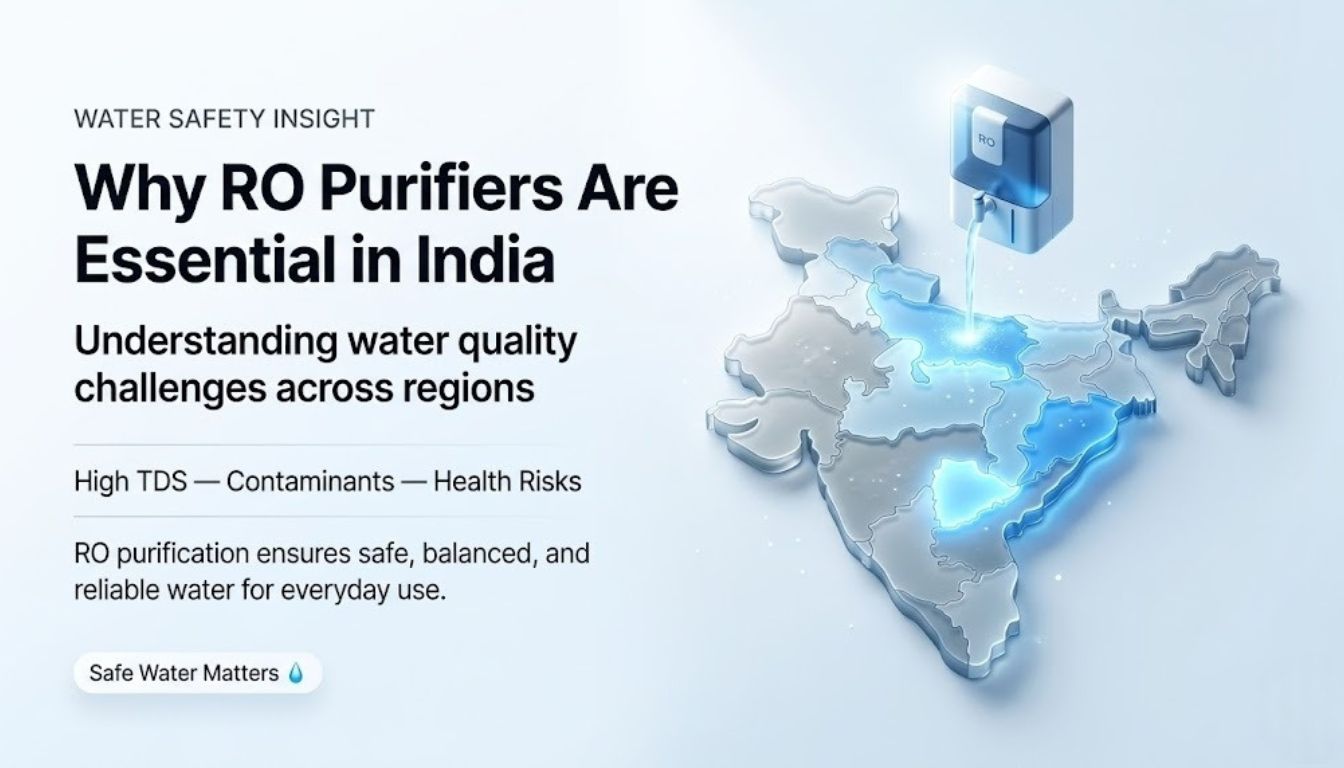
Water is necessary for every living entity. And access to clean drinking water is a basic need However, in India, water pollution is a major issue that causes serious health risks. This article covers what RO water purifiers mean and why Reverse Osmosis (RO) purifiers must be installed in India.
Reverse Osmosis (RO) is a water purification technique in which harmful contaminants like iron, calcium, magnesium, etc are removed from the water using a semipermeable membrane. This process effectively filters out impurities, leaving clean, safe drinking water to its users.
RO purifiers work by pushing bad water into a fine membrane, which blocks harmful contaminants such as bacteria, viruses, and chemicals so that clean water passes through, while the impurities are flushed away.
In India, water contamination comes from various sources, like industrial waste, agricultural waste, and inadequate sewage treatment. These contaminants mix into groundwater and surface water, making that water impure for usage.
Contaminated water can cause various health issues such as diarrhea, cholera, etc. Long-term exposure to this polluted water can cause serious conditions including cancer and liver damage.
RO water purifiers effectively remove contaminants from the water, like heavy metals (like lead and arsenic), pesticides, and microorganisms. This ensures that the water you drink is free from harmful particles.
Water contamination also affects the taste and smell of the water. RO water purifiers can effectively improve the taste and smell of the water by removing chlorine and other impurities, providing smell-free and clean drinking water.
Ro purifiers protect your health from various harmful waterborne diseases, by removing harmful particles from the water to promote overall health and well-being. It is especially important for vulnerable populations such as children, the elderly, and those with compromised immune systems.
These include dirt, sand, and rust particles that can enter the water supply through corroded pipes or other means.
RO purifiers can remove harmful chemicals like chlorine, fluoride, and heavy metals that are often found in polluted water sources.
Bacteria, viruses, and parasites are effectively filtered out by RO water purifier systems, preventing diseases and infections.
Boiling can kill bacteria and viruses from the water but it does not remove chemical contaminants or improve the taste and smell of the water.
UV purifiers are effective against microorganisms but are not effective in removing chemical pollutants or physical contaminants.
Carbon filters can remove chlorine and improve taste but are not as effective against heavy metals and other chemicals as RO water purifiers are.
The initial cost of RO water purifiers can be high, but the benefits you get after installing this system can outweigh the cost, along with regular maintenance of this system is also very important to ensure the proper functioning of the purifiers.
Investing in an RO purifier can lead to significant savings on medical bills by preventing waterborne diseases and health issues caused by contaminated water.
By using RO purifiers, households can reduce their reliance on bottled water, which helps decrease plastic waste and environmental pollution.
Proper disposal and recycling of RO system components are essential to minimize environmental impact. While RO purifiers do produce some wastewater, modern systems are becoming more efficient, reducing the amount of water wasted during the purification process.
The upfront cost of purchasing and installing an RO purifier can be a barrier for many households, especially in low-income areas. However, the long-term health benefits and savings on medical expenses can justify the investment.
Rural areas often face challenges in accessing advanced water purification technologies due to logistical and financial constraints. Government programs and NGO initiatives are working to bridge this gap by providing subsidies and awareness campaigns.
Leave A Comment