Added to wishlist.

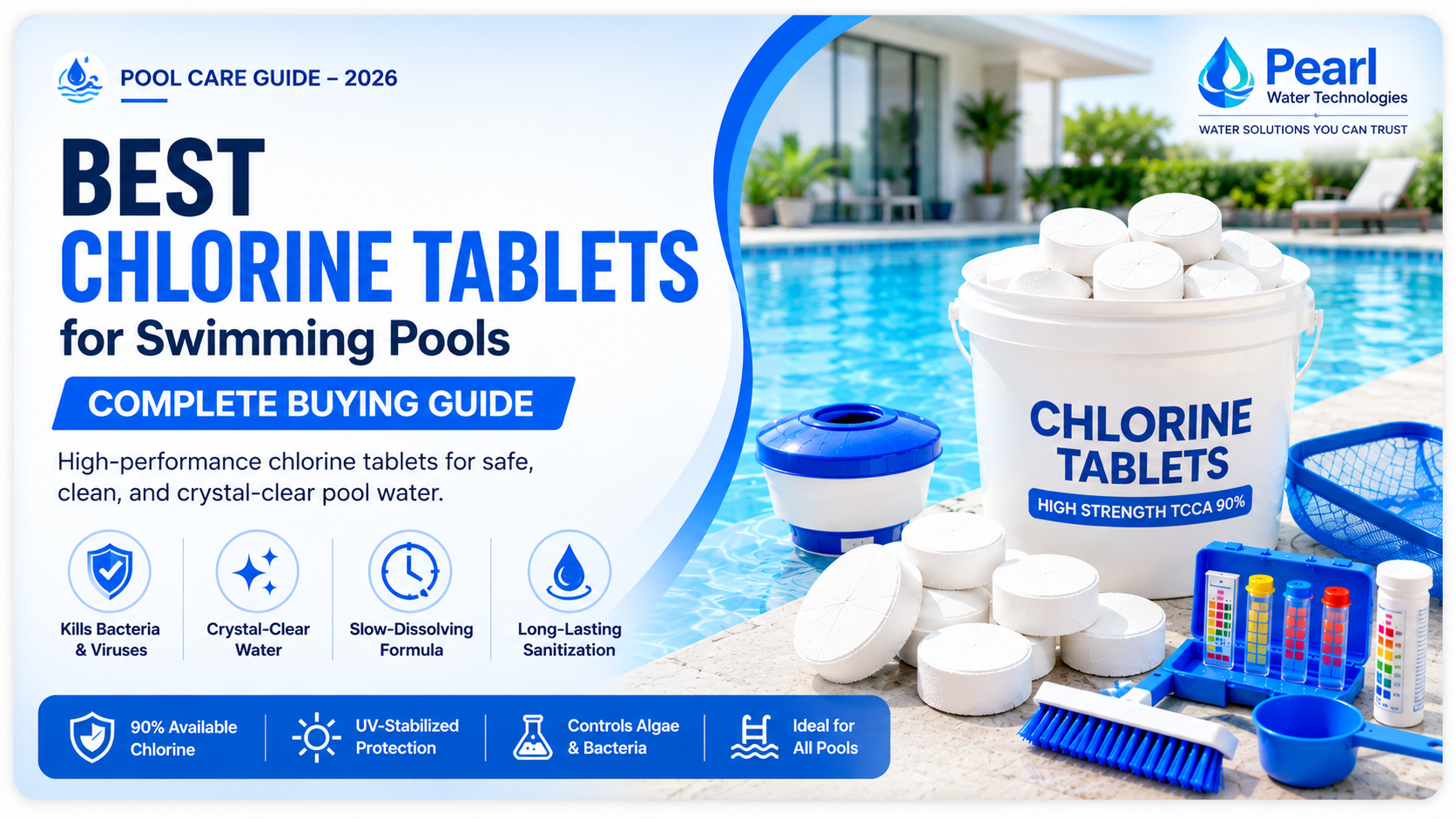
Best Chlorine Tablets for Swimming Pools: Complete Buying Guide

17-Jul-2026

Best Chlorine Tablets for Swimming Pools: Complete Buying Guide

Maintaining a safe, hygienic, and crystal-clear swimming pool relies on a delicate balance of water chemistry. Whether you manage a cozy backyard oasis or a high-traffic Olympic-sized commercial resort pool, proper sanitization is non-negotiable.

Without a reliable chemical sanitizer, standing pool water quickly becomes a breeding ground for pathogenic bacteria, viruses, and microscopic algae. Among all sanitizing methods, chlorine tablets remain the most popular choice globally. They provide a continuous, slow-dissolving stream of active disinfectant that keeps pool water continuously sanitized.

Yet, purchasing the wrong type of chlorine tablets can lead to cloudy water, skin irritation, damaged pool equipment, or chemical imbalances like "chlorine lock." This comprehensive buying guide breaks down the science of swimming pool water treatment, compares the top-rated chlorine options on the market, highlights common maintenance mistakes, and details how physical filtration systems work alongside your chemical regimen.


What Are Chlorine Tablets?

Swimming pool chlorine tablets are compressed forms of dry chlorine designed to dissolve slowly in water. Their primary purpose is continuous pool sanitization, which keeps water clean and free of biological pathogens.  

When a tablet is submerged in water, it dissolves to form Hypochlorous Acid (HOCl) and Hypochlorite ions ($OCl^-$). Hypochlorous acid is the active, killing form of chlorine. It neutralizes bacteria, inactivates viruses, and halts the reproductive cycle of algae by penetrating cell walls and destroying internal proteins.

Because liquid chlorine degrades rapidly and granular shock releases all its sanitizing power at once, compressed tablets are highly valued for providing a steady, reliable baseline of sanitizer.


How Do Chlorine Tablets Work?

Chlorine tablets are formulated for slow-release water treatment. They do not sanitize the pool instantly; instead, they dissolve slowly over a period of three to seven days depending on water temperature, circulation, and flow rates.

[Chlorine Tablet in Feeder/Dispenser] 


 (Slow dissolution by moving water)

[Dissolved Active Free Chlorine (HOCl)] 


    (Circulated by Pool Pump)

[Uniform Sanitization throughout Pool Basin]

To function correctly, tablets require constant water movement. As water drawn by the pump circulates through a floating dispenser, skimmer basket, or an automatic inline chemical feeder, it erodes the tablet at a predictable rate. This erosion continuously replenishes the free chlorine residual in the pool, replacing sanitizer that has been depleted by organic debris, swimmer waste, or sunlight.


Types of Chlorine Tablets

When shopping for pool sanitizer tablets, you will encounter two primary chemical classifications: stabilized and unstabilized chlorine.


                                                               Pool Chlorine Tablets      


      Stabilized Chlorine (TCCA)                                                                  Unstabilized Chlorine     

       • Contains Cyanuric Acid                                                                       • No Cyanuric Acid (CYA)   

      • Protects from UV rays                                                                         • Rapid degradation by sun 

      • Best for outdoor pools                                                                          • Best for indoor pools    


Stabilized Chlorine Tablets (TCCA)

Stabilized tablets are made of Trichloro-S-Triazinetrione, commonly abbreviated as TCCA or Trichlor. These tablets contain Cyanuric Acid (CYA), which acts as a "sunscreen" for chlorine molecules.

  • Advantages: Excellent UV resistance, very high concentration of available chlorine (typically 90%), slow and uniform dissolution rate, and easy storage.
  • Disadvantages: Continuous use steadily builds up Cyanuric Acid in the water. If CYA levels exceed 100 ppm, it can trigger chlorine lock, rendering your sanitizer ineffective.
  • Best Use Cases: Outdoor residential pools, commercial pools exposed to direct sunlight, and automated chlorinating systems.


Unstabilized Chlorine Tablets

Unstabilized tablets—typically made of Calcium Hypochlorite (Cal-Hypo)—do not contain Cyanuric Acid.

  • Advantages: They do not increase CYA levels, making them perfect for avoiding chlorine lock. They also add calcium to soft water, which protects pool plaster.
  • Disadvantages: Extremely vulnerable to sunlight; UV rays can destroy up to 90% of free chlorine in less than two hours. They also dissolve faster than Trichlor and can raise water hardness (calcium levels) too high over time.
  • Best Use Cases: Indoor pools, night-time shock treatments, or outdoor pools with already high CYA levels.

Best Chlorine Tablets for Different Pool Types

Choosing the right chemical depends entirely on your pool's environment, design, and daily swimmer load:

  • Residential Outdoor Pools: 3-inch stabilized TCCA tablets are the standard recommendation. They require minimal intervention, meaning homeowners only need to replenish their chlorinator once a week.
  • Commercial Pools (Hotels & Resorts): Large pools require precise chemical control. Using premium, slow-dissolving TCCA tablets in an automatic commercial chlorinator maintains a steady 1 to 3 ppm free chlorine level, even during heavy bather loads.
  • Indoor Pools (All Types): Because indoor facilities are shielded from UV rays, unstabilized chlorine tablets are highly recommended. This avoids unnecessary accumulation of Cyanuric Acid, keeping the water balanced and comfortable.

How to Choose the Best Chlorine Tablets

Keep these key factors in mind when purchasing chlorine tablets for your swimming pool:

  1. Active Ingredient Concentration: Look for tablets containing 99% Trichloro-S-Triazinetrione (Trichlor). Premium formulas contain roughly 90% available chlorine, while cheaper brands use binders and fillers that dilute the product and cause tablets to crumble.
  2. Tablet Size: Standard sizes are 1-inch and 3-inch tablets. Use 1-inch tablets for small spas, hot tubs, and above-ground pools under 5,000 gallons. Use 3-inch jumbo tablets for larger inground pools.
  3. Dissolving Speed: High-quality tablets are compacted under extreme pressure to ensure they dissolve slowly and uniformly over 5 to 7 days, providing reliable residual sanitization.
  4. Feeder Compatibility: Ensure the tablets fit your existing delivery system, whether it is an automatic inline chlorinator, a floating chlorinator, or a skimmer loop.
  5. Storage Life: Choose brands that package tablets in moisture-tight, double-sealed buckets. Properly sealed TCCA tablets have an exceptionally long shelf life, lasting up to 3 to 5 years without losing their sanitizing potency.

Advantages of Chlorine Tablets

Implementing a tablet-based sanitization routine offers several key operational benefits:

  • Exceptional Convenience: Simply add the calculated number of tablets to your chlorinator weekly. This replaces the daily chore of measuring and pouring liquid sanitizers.
  • Consistent, Safe Dosing: Because they dissolve slowly, they prevent sudden spikes and drops in chlorine levels, keeping water chemistry stable.
  • Cost-Effectiveness: High active chlorine concentration means a single bucket of 3-inch tablets goes a long way, reducing your seasonal chemical expenses.
  • Algae and Pathogen Control: Continuous sanitizer release eliminates algae spores and pathogens before they can bloom or multiply.

Common Mistakes When Using Chlorine Tablets

  • Placing Tablets Directly in the Skimmer Basket: While common, this is highly damaging. When the pool pump turns off, tablets continue to dissolve in the stagnant water, creating a highly concentrated, acidic pocket (pH ~2.8). When the pump restarts, this acid runs straight through your pool pump, seals, gaskets, and heater, causing expensive equipment damage.
  • Throwing Tablets Directly into the Pool Basin: Tablets sink to the bottom and bleach vinyl liners, stain plaster, or erode fiberglass shells.
  • Ignoring the Cyanuric Acid (CYA) Build-Up: Continuously adding stabilized Trichlor tablets without monitoring CYA will eventually lock your chlorine. Regular water testing is essential.
  • Mixing Different Chlorine Types: Never mix Trichlor tablets with Calcium Hypochlorite (unstabilized) tablets in the same feeder. This can trigger a highly volatile, explosive chemical reaction.

Chlorine Tablets vs. Liquid Chlorine

Choosing between solid tablets and liquid chlorine is a common debate in pool maintenance. Use this comparison table to guide your choice:

Feature

Chlorine Tablets (TCCA)

Liquid Chlorine (Sodium Hypochlorite)

Available Chlorine

High (Approx. 90%)

Low (Approx. 10% to 12.5%)

Convenience

Excellent (Weekly dosing)

Low (Requires daily or every-other-day dosing)

Shelf Life

Long (3 to 5 years in dry conditions)

Short (Degrades by 50% in 1–3 months)

Effect on pH

Lowers pH (Acidic, pH ~2.8)

Raises pH (Alkaline, pH ~13)

Stabilizer (CYA)

Yes (Contains stabilizer)

No (Unstabilized)

Best Application

Continuous sanitization

Instant shock treatment and quick corrections


Advanced Filtration: The Pearl Water Technologies Edge

Chemical sanitization is only half the battle when keeping pool water safe and clean; physical mechanical filtration is the other half. When chlorine kills algae, bacteria, and organic debris, these microscopic dead particles remain suspended in the water, making it look dull and cloudy.

To maintain truly clear water, you need to pair your chlorine treatment with a high-performance physical filtration system. Pearl Water Technologies is an industry-leading water treatment manufacturer that specializes in residential and commercial FRP (Fiberglass Reinforced Plastic) Pool Sand Filters.

Why High-Efficiency Sand Filtration Saves Your Chlorine

  • Reduces Chemical Demand: Pearl Water’s range of bobbin-wound, UV-stable FRP sand filters (ranging from compact 400mm systems for villas up to high-capacity 1200mm commercial systems) efficiently traps suspended matter down to 20–40 microns. By removing organic debris mechanically, your free chlorine doesn't have to work as hard, which preserves your tablets and extends their lifespan.
  • Engineered for Tough Conditions: Built to withstand high working pressures and corrosive pool chemicals, these FRP sand filters feature simple-to-use multiport valves for effortless backwashing and maintenance.
  • Complete Water Treatment Integration: Pairing high-purity pool sanitizer tablets with an robust FRP sand filter creates a clean, efficient, and cost-effective pool system.

How to Store Chlorine Tablets Safely

Because chlorine is a powerful oxidizing agent, safety must always come first when storing it:

  • Keep It Completely Dry: Store tablets in their original airtight container in a cool, dry, well-ventilated area. Even small amounts of moisture can cause tablets to release toxic chlorine gas.
  • Avoid Direct Sun: Heat accelerates chemical degradation, so keep your storage containers away from direct sunlight.
  • Keep Away from Metal and Organics: Do not store chlorine near pool pumps, heaters, or metal tools, as the fumes are highly corrosive.
  • Store Out of Reach: Keep all pool chemicals locked away and out of reach of children and pets.

Frequently Asked Questions

Which chlorine tablets are best?

The best chlorine tablets are those containing 99% Trichloro-S-Triazinetrione (Trichlor) with approximately 90% available chlorine. This formula ensures slow, uniform dissolution and excellent UV protection for outdoor swimming pools.

How many tablets should I use?

The standard guideline is one 3-inch tablet for every 5,000 gallons of pool water per week. For example, if you have a 15,000-gallon pool, you will need to add three 3-inch tablets to your chlorinator or dispenser each week.

How often should I add chlorine tablets?

Test your pool water regularly and check your feeder once a week. If the previous week's tablets have dissolved completely and your free chlorine level is dropping below 1.5 ppm, it is time to replenish them.

Can I swim after adding chlorine tablets to my pool?

Yes, as long as your pool's water chemistry is balanced. Specifically, your free chlorine levels must be between 1 and 3 ppm, and the water's pH should sit between 7.2 and 7.6. Always test the water before jumping in.

Do chlorine tablets expire?

If stored in a cool, dry, and airtight container, stabilized chlorine tablets (TCCA) do not technically expire for 3 to 5 years. However, unstabilized tablets can lose their potency much quicker if exposed to air or moisture.

Are stabilized tablets better than unstabilized ones?

Stabilized tablets are better for outdoor pools because their Cyanuric Acid content prevents sunlight from evaporating the chlorine. Unstabilized tablets are better for indoor pools or pools that already have high stabilizer levels.

Can chlorine tablets damage pool liners?

Yes. If you toss chlorine tablets directly onto the floor of a vinyl, plaster, or fiberglass pool, they will bleach and weaken the material. Always use an automatic inline feeder, a floating dispenser, or a specialized chlorinating loop.

Why aren't my chlorine tablets dissolving?

If your tablets aren't dissolving, it is likely due to poor water flow. Check for a clogged pump basket, a dirty pool filter that needs backwashing, or a closed valve on your inline automatic chlorinator.

How long do chlorine tablets last in the water?

A high-quality, densely compacted 3-inch chlorine tablet will typically last 5 to 7 days in a residential pool, depending on your water temperature, pump run-time, and daily water flow rate.

Can I use chlorine tablets in every type of pool?

Yes, chlorine tablets can be used in above-ground, inground, concrete, vinyl, and fiberglass pools. However, you must use the appropriate dispensing equipment (such as a floating dispenser or automatic chlorinator) to avoid direct contact with the pool's surfaces.

Conclusion

Choosing the best chlorine tablets for swimming pools is essential for keeping your water healthy, clear, and inviting. By selecting high-purity, 99% Trichlor stabilized tablets and using them safely in a dedicated feeder, you can maintain a consistent sanitizing barrier against bacteria and algae.

Remember that chemical treatment is only half of the equation. To get the most out of your pool chemicals, pair your sanitizing routine with a high-performance physical filtration system, such as a Pearl Water Technologies FRP sand filter. Regular water testing, proper chemical application, and efficient filtration are the ultimate keys to a clean, sparkling pool all season long.


Share:

Leave A Comment

Thank You for subscribing our newsletter.