|
Product |
RO Antiscalant Alkaline 900 |
|
Brand |
Pearl Water |
|
Pack size |
5 Litres |
|
Dosing rate |
3–5 ppm |
|
pH (100%) |
10.0 ± 1.0 |
|
Physical state |
Viscous liquid |
|
Best for |
High-pH RO feed water, industrial/commercial RO |
₹ 1,275 ₹ 1,449


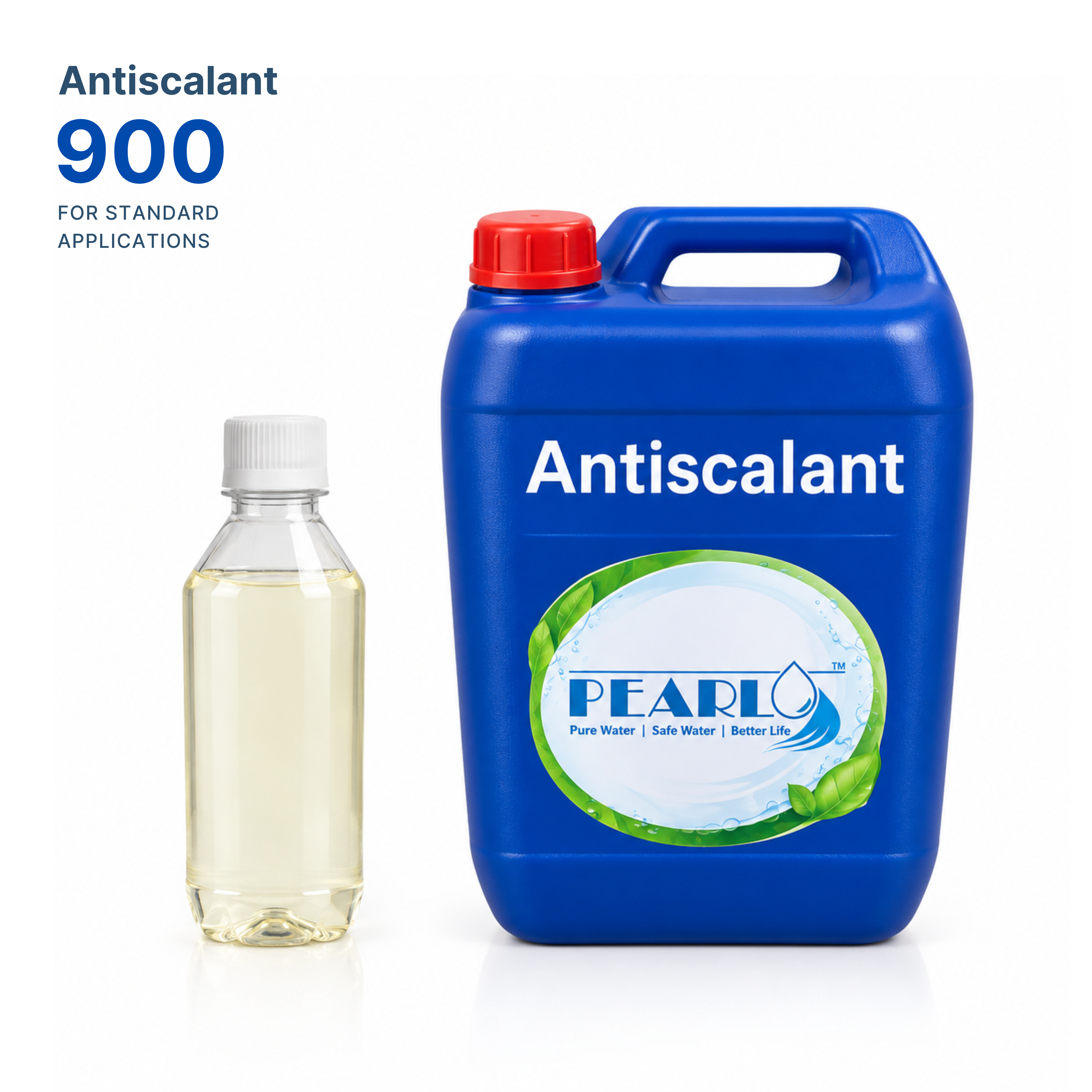
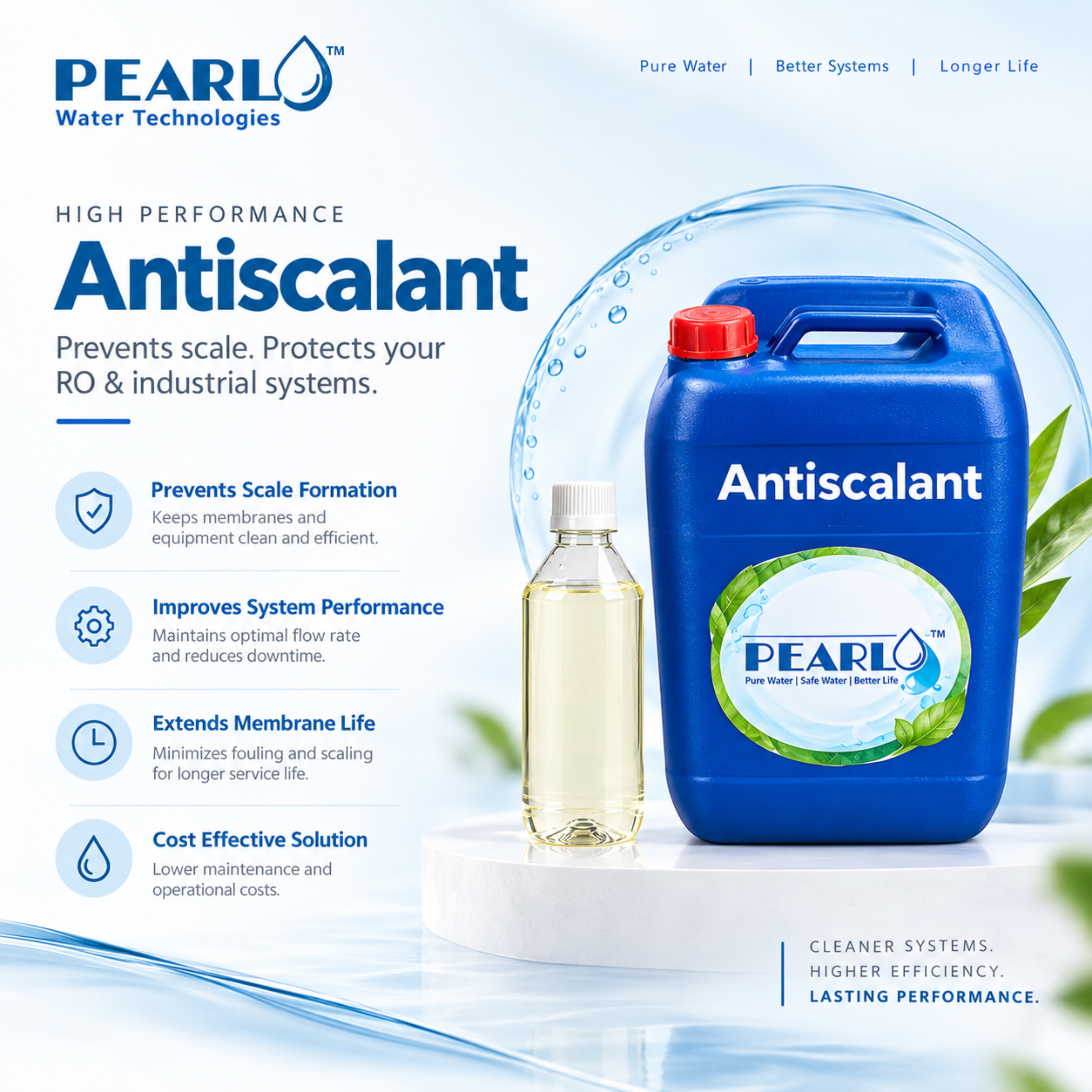
Pearl Water's RO Antiscalant Alkaline 900 is a specially formulated liquid scale inhibitor designed to protect reverse osmosis (RO) membranes operating under high-pH, high-alkalinity feed water conditions. It is one of the most common causes of premature RO membrane failure worldwide — hard water minerals such as calcium carbonate, calcium sulphate, and silica precipitate out of solution as water is concentrated during the RO process, forming a hard scale layer on the membrane surface. This antiscalant is engineered specifically to stop that from happening.
How it works When dosed continuously into the RO feed line ahead of the membrane, Antiscalant Alkaline 900 binds to scale-forming ions (calcium, magnesium, barium, strontium, and silica) and keeps them suspended in solution rather than allowing them to crystallize and deposit on the membrane. This keeps the membrane surface clean, maintains consistent permeate flow, and significantly reduces the frequency of chemical cleaning (CIP) cycles — protecting the lifespan of your RO membrane.
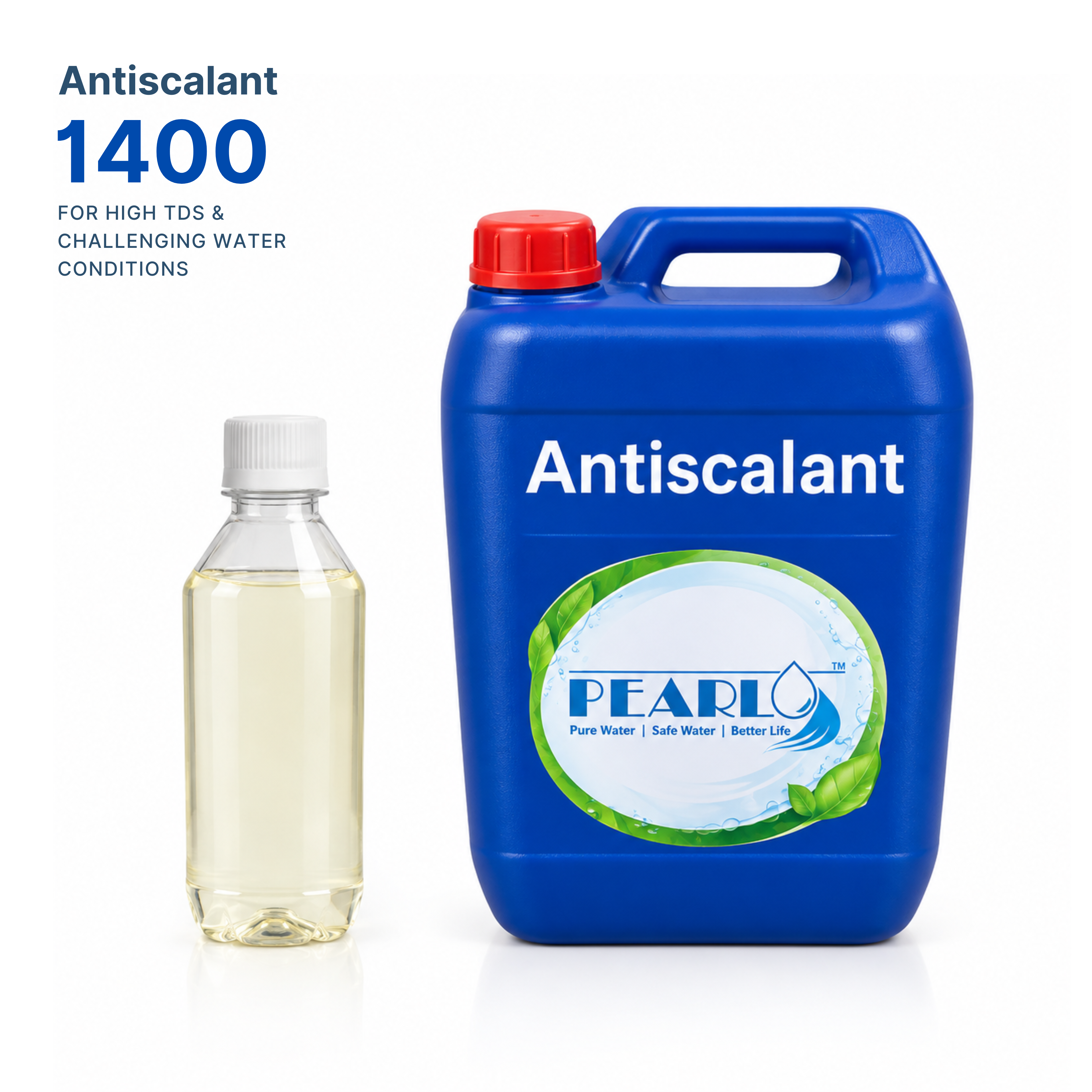
Why high-pH formulation matters Most generic antiscalants are formulated for neutral or slightly acidic feed water. When source water is alkaline (high pH) — common with borewell water, certain groundwater sources, and water that has been pre-treated with lime softening — standard antiscalants lose effectiveness and scaling risk increases sharply. Antiscalant Alkaline 900 is purpose-built to remain stable and effective across a high-pH range, making it the correct choice for plants where feed water pH regularly exceeds neutral levels. If your feed water is closer to neutral or acidic, compare it against our Antiscalant 1400 instead.
Recommended dosing Dose at 3–5 ppm (mg per litre of feed water) using a calibrated dosing pump, injected upstream of the RO cartridge filters. Exact dosing should be fine-tuned based on your feed water hardness, silica content, recovery rate, and membrane manufacturer's guidelines. Underdosing increases scaling risk; overdosing can lead to antiscalant deposition and organic fouling, so accurate calibration is recommended.
Compatibility Compatible with thin-film composite (TFC) polyamide RO membranes commonly used in industrial RO plants, commercial systems, and drinking water RO setups. Suitable for use with standard chemical dosing pumps and can be used alongside SMBS (sodium metabisulphite) dechlorination systems.
Applications
Commercial and packaged drinking water RO systems
Boiler feed water treatment
Cooling tower makeup water
Desalination and brackish water RO plants
High-TDS / high-silica borewell water treatment
Packaging & Handling Supplied in a 5-litre container as a viscous, ready-to-dose liquid. Store in a cool, dry place away from direct sunlight. No dilution required before dosing (unless specified otherwise by your dosing system design).
Why choose Pearl Water Pearl Water manufactures and supplies water treatment chemicals across India, with a presence in Gurgaon, Bengaluru, and Lucknow. Antiscalant Alkaline 900 is manufactured under quality-controlled conditions and is trusted by industrial and commercial RO plant operators for consistent scale protection. Browse our full range of RO chemicals, or read more on how to prevent RO membrane scaling on our blog.
Required fields are marked *
Q: What is RO Antiscalant Alkaline 900 used for? It's used to prevent scale formation (calcium, magnesium, silica deposits) on RO membranes in industrial and commercial water treatment systems, especially where feed water has high pH or high alkalinity.
Q: What is the correct dosing rate for Antiscalant 900? A dosing rate of 3–5 ppm is recommended, though this can vary based on your membrane manufacturer's specifications and feed water quality.
Q: How is Antiscalant Alkaline 900 different from standard antiscalants? It's formulated specifically for high-pH applications, where many standard/generic antiscalants become less effective at preventing scale.
Q: Can antiscalant be used in drinking water RO plants? Yes, when dosed correctly, RO antiscalants are commonly used in drinking water, commercial, and industrial RO systems.
Q: Does overdosing antiscalant cause problems? Yes — overdosing can cause the antiscalant itself to deposit on the membrane, leading to organic fouling. Underdosing risks scale formation. Correct dosing (3–5 ppm) is important