|
Product |
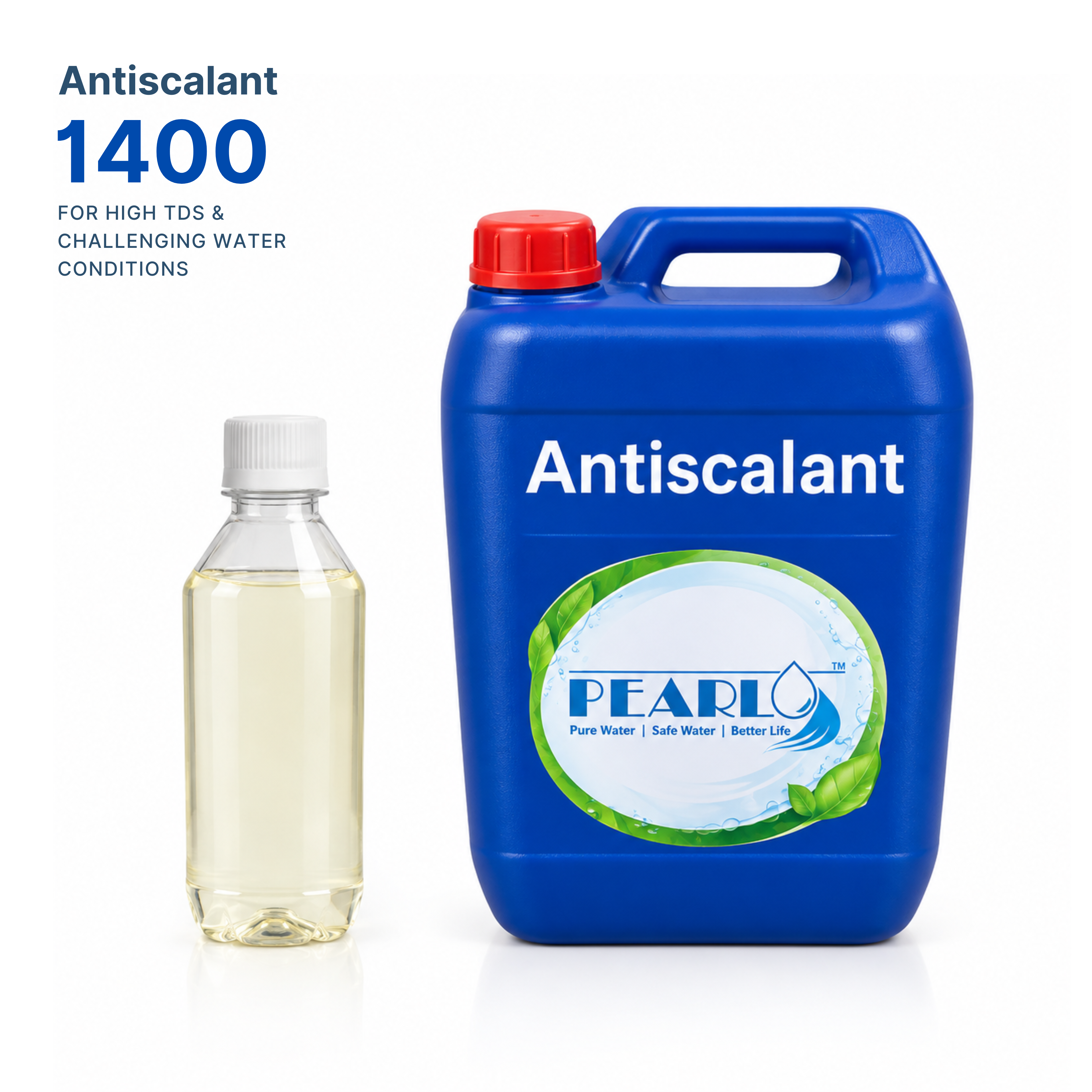
RO Antiscalant 1400 |
|
Brand |
Pearl Water |
|
Pack size |
5 Litres |
|
Dosing rate |
3–5 ppm |
|
pH (100%) |
1–2 ± 0.5 |
|
Physical state |
Concentrate liquid |
|
Best for |
General-purpose / most RO membranes, low-to-neutral pH feed water |
₹ 1,709 ₹ 1,899


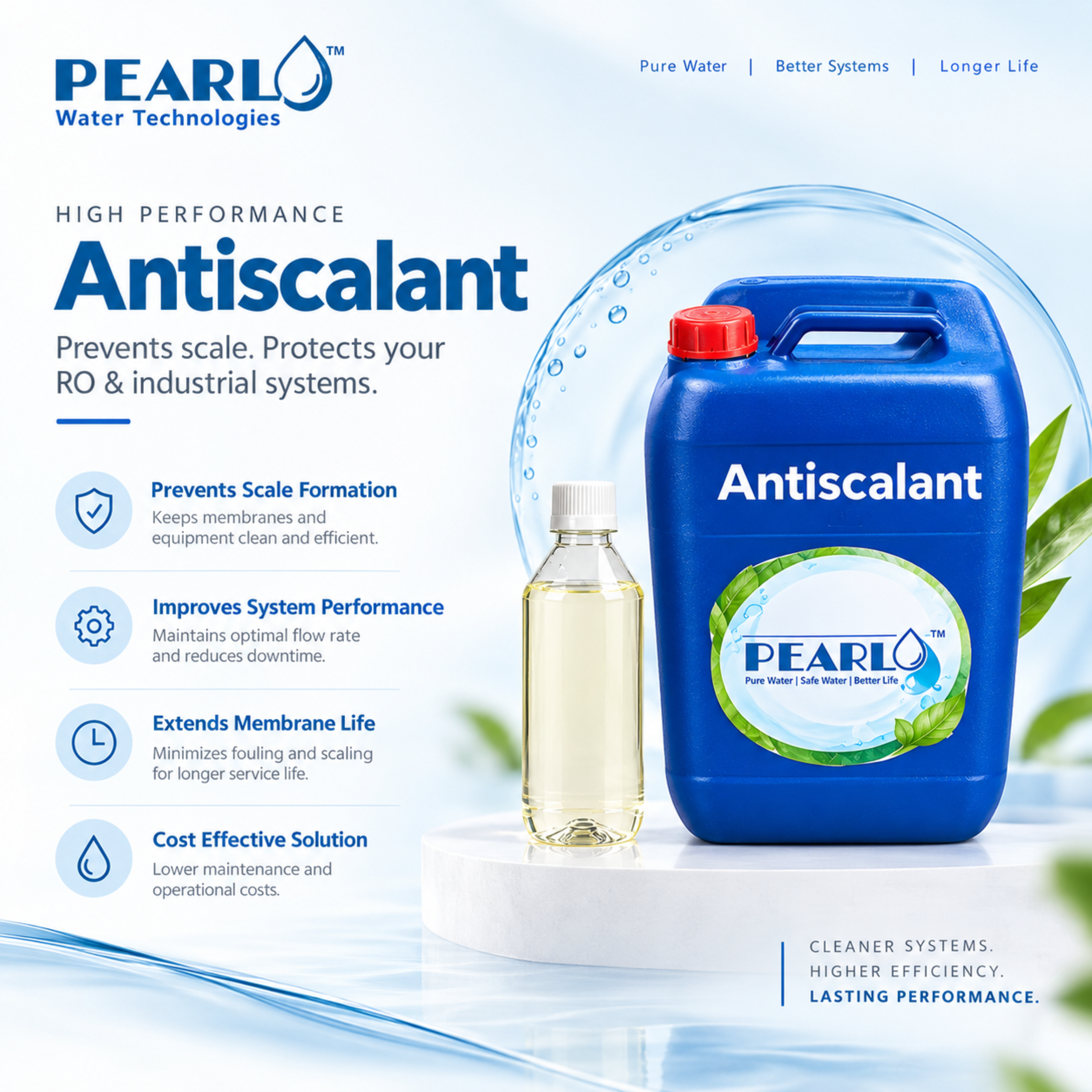
Pearl Water's RO Antiscalant 1400 is a phosphino-carboxylate-based liquid scale inhibitor formulated for general-purpose use across most reverse osmosis (RO) membrane systems. It's designed to prevent the single biggest cause of RO membrane failure — mineral scaling — by stopping calcium, magnesium, barium, strontium, and silica from crystallizing onto the membrane surface as feed water is concentrated during the RO process.
How it works Dosed continuously upstream of the RO membrane, Antiscalant 1400 keeps scale-forming minerals suspended in solution instead of allowing them to precipitate and bond to the RO membrane surface. This maintains stable permeate flow, reduces chemical cleaning (CIP) frequency, and protects membrane lifespan over time.
Why choose 1400 over the Alkaline 900 variant Antiscalant 1400 is a low-pH, general-purpose formulation (pH 1-2) suited to the majority of standard feed water conditions and works across most RO membrane brands. If your feed water is alkaline or high-pH — common with certain borewell sources or lime-softened water — our Antiscalant Alkaline 900 is the better-matched formulation. Not sure which one applies to your plant? Check your feed water pH report or your membrane manufacturer's chemical compatibility sheet before choosing.
Recommended dosing Dose at 3–5 ppm (mg per litre of feed water) via a calibrated dosing pump, injected before the RO cartridge filters. Fine-tune based on feed water hardness, silica levels, system recovery rate, and your membrane manufacturer's operating manual. Underdosing risks scale formation; overdosing can cause antiscalant deposition and fouling on the membrane.
Compatibility Suitable for most reverse osmosis membranes used in industrial RO plants, commercial systems, and drinking water treatment. Compatible with standard chemical dosing equipment; not compatible with strong acids or oxidizing agents.
Applications
Commercial and packaged drinking water RO systems
Boiler feed water treatment
Cooling tower makeup water
General borewell / municipal water RO treatment
Packaging & Handling Supplied in a 5-litre container as a concentrate liquid. Store in a cool, dry place away from direct sunlight and away from strong acids or oxidizing compounds.
Why choose Pearl Water Pearl Water manufactures and supplies water treatment chemicals pan-India, with offices in Gurgaon, Bengaluru, and Lucknow. Browse our full range of RO chemicals, or read how to choose the right antiscalant dosing rate on our blog.
Modern RO systems use membranes to produce high quality water and to ensure that scaling doesn’t impact the membranes and to prevent fouling a good quality antiscalant is required. Due to impact of high pressure the water will pass through the membranes leaving behind the minerals which will not pass due to its ion size and overtime scale formation will happen if they are allowed to concentrate beyond their saturation limit. The scale on the membrane surface would prevent water from passing through, so it is essential to inhibit scale from RO chemical systems to operate continuously.
If the wrong antiscalant is used then it will allow scaling and subsequent performance loss therefore injecting the right antiscalant at the correct dosing rate is important to prevent scaling problems completely.
Application areas of Antiscalants RO 1400:-
Antiscalants are fed upstream of the RO System and typically require very low dosage rate and at the same time maintaining proper dosing rate of an antiscalant is very important. On the one hand under dosing can cause scaling or fouling and on the other hand overdosing can cause a deposition of the antiscalant onto the membrane surface in result creating a fouling problem.
Required fields are marked *
Q: What is RO Antiscalant 1400 used for? It prevents scale formation (calcium, magnesium, silica deposits) on RO membranes and is suitable for most reverse osmosis systems across industrial, commercial, and drinking water applications.
Q: What's the difference between Antiscalant 1400 and Antiscalant Alkaline 900? 1400 is a general-purpose, low-pH formulation suited to most feed water conditions. Alkaline 900 is formulated specifically for high-pH feed water where standard antiscalants lose effectiveness. Check your feed water pH to choose correctly.
Q: What dosing rate should I use for Antiscalant 1400? 3–5 ppm is recommended, though your membrane manufacturer's operating manual and your specific feed water quality may require adjustment.
Q: Can Antiscalant 1400 be used with any RO membrane brand? Yes, it's formulated to be compatible with most thin-film composite RO membranes used across industrial and commercial systems.
Q: What happens if I use the wrong antiscalant or wrong dosing rate? Underdosing allows scale to form and reduces membrane performance over time; overdosing can cause the antiscalant itself to deposit on the membrane, creating a fouling problem. Correct product selection and dosing rate are both important.