


20-Apr-2026
Hair fall, dry skin, and constant bathroom stains are common complaints in Indian homes. Most people try changing shampoos or cleaning products, but the real issue often lies deeper—in the water itself.
In cities like Gurugram, Delhi, and Bangalore, hard water is a widespread problem due to underground and borewell sources. The good news? You don’t need expensive tools to identify it.
With a few simple checks, you can confirm whether your home needs a water softener for home India and prevent long-term damage.
Water hardness refers to the presence of minerals like calcium and magnesium in water.
These minerals are commonly found in:
While not harmful for drinking, they can significantly impact your daily routine, from bathing to cleaning.
Before testing, check these real-life indicators:
If these sound familiar, your home likely needs a water softener system for home.
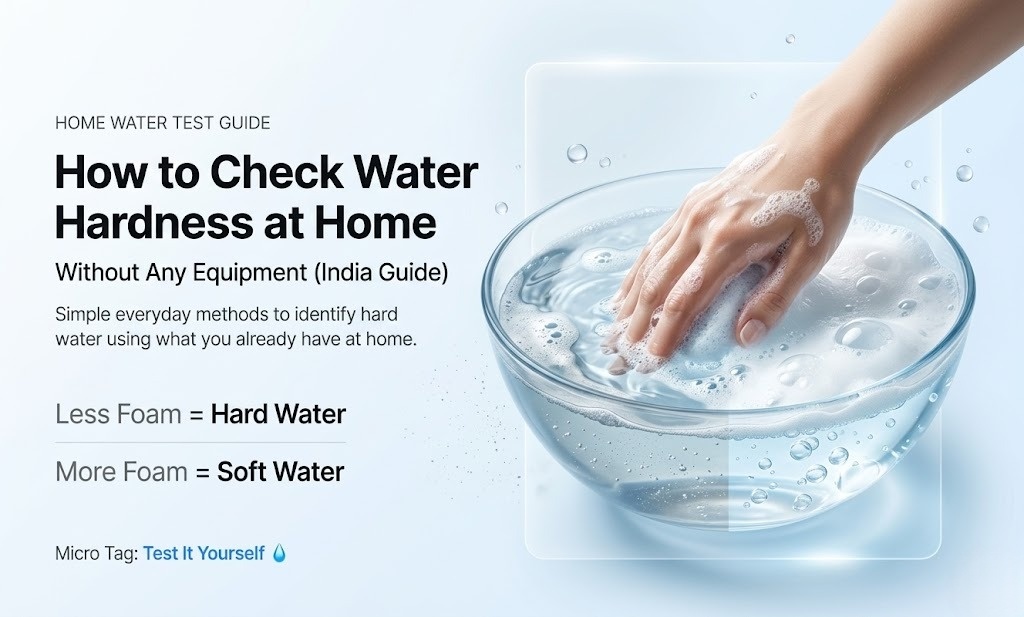
Add a few drops of liquid soap to a glass of water and shake it.
This is one of the easiest DIY methods.
Fill a bottle with water and soap, then shake.
This helps confirm results quickly.
Observe your bathroom:
These are clear signs that you may need a water softener for bathroom.
During hand wash or shower:
This difference becomes noticeable over time.
Check for scaling in:
If appliances frequently need repair, hard water is likely the cause—and a water softener plant for home can help.
DIY methods work well, but professional testing is useful when:
This helps in choosing the right system and understanding the water softener price range for your needs.
Once hard water is confirmed, temporary fixes won’t work. The minerals continue to affect your hair, skin, and appliances.
The most effective long-term solution is installing a water softener, which removes hardness-causing minerals before water reaches your taps.
Explore suitable water softener for home options here:
https://pearlwater.in/water-softeners
A homeowner in Gurugram faced constant hair fall and scaling issues. Despite trying multiple products, nothing worked.
After a simple DIY test, hard water was confirmed. Installing a water softener system for home led to noticeable changes within weeks:
This shows how solving the root cause delivers real results.
These steps help you select the right water softener for home India.
A balanced understanding helps in making the right decision.
Avoiding these mistakes ensures better performance and value.
You can use soap tests, bottle shake methods, and visual inspection for stains.
Yes, especially in areas with borewell or tanker water where hardness is high.
Yes, it removes minerals that cause dryness and rough texture.
It ranges from ?8,000 to ?60,000+, depending on system capacity and features.
Bathroom softeners are suitable for small usage, while full-home systems offer complete protection.
Hard water issues don’t go away on their own—they gradually increase maintenance costs and daily discomfort.
By using simple DIY methods, you can identify the problem early and take the right step toward a long-term solution.
Instead of repeatedly managing symptoms, fixing the root cause is the smarter approach.
Explore the best water softener system for home here:
https://pearlwater.in/water-softeners
Or consult an expert for a professional recommendation: +91-9582215137
Making the right choice today can improve your daily life and protect your home for years to come.
Leave A Comment