What is Water Softener Resin? Complete Guide (2026)
Hard water has become a common problem in almost every household today—whether it’s clogged pipes, white stains on surfaces, or reduced lifespan of appliances. One of the most effective solutions to this issue is water softener resin.
In this guide, we’ll explain in simple terms:
- What water softener resin is
- How it works
- Its key benefits
What is Water Softener Resin?
Water softener resin is a special material used to convert hard water into soft water.
It comes in the form of tiny bead-like particles, typically ranging from 0.3 mm to 1.2 mm in size. These beads are mainly made of:
- Polystyrene (a type of plastic)
- Divinylbenzene (DVB), which adds strength and durability
???? The resin bed acts like a filter that removes hardness-causing minerals such as calcium and magnesium ions from water.
How Does Water Softener Resin Work?
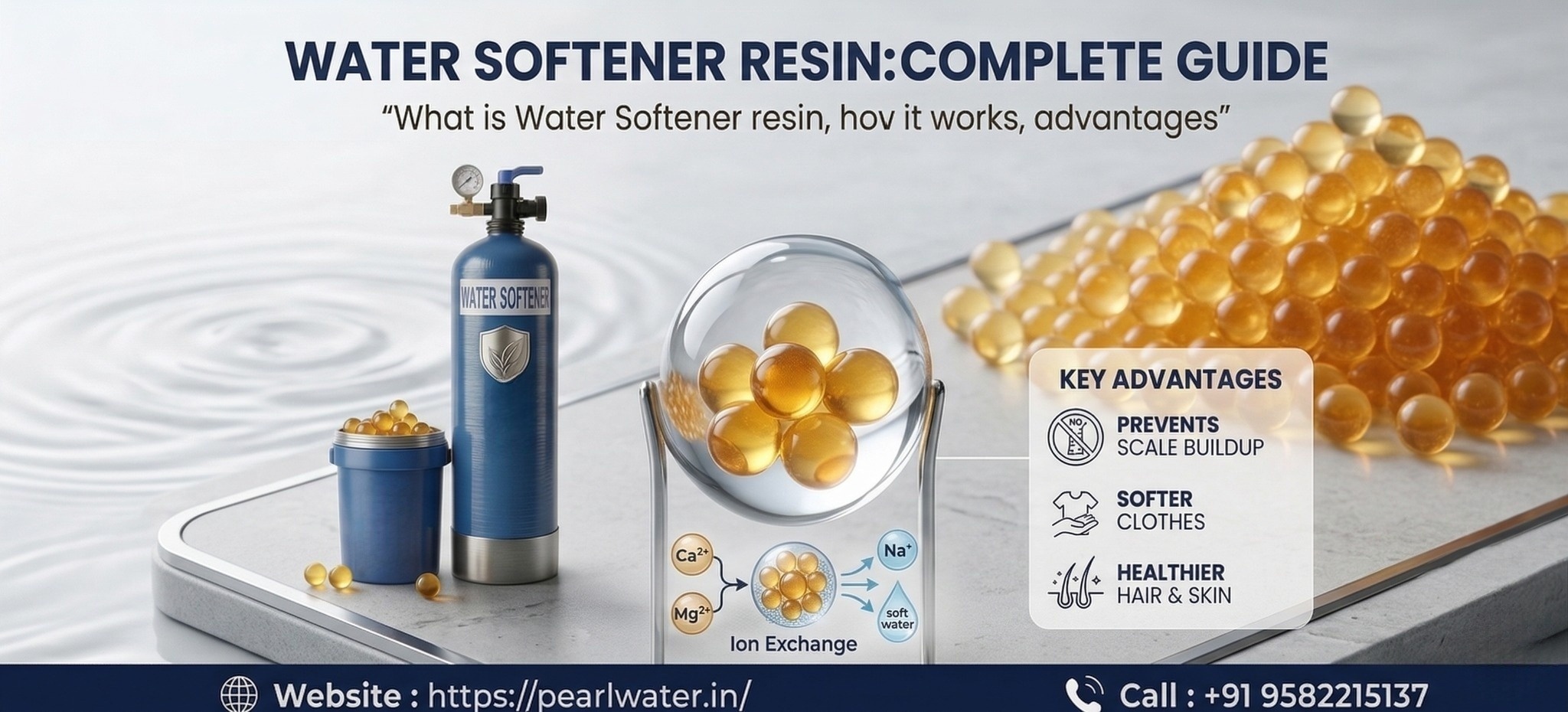
A water softener works on the principle of the ion exchange process.
Step-by-step process:
- Resin beads are initially charged with sodium ions (Na?)
- Hard water contains:
- Calcium (Ca²?)
- Magnesium (Mg²?)
- When hard water passes through the resin bed:
- The resin attracts calcium and magnesium ions
- It releases sodium ions in exchange
Result: Hard water is converted into soft water.
Advantages of Water Softener Resin
1. Soft Water Supply
Effectively converts hard water into soft water, making it ideal for daily use.
2. Protection for Pipes & Appliances
- Prevents pipe clogging
- Increases the lifespan of appliances like geysers and washing machines
3. Stain-Free Surfaces
No more white stains on tiles, taps, or utensils.
4. Better Cleaning Efficiency
Soap and detergents lather better, improving cleaning performance.
5. Reduction of Unwanted Minerals
Helps reduce excess minerals present in water.
Why Choose High-Quality Resin?
Low-quality resin tends to degrade quickly and offers poor performance. That’s why it’s important to choose a premium-quality resin that is:
- Long-lasting
- Has high ion exchange capacity
- Delivers consistent performance
Water Softener Resin Price in India
The price of water softener resin depends on several factors:
- Quality (standard vs premium)
- Brand
- Lifespan
- Ion exchange capacity
Generally, it is available at an affordable cost and offers long-term savings by reducing maintenance and repair expenses.
Conclusion
If you are struggling with hard water problems, water softener resin is a must-have solution. It not only improves water quality but also protects your home’s plumbing system and appliances, making it a smart long-term investment.
FAQs
- What is water softener resin?
Water softener resin is a bead-like material, usually made of polystyrene and divinylbenzene, used to remove hardness-causing minerals like calcium and magnesium from water.
- How does water softener resin work?
It works through ion exchange, where resin beads charged with sodium ions replace calcium and magnesium ions in hard water, converting it into soft water.
- What types of resin are available for water softeners?
The main types are cation exchange resin (removes positive ions like Ca²? and Mg²?) and anion exchange resin (used in some advanced systems to remove negative ions).
- How long does water softener resin last?
Premium-quality resin typically lasts 10–15 years with proper maintenance, while low-quality resin may degrade in 3–5 years.
- Can water softener resin remove all types of water impurities?
No, it primarily removes hardness-causing minerals. It does not remove bacteria, viruses, or chemical contaminants.
- How do I know when to replace my resin?
Signs include decreased softening efficiency, soap not lathering well, and white mineral buildup on taps or utensils.
- What factors affect the price of water softener resin in India?
Price depends on quality (standard vs premium), brand, lifespan, and ion exchange capacity.
- Is water softener resin safe for drinking water?
Yes, the resin itself does not add harmful chemicals, but it is essential to use a food-grade, certified resin for potable water systems.
- Can I clean or regenerate water softener resin?
Yes, resin is regenerated using salt (sodium chloride) during the softening cycle to restore its ion exchange capacity.
- Why is high-quality resin recommended?
High-quality resin lasts longer, has a higher ion exchange capacity, and ensures consistent water softening performance, protecting pipes and appliances.


Leave A Comment